When a building catches fire, the materials inside the walls determine how much time occupants have to escape—and whether the structure survives. Choosing the right sheathing and panel material is therefore not just a procurement decision; it is a life-safety decision. Magnesium oxide (MgO) panels have emerged as one of the most technically robust solutions for fire-resistant construction, offering inherent non-combustibility, verified compliance with major building codes, and performance that traditional gypsum and wood-based panels cannot match. This article explains the science, standards, and practical applications that make MgO panels a leading choice for builders and architects who need to meet modern fire-safety requirements.
Why Fire Resistance Starts with the Right Material
Fire-resistant construction is not achieved by adding coatings or sprinkler systems alone—it begins at the material level. Building codes such as the International Building Code (IBC) classify structures into construction types (I through V) based on the combustibility of their primary structural elements. Higher-risk occupancies, taller buildings, and denser urban environments demand materials that are inherently non-combustible, not just treated to slow ignition.
Traditional options like oriented strand board (OSB) and standard gypsum drywall have long been the industry default, but each comes with significant fire-performance limitations. OSB is combustible and can contribute actively to fire spread. Gypsum board relies on crystalline water in its core to delay heat transfer—a mechanism that fails rapidly once temperatures exceed 400°C, at which point the panel crumbles and loses all structural integrity within 20 to 30 minutes.
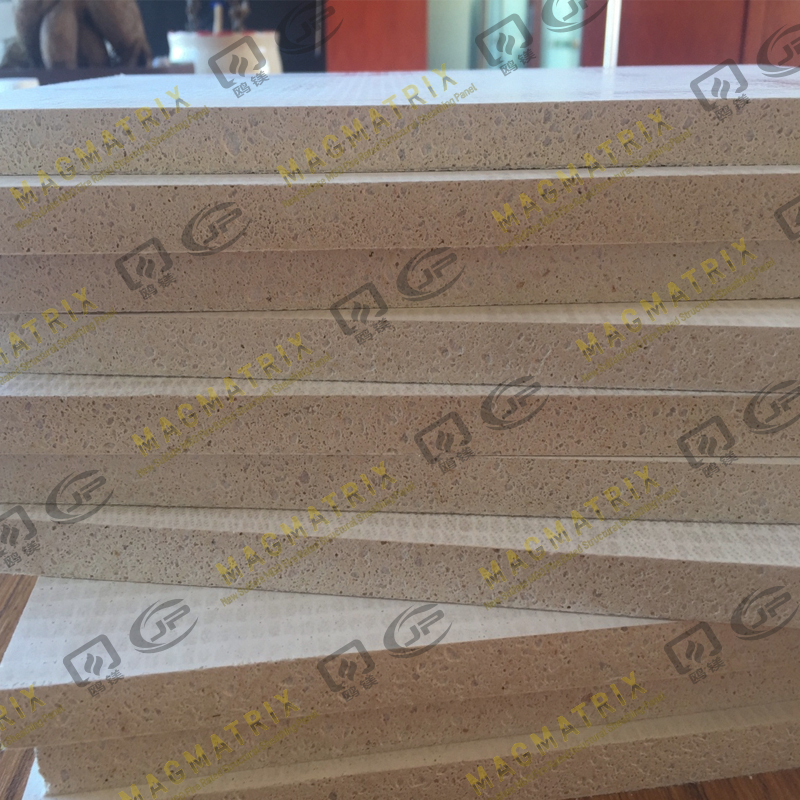
MgO panels address these weaknesses at the chemistry level. Made from magnesium oxide combined with magnesium sulfate, perlite, and fiberglass mesh reinforcement, they form a dense, cementitious matrix that does not combust, does not shrink under flame, and does not release toxic gases during a fire event. This makes them a fundamentally different category of building material—one built for fire resistance by design, not by treatment.
The Science Behind MgO's Fire Resistance
The fire-resistant behavior of MgO panels is rooted in a process called endothermic dehydration. When exposed to high temperatures, magnesium oxide absorbs heat energy as it releases bound water vapor from the panel matrix. This reaction actively draws heat away from the surrounding assembly, slowing temperature rise on the unexposed side of the wall and buying critical evacuation time.
Several measurable outcomes result from this chemistry:
- Zero flame spread index (FSI = 0): MgO panels achieve a Flame Spread Index of zero in ASTM E84 Steiner Tunnel testing, meaning fire does not propagate across the panel surface under standardized test conditions.
- Extreme temperature stability: High-quality MgO panels maintain structural integrity at temperatures exceeding 1,000°C, with some formulations tested up to 1,200°C without igniting or releasing combustible gases.
- No toxic off-gassing: Unlike many polymer-based or wood-based panels, MgO does not emit toxic fumes when exposed to flame—a critical factor for occupant safety and firefighter protection.
- Structural retention under heat: MgO panels do not shrink, crack, or delaminate during fire exposure in the way gypsum and wood-fiber boards do, preserving wall assembly integrity throughout a fire event.
These properties are built into the panel's mineral composition. The Magnesium Oxide Sulfate Board produced using Basic Magnesium Sulfate Cementitious (BMSC) technology is chloride-free, which further reduces corrosion risk on metal framing and improves long-term dimensional stability—both important considerations in fire-rated assemblies that must perform reliably for the life of a building.
Fire Ratings and Code Compliance: What the Standards Say
For an MgO panel to be specified with confidence on a code-regulated project, it must pass a defined set of standardized tests. The key standards that govern fire performance in the United States and international markets are as follows:
- ASTM E136: This test determines whether a material qualifies as non-combustible. Panels that pass ASTM E136 are classified as noncombustible under IBC 2021 and can be used in Construction Types I and II—the most fire-restrictive building classifications. This is the benchmark that separates MgO from gypsum and wood-based products, which cannot pass this test.
- ASTM E84 (UL 723): The Steiner Tunnel Test measures flame spread and smoke development. MgO panels consistently achieve a 0/0 rating—zero flame spread, near-zero smoke developed—qualifying them for Class A designation under IBC requirements.
- ASTM E119 / UL 263: This assembly-level test measures how long a wall, floor, or ceiling assembly resists fire penetration and structural failure. MgO panels have been tested in assemblies achieving 1-hour, 2-hour, and 3-hour fire-resistance ratings depending on configuration.
- NFPA 285: Required for exterior wall assemblies in mid-rise and high-rise construction, this test evaluates the spread of flame through multi-story wall systems. MgO panels have been evaluated for use within NFPA 285-compliant assemblies with a range of cladding and water-resistive barrier combinations.
- EN 13501-1 Class A1: The European equivalent classification for non-combustible materials. MgO panels with A1 ratings have been tested to withstand temperatures exceeding 750°C for over 30 minutes without discoloration or combustion.
The Perseverance MgO Fire-Rated Structural Sheathing Board is one example of a product that achieves ASTM E136 noncombustible classification, Class A flame spread rating, and carries ICC-ES evaluation for use in IBC Construction Types I through V—providing architects and specifiers with the third-party verification needed to satisfy code-compliance requirements on regulated projects.
Key Applications in Fire-Resistant Construction
The versatility of MgO panels means they can be deployed at multiple points in a building envelope and interior layout to create a comprehensive fire-resistant system.
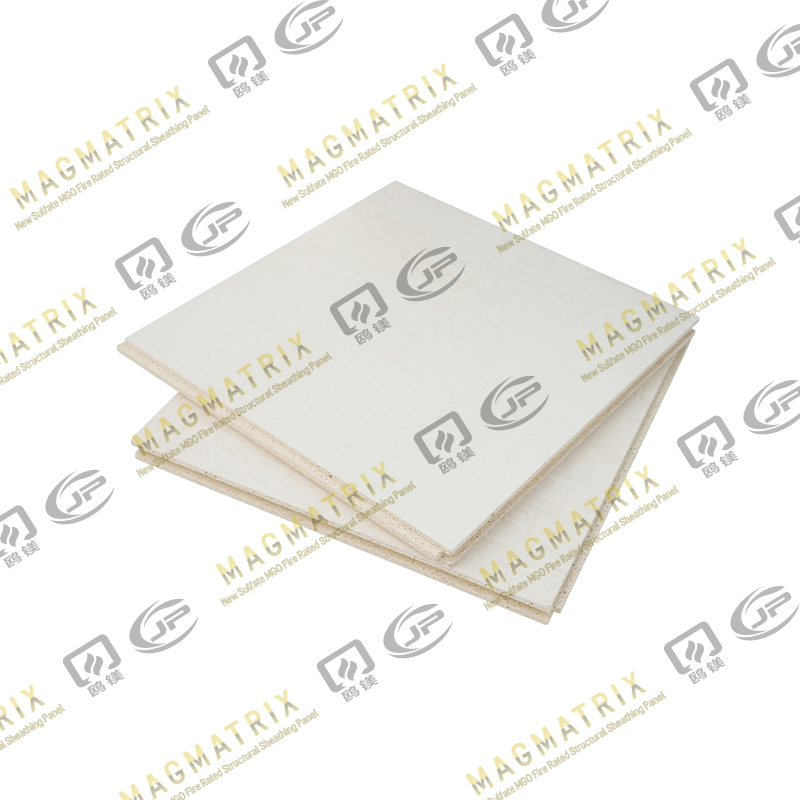
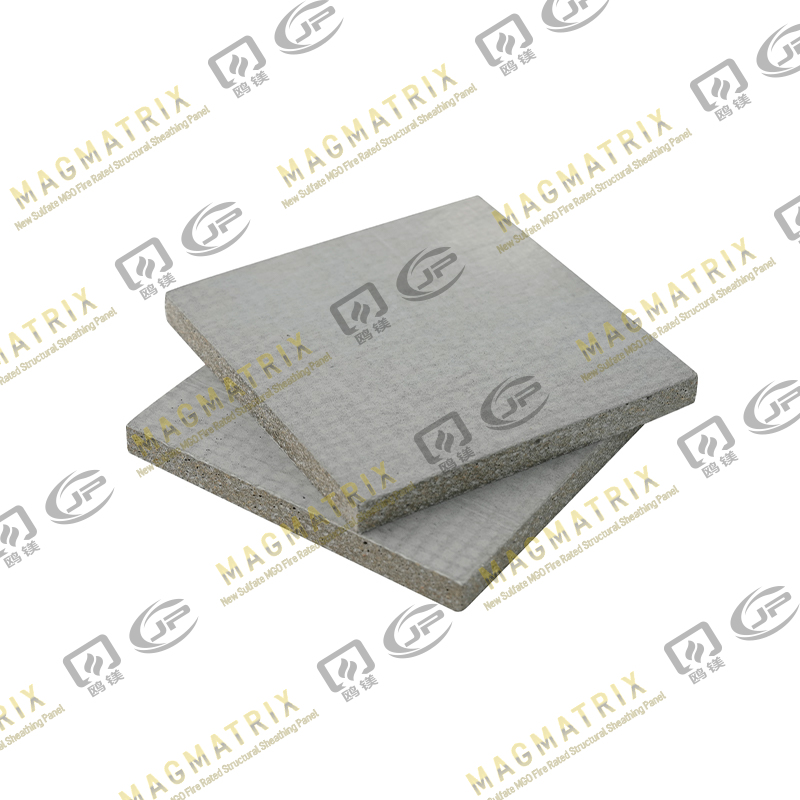
Exterior wall sheathing in mid-rise and high-rise buildings. Type III construction under the IBC requires non-combustible exterior walls. MgO panels used as exterior sheathing meet this requirement directly, and their moisture resistance means they can remain exposed during construction without the risk of degradation that affects gypsum-based alternatives. The MgO Wall Sheathing Board is engineered for both exterior and interior wall applications, attaching easily to wood or metal stud framing with standard tools and installation methods familiar to framing crews.
Egress routes: stairwells, corridors, and exit paths. Fire codes require that corridors and stairwells maintain their integrity long enough for full building evacuation. MgO panels installed in these locations provide 1- to 2-hour rated protection in a single-layer application, outperforming the double-layer Type X gypsum assemblies traditionally required to achieve the same rating. This simplifies assembly details and reduces both material cost and installation labor.
Wildland Urban Interface (WUI) zones. In fire-prone regions governed by state codes such as Section 707A of the California Building Code (CBC), exterior sheathing must meet Ignition-Resistant Construction requirements. MgO panels qualify for Class 1, 2, and 3 Ignition-Resistant Construction classifications, making them a code-compliant choice for homes and structures built in or near wildland areas.
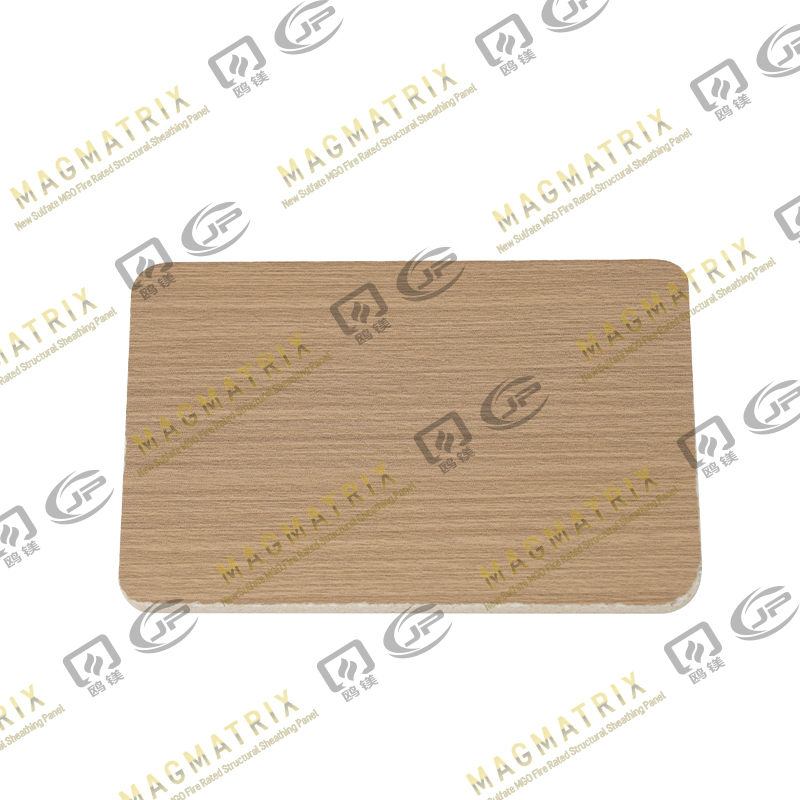
Interior partitions in high-occupancy buildings. Hospitals, schools, hotels, and multifamily residential buildings require fire-rated separation between spaces to protect occupants and limit loss. For interior applications requiring both fire resistance and a finished aesthetic surface, the MgO Fire Resistance Interior Decorative Board provides non-combustible performance with a surface ready for paint, laminate, or tile finishes—eliminating the need for a separate finish layer in many applications.
MgO Panels vs Traditional Materials: A Compliance Comparison
The table below summarizes how MgO panels compare against the most commonly specified alternatives across the performance dimensions most relevant to fire-resistant construction and code compliance.
Performance comparison based on standardized test data. Actual values depend on product formulation, thickness, and assembly configuration.
| Performance Criterion |
MgO Panel |
Type X Gypsum |
OSB |
Cement Board |
| Combustibility (ASTM E136) |
Non-combustible |
Fails |
Fails |
Non-combustible |
| Flame Spread Index (ASTM E84) |
0 |
0–15 |
75–200+ |
0 |
| Max Fire Rating (assembly) |
Up to 3 hours |
Up to 1 hour (single layer) |
Not rated |
Up to 1 hour |
| IBC Type I / II Approved |
Yes |
No |
No |
Yes (limited) |
| Toxic fumes in fire |
None |
Minimal |
Significant |
Minimal |
| Moisture resistance |
High (<0.34% surface absorption) |
Low (degrades when wet) |
Low (swells and delaminates) |
Moderate |
| Structural integrity after fire exposure |
Retained |
Lost after ~20–30 min at 400°C |
Lost rapidly |
Moderate |
The data makes clear that MgO panels are the only widely available sheathing product that satisfies the full range of fire-compliance requirements—non-combustibility, Class A flame spread, assembly fire ratings, and IBC Type I/II approval—in a single-panel solution that also resists moisture and mold.
Installation Considerations for Fire-Rated Assemblies
Specifying a non-combustible panel is only part of achieving code compliance. The assembly in which it is used—framing type, panel thickness, fastener spacing, and any adjacent cladding or water-resistive barrier—must be configured correctly to carry a published fire rating.
Several practical considerations apply when installing MgO panels in fire-rated assemblies:
- Single-layer efficiency: A key advantage of high-performance MgO sheathing is that a single layer on the exterior side of a wall assembly can achieve a 2-hour fire rating, whereas conventional gypsum assemblies typically require two layers of Type X panels on both sides to reach the same rating. This directly reduces material quantity, labor time, and wall thickness.
- NFPA 285 system compliance: For exterior walls in buildings over 40 feet in height, the entire cladding system—sheathing, water-resistive barrier, insulation, and finish—must be tested as an assembly under NFPA 285. Specifiers should confirm that the MgO panel has been evaluated within a published NFPA 285-compliant system that matches the intended cladding type.
- Fastener selection: Because MgO panels have a cementitious composition, standard carbon steel fasteners can corrode over time in the presence of residual moisture. Stainless steel or hot-dipped galvanized screws are recommended for all MgO panel installations to maintain long-term assembly integrity.
- Compatibility with WRB and cladding: MgO panels function as structural sheathing and can accept a wide range of water-resistive barriers and cladding systems directly. Builders should reference the panel manufacturer's ICC-ES evaluation report to confirm which WRB and cladding combinations carry the published fire-rating and structural values.
- Acclimation before installation: Allowing MgO panels to acclimate to the installation environment for three to five days before mounting minimizes minor dimensional movement and ensures the panels perform as tested once the building is enclosed.
Because MgO panels can be scored, snapped, and fastened using tools already familiar to framing crews, the learning curve is minimal. Most projects report installation speeds comparable to OSB or standard gypsum sheathing, with no specialized equipment required.
Conclusion
Fire-resistant construction demands materials that perform under the conditions they are designed to resist. MgO panels deliver non-combustibility by chemistry, verified fire ratings by testing, and code compliance by certification—not by chemical treatment or layering workarounds. From exterior wall assemblies on Type I high-rises to egress corridors in schools and wildfire-prone residential construction, MgO panels provide a single-product solution that satisfies the most stringent requirements of modern building codes.
For project teams navigating IBC construction type classifications, NFPA 285 system compliance, or WUI zone regulations, specifying a third-party certified MgO panel with published ICC-ES evaluation reports is the most reliable path to compliance. As fire safety standards continue to tighten globally, the inherent performance advantages of magnesium oxide will only grow in relevance for builders and developers who cannot afford to compromise on safety.



 English
 русский
 Español
 BMSC 517 New Sulfate MgO Board
 Multi-Support MgO Wall Sheathing Board
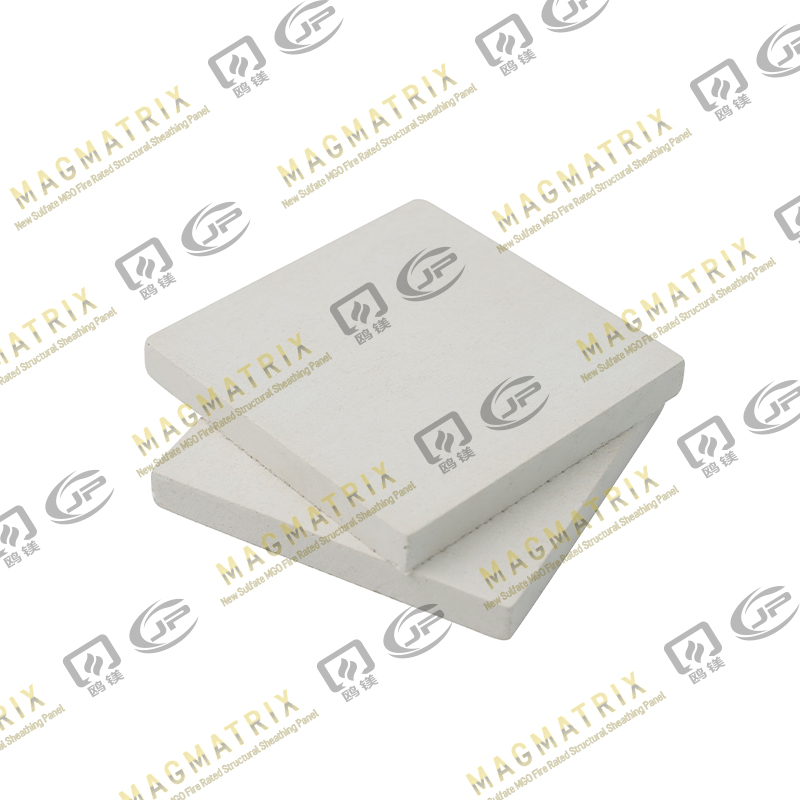 Perseverance MgO Wall Sheathing Board
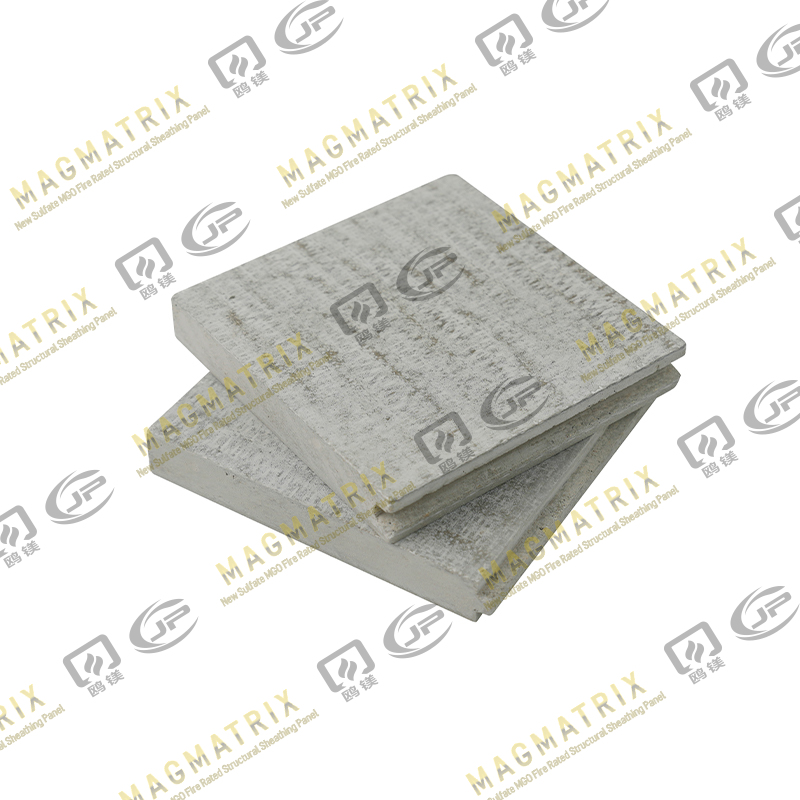 Multi-Support MgO Subfloor Sheathing Board
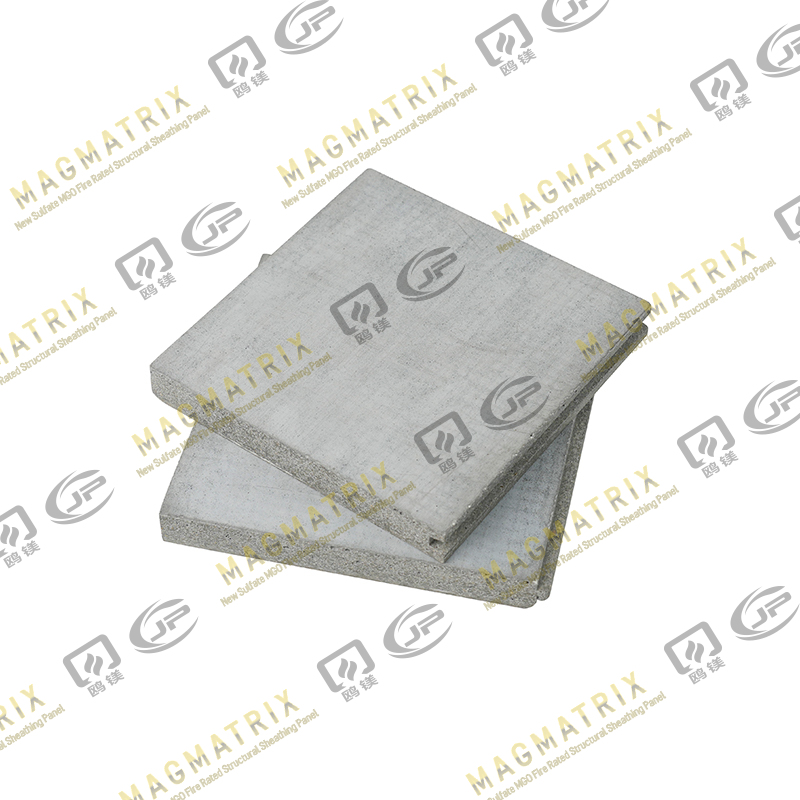 Perseverance MgO Subfloor Sheathing Board
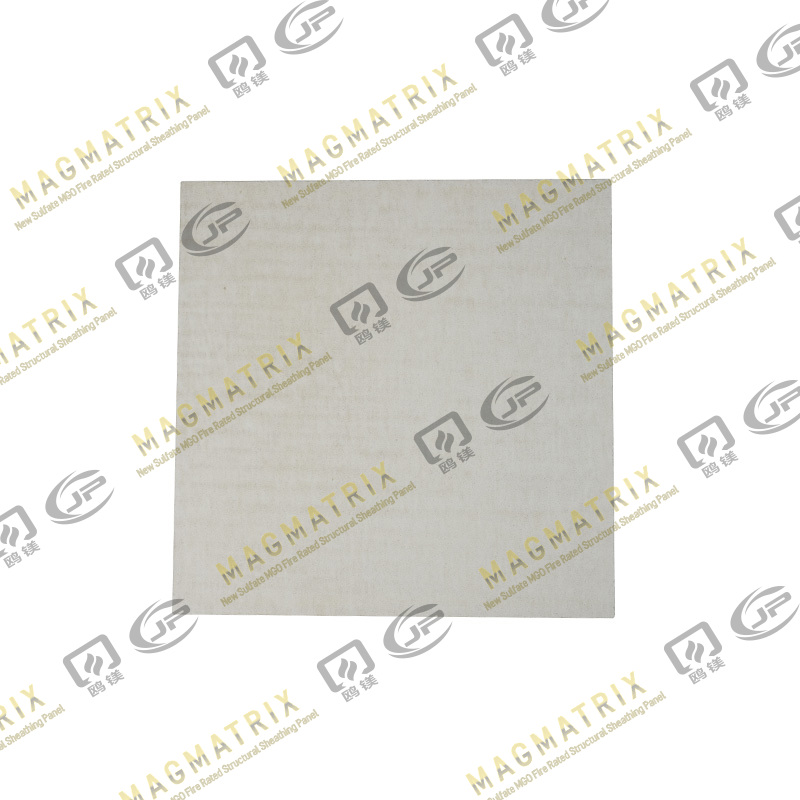 MagMatrix MgO Underlayment Panel/board