A subfloor data sheet lands on the desk with two separate lines in the emissions section: one for volatile organic compound content, one for formaldehyde emission class. The split looks like a chemical distinction. It is not. Formaldehyde is a volatile organic compound by every technical definition in use, and it is also regulated as a named carcinogen, which is why the paperwork keeps it in its own box.
Direct answer
Yes. Formaldehyde is a volatile organic compound. It is an organic molecule with a boiling point of about minus 19 degrees Celsius, far below the 250 degree Celsius threshold that most regulators use to define volatility.
Getting this right matters on site, not just in a chemistry exam. Once you accept that formaldehyde belongs to the VOC family, its behaviour becomes predictable: how quickly it leaves a panel, why warm and humid rooms read higher, and why a total VOC number can look acceptable while a formaldehyde-specific limit is quietly being exceeded.
Yes, Formaldehyde Is a VOC, and the Definition Proves It
Formaldehyde is a volatile organic compound because it is a carbon-based compound that vaporises readily at ordinary indoor temperatures. That single sentence settles the classification question; everything else here is about what follows from it.
Working definition: a volatile organic compound is any organic compound with an initial boiling point at or below 250 degrees Celsius at standard atmospheric pressure, roughly 101.3 kPa. The threshold appears in European solvent legislation and broadly mirrors the World Health Organization range of about 50 to 260 degrees Celsius.
Formaldehyde sits at the extreme end of that range rather than near the boundary. It is the simplest aldehyde, a one-carbon molecule written as CH2O or HCHO, and it is already a gas before the room reaches normal occupancy temperature. Nothing has to be heated, cut, or damaged for it to migrate into the air.
In air monitoring terms it belongs to the carbonyl subgroup of VOCs, alongside acetaldehyde, acetone, and acrolein. Labs often report it separately from the aromatic and aliphatic fractions because the sampling method differs, but a separate report line is not a separate chemical family.
What Volatility Actually Means in a Finished Building
Volatility is the property that turns formaldehyde from an industrial raw material into an indoor air quality issue, because a compound that is already gaseous at room temperature does not need a trigger to escape a product.
minus 19 C boiling point at standard pressure
30.03 molecular mass in grams per mole
0.5 to 1.0 ppm typical odour threshold in air
0.1 mg/m3 WHO indoor guideline, 30 minute average
Those four numbers explain most of the practical behaviour. Because the molecule is small and light, it diffuses quickly through the pore structure of a panel and through still air. Because the odour threshold sits roughly six to twelve times above the World Health Organization guideline value, smell is not a usable detector: a room can meet the guideline and still smell faintly of resin, or exceed the guideline with no warning at all.
Emission rates also track temperature and humidity rather than the calendar. A sealed, sun-warmed apartment can read several times higher than the same apartment on a mild, ventilated day, and a bathroom with constant moisture keeps resin-bound panels releasing long after the rest of the building has settled.
Emissions from amino resin panels follow a decay curve rather than a switch. The highest rates occur in the first weeks after manufacture, then fall steeply and continue at a low, persistent level. Flush-out ventilation during commissioning does more for final air quality than most product switches made later.
Where Formaldehyde Enters a Wall, Floor or Ceiling
In construction products, formaldehyde arrives mainly through the resins that glue wood together, with a smaller contribution from coatings, adhesives, and preservatives.
Resin chemistry sets the emission profile
Urea-formaldehyde resins are the highest-emitting class and dominate interior particleboard and MDF. Melamine-urea-formaldehyde sits in the middle, and phenol-formaldehyde is more stable because the cured network is more resistant to hydrolysis. Polyurethane binders such as pMDI introduce no formaldehyde at all, which is why some exterior sheathing products screen low even though they are wood-based.
Indicative formaldehyde relevance by product type. Entries describe typical binder chemistry and are not a compliance statement for any specific product.
| Product |
Typical binder |
Formaldehyde relevance |
| Interior particleboard and MDF |
Urea-formaldehyde or melamine-urea-formaldehyde |
High |
| Interior plywood |
Urea-formaldehyde or phenol-formaldehyde |
Moderate to high |
| OSB and exterior sheathing |
Polymeric MDI or phenol-formaldehyde |
Low to moderate |
| Mineral wool insulation |
Phenol-formaldehyde binder |
Low |
| Paints, adhesives and sealants |
Free formaldehyde preservatives |
Low per product, cumulative in a room |
| Paper-faced gypsum board |
Gypsum core with starch and paper facing |
Very low |
| Magnesium oxide and magnesium sulfate board |
Inorganic magnesia cement |
Not a formaldehyde resin source |
Read the table as a map of where to look, not as a ranking of finished assemblies. A plywood subfloor under a poured screed behaves very differently from the same board left exposed, and a sealed edge changes the surface area available for release.
A low-VOC paint label tells you about the paint. It says nothing about the board behind it, the adhesive beneath it, or the sealant around it.
If It Is a VOC, Why Does Formaldehyde Get Its Own Rules?
Formaldehyde is regulated separately from general VOCs because its health effects are far more serious than those of an average VOC mixture, and because a total VOC figure cannot describe a single compound.
Counted as a general VOC
- Included in total VOC sums and TVOC readings
- Reported in milligrams per cubic metre of air
- Covered by generic solvent and coating rules
- Limits applied to the mixture, not the molecule
Counted as a named hazard
- Classified as a Group 1 human carcinogen
- Given dedicated emission classes and panel limits
- Tested under separate chamber standards
- Held to a specific indoor air guideline value
That second column is why panel rules exist at all. Under the US federal TSCA Title VI rule and the California Phase 2 programme, composite wood products carry compound-specific limits rather than a single VOC ceiling:
- Hardwood plywood: 0.05 ppm
- Particleboard: 0.09 ppm
- Medium density fiberboard: 0.11 ppm
- Thin MDF: 0.13 ppm
Testing follows chamber methods such as ASTM D6007 or EN 717-1 for finished boards, with EN 120 and the desiccator method used for factory control. A generic VOC screen will not substitute for any of them.
A total VOC reading tells you how much organic carbon is in the air. It does not tell you whether the one compound that matters most is present.
Choosing Assemblies That Keep Formaldehyde Out of the Air
The most reliable way to lower formaldehyde in a new assembly is to remove formaldehyde-based binders from the specification, then confirm the claim with chamber data instead of a brochure sentence.
- Ask for the emission report, not the marketing line. A usable document names the test standard, the loading rate, the chamber conditions, and the measured value in ppm or mg/m3.
- Check the binder chemistry on the data sheet. Urea-formaldehyde, melamine-urea-formaldehyde, and phenol-formaldehyde are the names to look for; pMDI and inorganic magnesia binders are not in that family.
- Assess the whole system. Coatings, contact adhesives, sealants, and edge trims can reintroduce formaldehyde that the board itself does not contain.
- Plan the first ninety days. Ventilate during installation, run a deliberate flush-out before handover, and avoid sealing a newly boarded room warm and closed.
- Keep the paperwork for handover. Emission reports and screening documents belong in the project file, not in a supplier email thread.
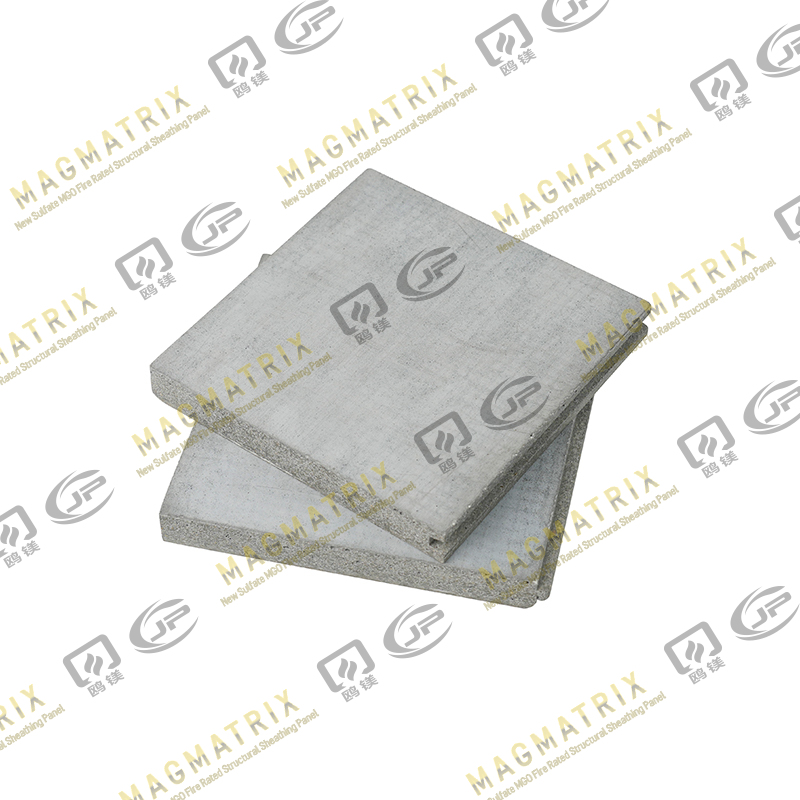
Magnesium oxide and magnesium sulfate boards take a different route. Their binder is an inorganic magnesia system rather than an amino resin, so the core is not a formaldehyde source, and the supporting evidence sits in the certificate library alongside non-combustibility and structural test reports. The indoor air question specifically is covered in this review of how sulfate MgO boards perform on indoor air quality testing.
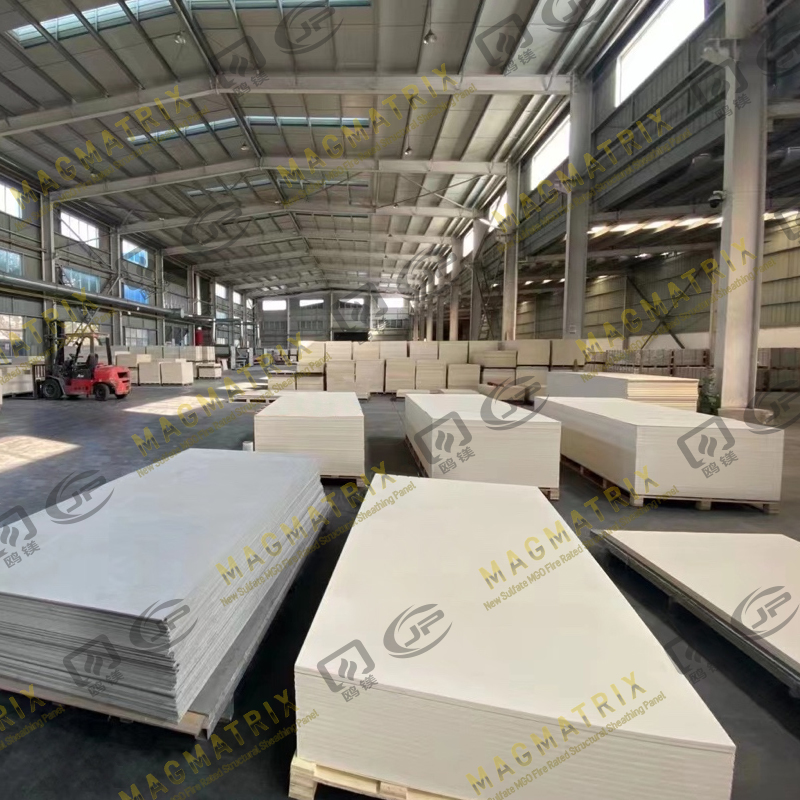 MagMatrix MgO Wall Sheathing BoardNon-combustible magnesium oxide wall sheathing board with an inorganic binder, relevant when specifying wall assemblies and evaluating amino resin content.View Product →
For wall sheathing, that difference is worth arguing for early in the specification, before the wall build-up is frozen. The comparison point is not "VOC free" versus "VOC containing", it is whether the board introduces an amino resin at all.
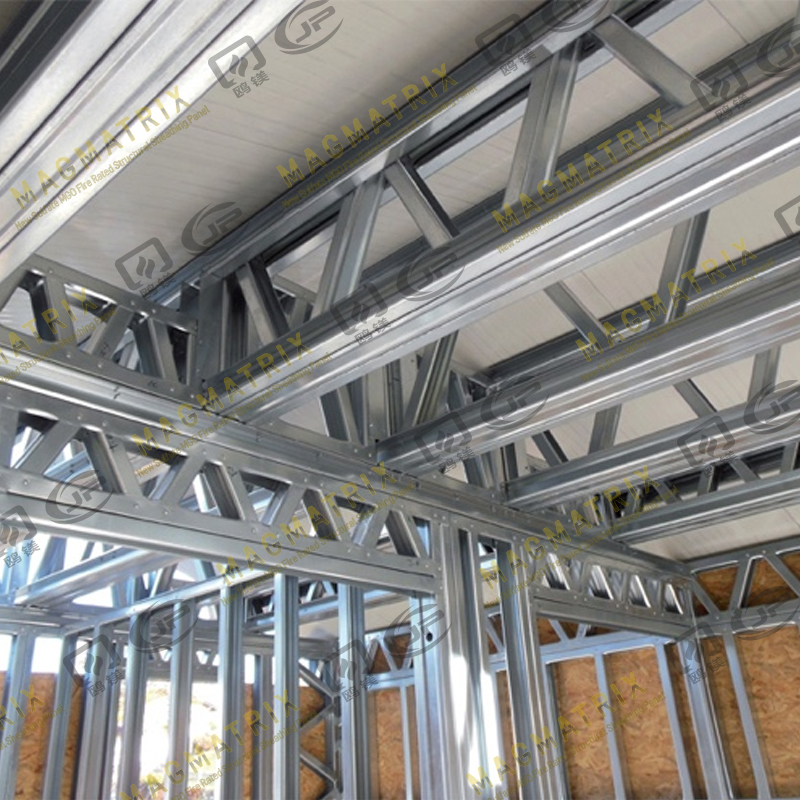 MagMatrix MgO Subfloor Sheathing BoardNon-combustible magnesium oxide subfloor panel for residential and commercial flooring, relevant where sheathing is the largest exposed layer in multi-layer assemblies.View Product →
Subfloors deserve the same scrutiny, because a floor assembly usually has more layers than a wall: joists, sheathing, underlayment, adhesive, and finish. Each layer is a potential source, and the sheathing is the layer with the largest exposed area.
Frequently Asked Questions
Is formaldehyde a VOC or a gas?
Both descriptions are correct and they answer different questions. VOC is a classification based on carbon chemistry and boiling point. Gas is the physical state the compound takes at room temperature. Formaldehyde is a VOC that happens to be gaseous under normal indoor conditions, which is exactly why it moves so easily out of products and into air.
Does a low-VOC label mean a product is formaldehyde-free?
No. Low-VOC claims usually describe the total mass of organic compounds in a coating or adhesive, and a product can be low in total VOCs while still releasing formaldehyde above a compound-specific limit. Formaldehyde-free is a separate declaration that needs separate evidence, ideally a chamber test report naming the standard and the measured value.
How long does formaldehyde keep coming out of a panel?
Emissions from amino resin panels peak immediately after manufacture, fall steeply during the first weeks, and then continue at a low rate for years. Temperature and humidity push the rate back up, so a closed, sun-warmed room can read several times higher than the same room under mild, ventilated conditions.
Are magnesium oxide boards formaldehyde-free?
The magnesia binder used in MgO and sulfate MgO boards is inorganic and does not rely on urea or phenol formaldehyde resins, so the board core is not a formaldehyde source. The finished assembly still deserves checking, because facings, coatings, adhesives, and sealants carry their own emissions. Ask for chamber data and screening documents for the delivered product, not just the raw panel.
Practical rule of thumb: treat any composite wood product as a formaldehyde question first and a VOC question second, and treat any inorganic board as a system question, because the board is rarely the last layer applied.



 English
 русский
 Español

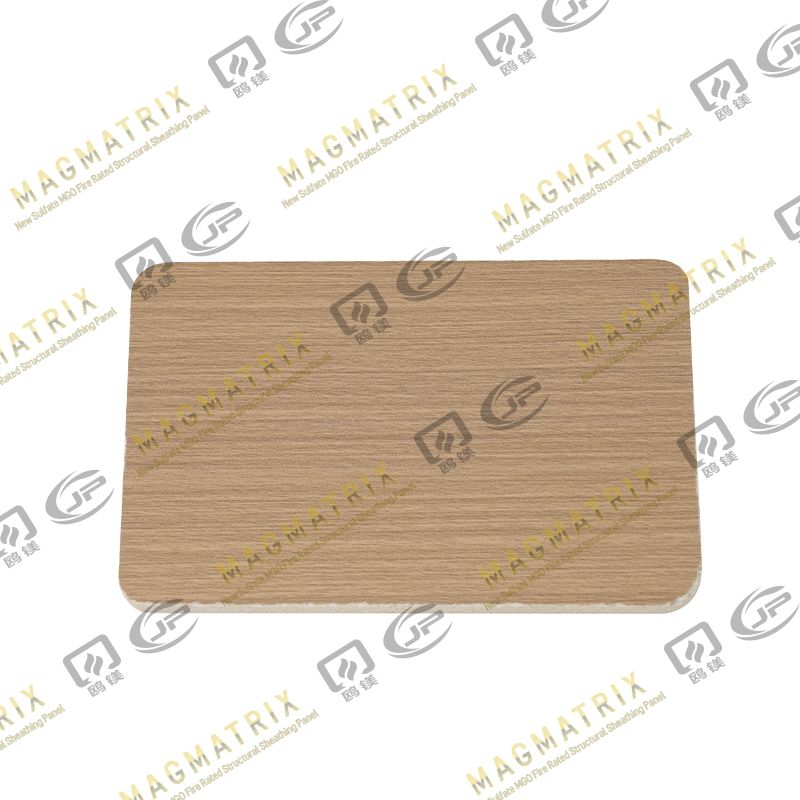
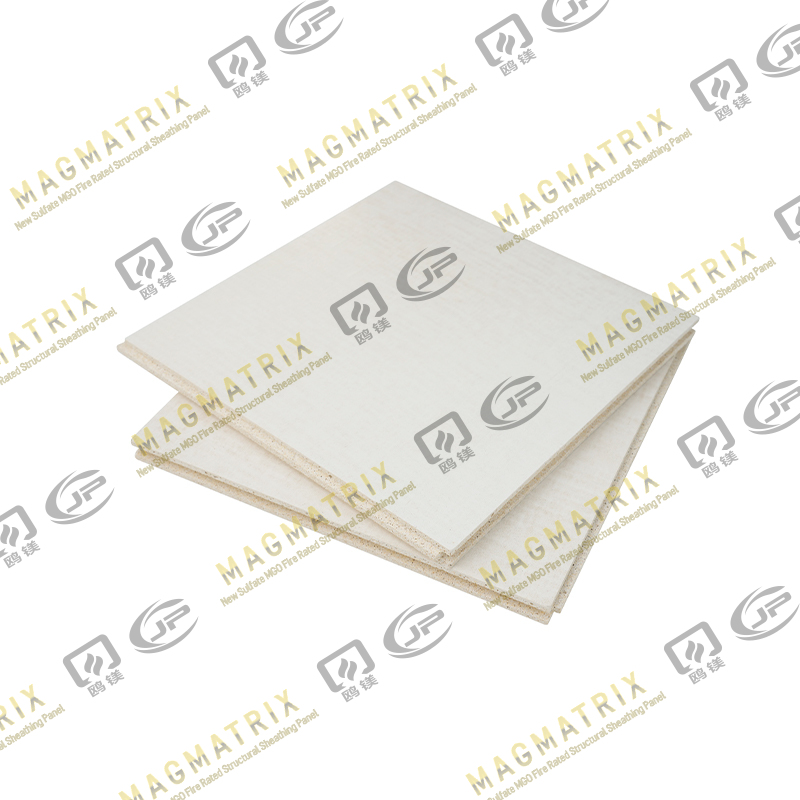
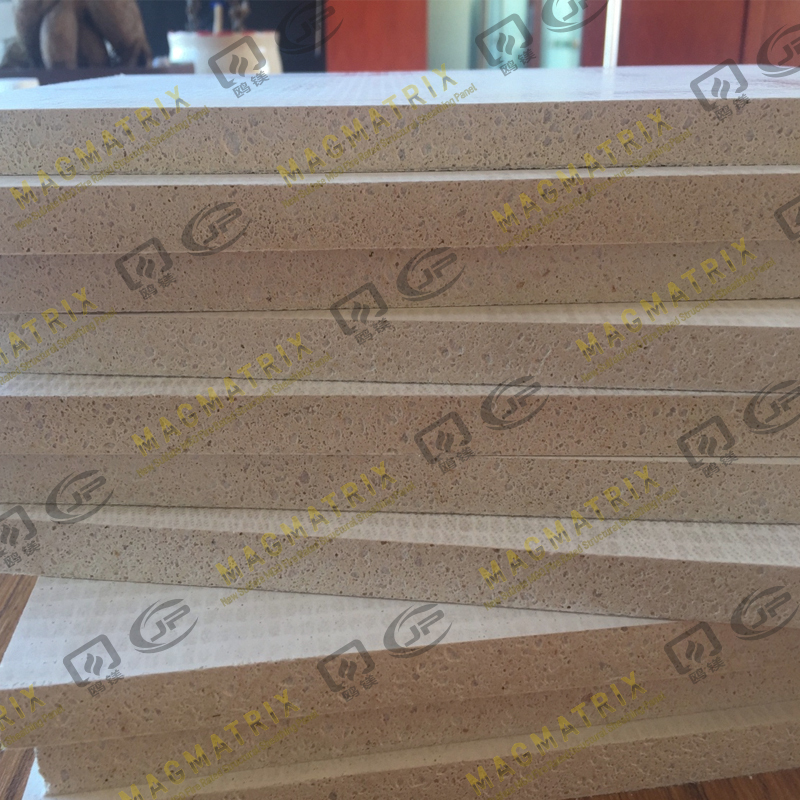 BMSC 517 New Sulfate MgO Board
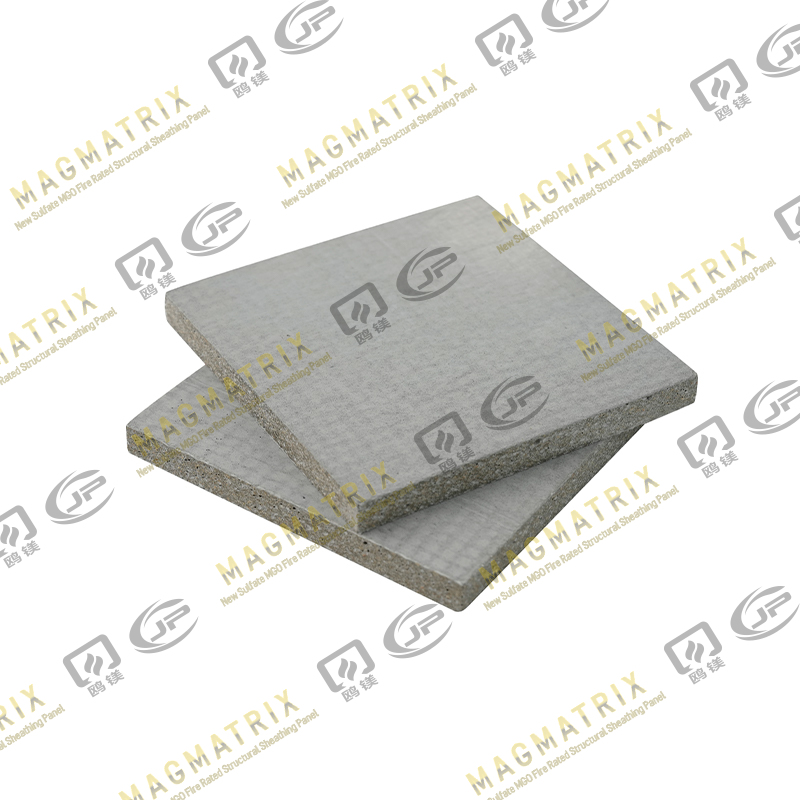 Multi-Support MgO Wall Sheathing Board
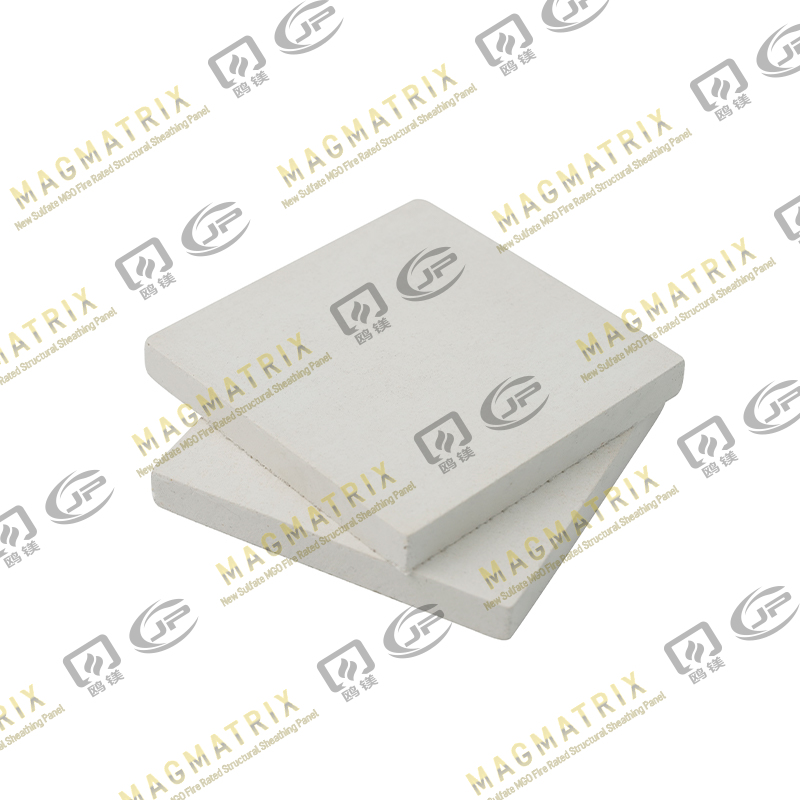 Perseverance MgO Wall Sheathing Board
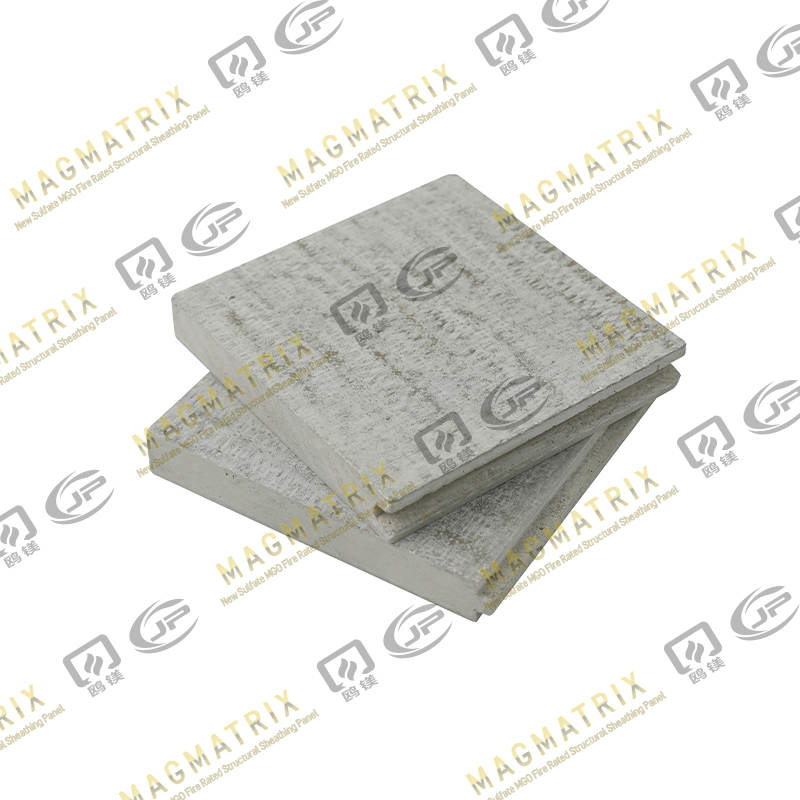 Multi-Support MgO Subfloor Sheathing Board
 Perseverance MgO Subfloor Sheathing Board
 MagMatrix MgO Underlayment Panel/board