A regional builder is reviewing a material submittal for a four-story, wood-frame apartment project. The architect has specified magnesium oxide board for exterior wall sheathing, and the project manager has two questions: what fire rating does the finished wall assembly deliver, and what happens if the panels get wet before the weather barrier is installed.
Both questions have favorable answers, but only when the board chemistry and the test documentation are checked before the order is placed. Magnesium oxide board can legitimately claim noncombustibility, mold resistance, and dimensional stability. The practical rule: choose a sulfate-based board, verify the fire and moisture reports, and detail the envelope so standing water never sits against the panel.
What Magnesium Oxide Board Is Made Of
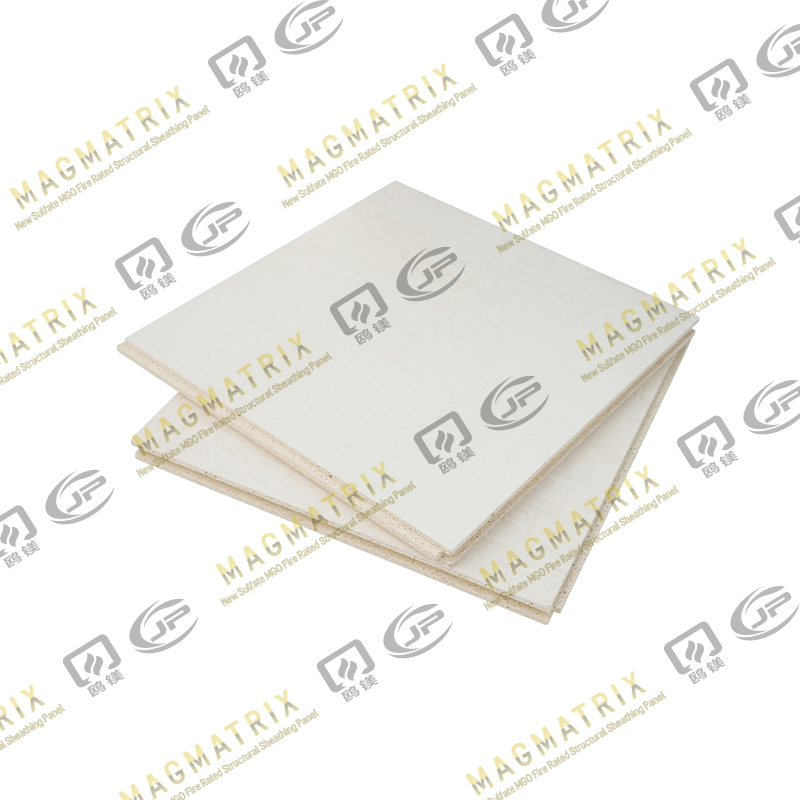
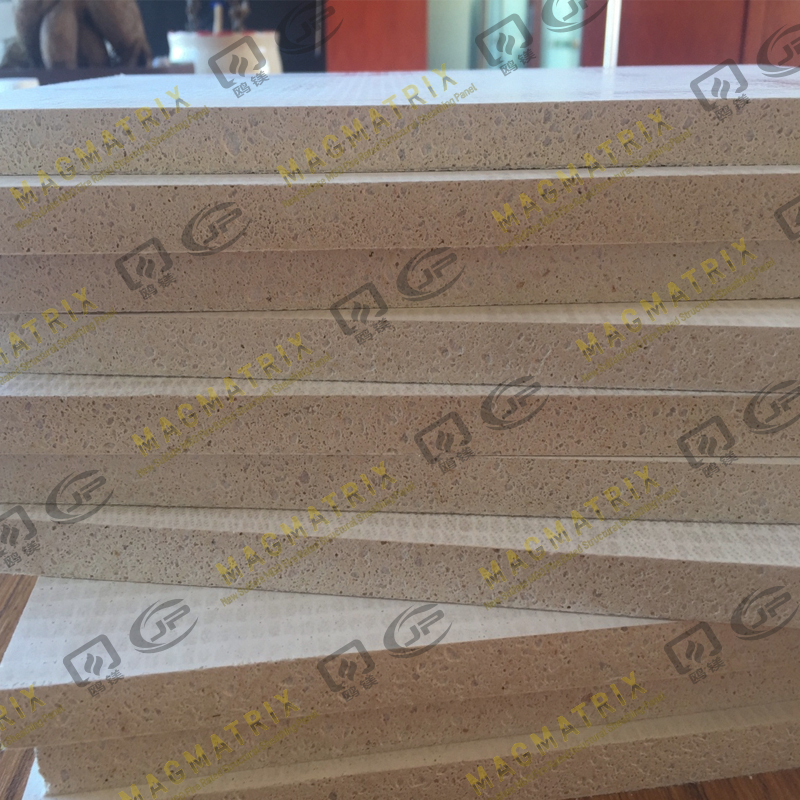
MgO board starts as magnesium oxide powder mixed with a magnesium salt binder and fillers such as perlite or light wood fiber, then laminated with fiberglass mesh and cured into a rigid sheet. Because the core is inorganic, the panel does not feed combustion or support mold growth. Panel densities typically range from about 750 kg/m³ for interior decorative grades to roughly 1,200 kg/m³ for structural sheathing.
Two binder families dominate the market. Chloride-based boards use magnesium chloride, which keeps cost low but leaves the panel vulnerable to moisture-related corrosion: the chloride ion can migrate with water and attack steel studs, screws, and even the embedded fiberglass mesh over time. Sulfate-based boards use magnesium sulfate and form a water-stable crystal phase that avoids that failure chain. This is why most exterior sheathing and floor products now use a sulfate formulation. A practical comparison of sulfate-based and chloride-based MgO boards explains the technical reasons behind the shift.
Fire Performance Starts With the Test Reports
The fire case for MgO board rests on three standard tests, each answering a different question:
- ASTM E136 noncombustibility: proves the panel itself does not burn or contribute heat.
- ASTM E119 assembly tests: demonstrates a complete wall, including wood or steel studs and fasteners, holds its structural and thermal barrier for one or two hours.
- ASTM E84 surface burning characteristics: produces the Class A rating for flame spread and smoke development.
Marketing sheets are not evidence. Ask the supplier for the actual PDF reports and confirm that the product name, thickness, and density on the report match the product being quoted. A manufacturer that cannot produce a matching report is passing risk to you, not solving a problem.
Two further documents matter when the board becomes part of a structural assembly. ASTM C871-18 measures leachable chloride, so it confirms the board will not promote fastener corrosion in humid service. A coefficient of linear thermal expansion evaluation (ASTM E228) lets the design team size movement gaps correctly. For environmental submittals, a 219-item SVHC screening report under the EU chemicals regulation supports green-building documentation.
Moisture Performance Is a Chemistry Question
Most field failures reported on MgO board, including soft faces after a wet season, weeping, white efflorescence, and corroded screws, involve chloride-based panels exposed to humidity. The binder chemistry is the root cause, not the material category.
A sulfate-based board behaves differently in the same conditions. Its crystal structure resists moisture transport, so the panel keeps its hardness and dimensions in humid coastal air, bathrooms, and below-grade spaces. It is still not a waterproof barrier. Store panels off the ground and under cover, seal cut edges with the edge treatment recommended by the manufacturer, and install flashings so water drains away before it can sit on the face or in a fastener hole.
Where MgO Board Fits in a Building
MgO board is not a universal replacement for every sheet material, but it has clear roles in wall, floor, and ceiling assemblies.
Exterior wall sheathing
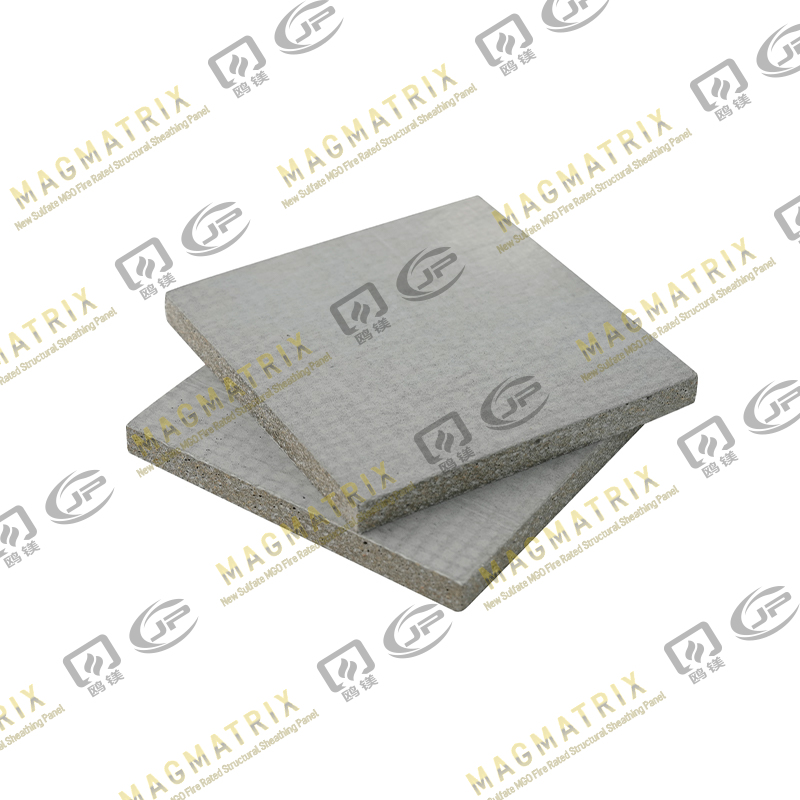
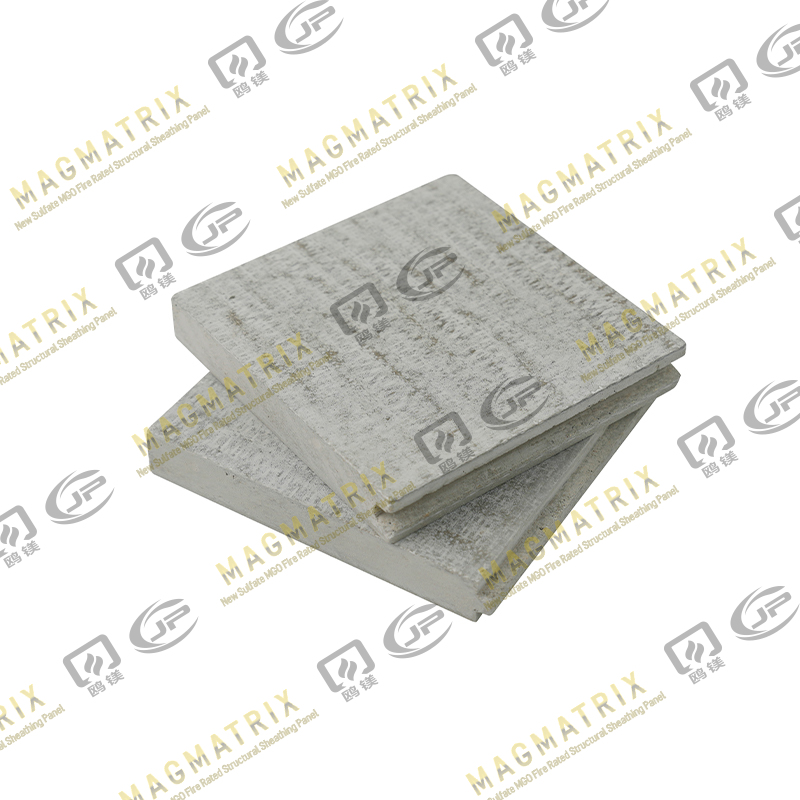
Exterior walls that must be noncombustible are the most common application. A 12 mm or 15 mm board replaces OSB or plywood while contributing a noncombustible component to the assembly and giving cladding a rigid substrate. The MagMatrix MgO wall sheathing board carries the ASTM E136 noncombustibility result and a two-hour steel-stud wall fire rating in one product family.
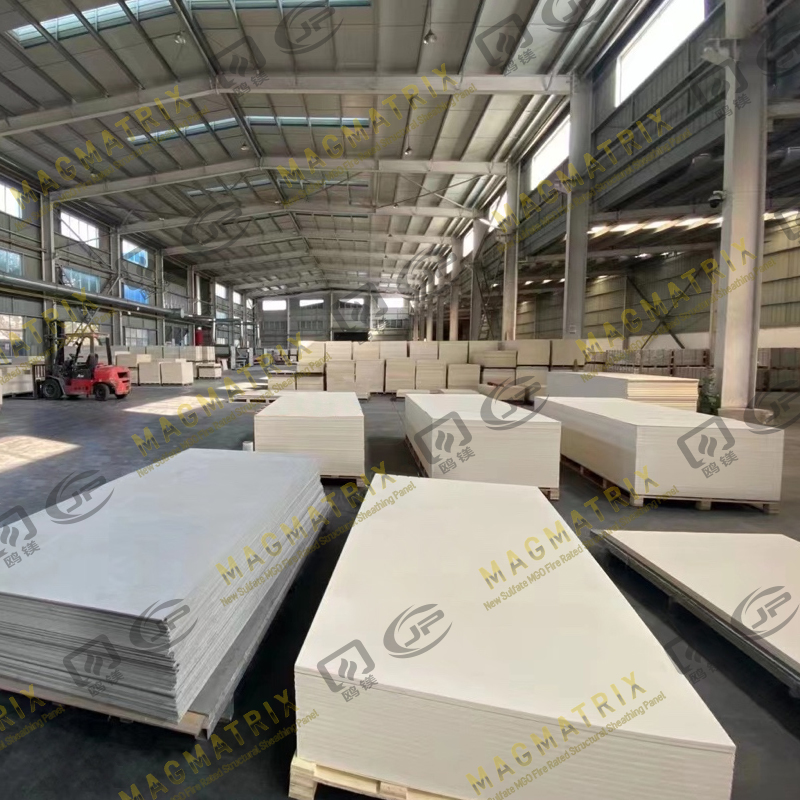 MagMatrix MgO Wall Sheathing Board Manufacturers, FactoryJinpeng are MGO Wall Board Manufacturers and Magnesium Oxide Sheathing Board Factory in China, Custom Magnesium Oxide Wall Sheathing Boar...View Product →
Subflooring over wood or steel joists
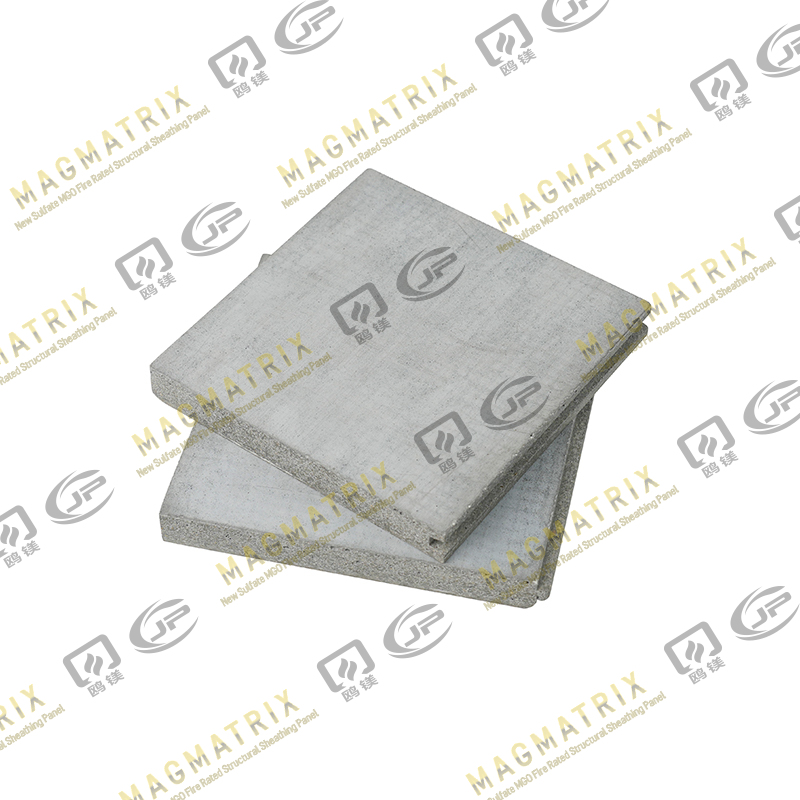
On floor framing, 18 mm and 20 mm panels form a hard, flat surface that handles concentrated loads from kitchen islands, tile, and appliances better than plywood. Fastener layouts typically call for screws at 150 mm along supported edges and 300 mm in the field, but always follow the manufacturer's pattern. The MagMatrix MgO subfloor sheathing board is built for this duty, with fire-test and load-test documentation to support the specification.
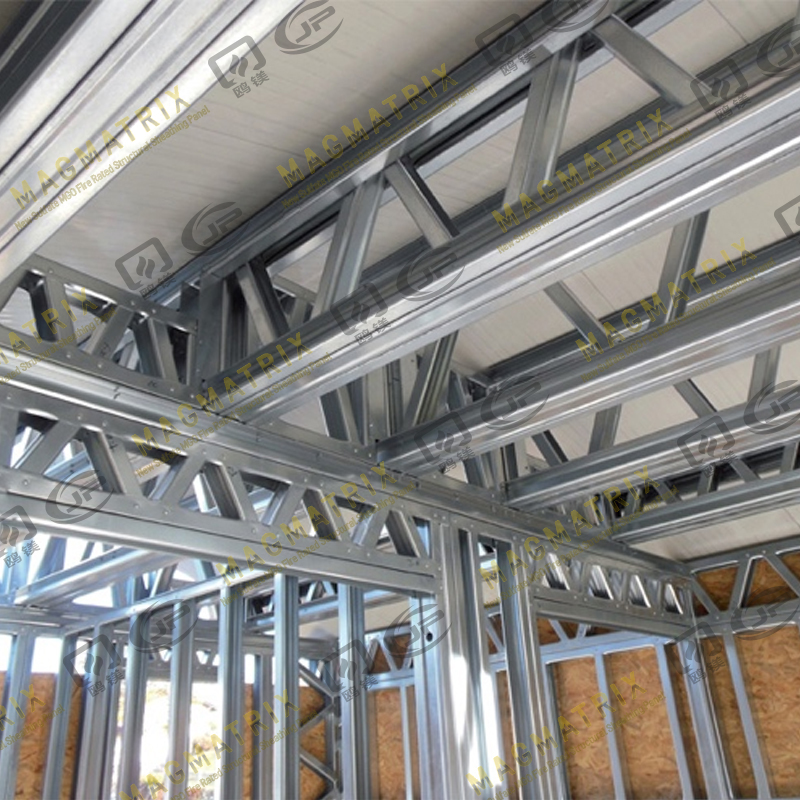 MGO Subfloor Panel Manufacturers, MGO Flooring Board FactoryJinpeng - MagMatrix MgO Subfloor Sheathing Board Manufacturers and MGO Subfloor Panel Factory in China, Supply Custom MGO Flooring Board...View Product →
Underlayment and tile backer
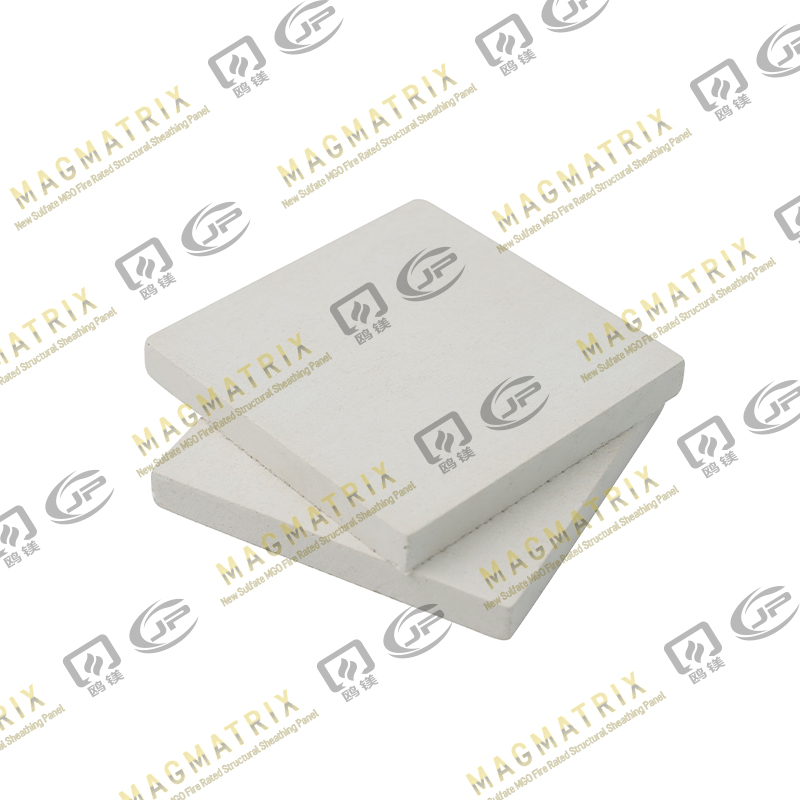
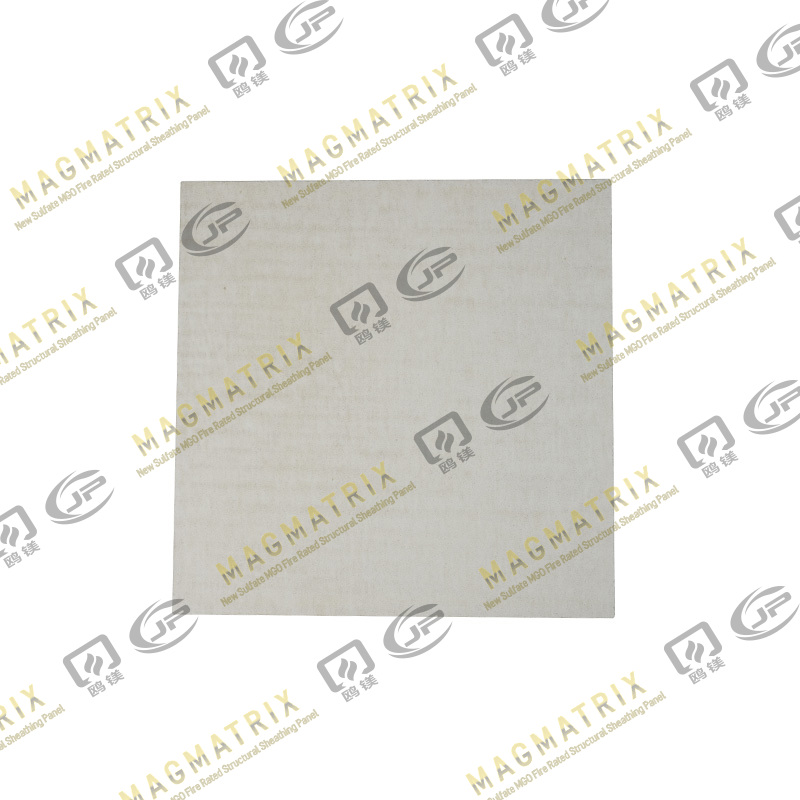
A 12 mm panel works well as a smooth underlayment for vinyl plank or tile over wood subfloors and concrete slabs. The stable face reduces the joint telegraphing that appears over time with gypsum-based underlayments, and the moisture resistance suits bathrooms and entries. The MgO underlayment panel is produced in fire-rated and moisture-resistant versions to match the floor assembly.
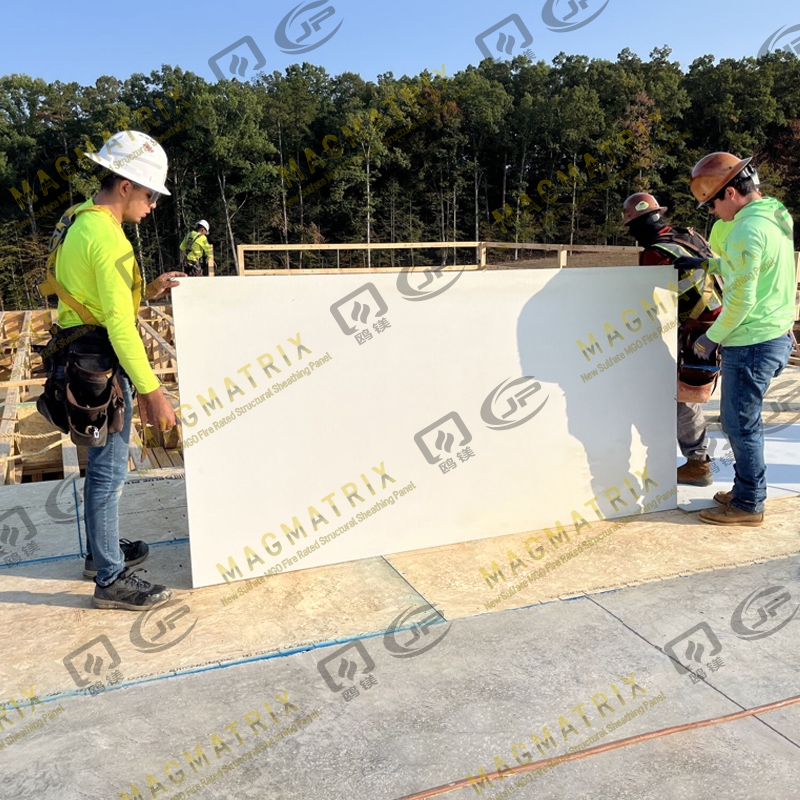 MgO Underlayment Panel Manufacturers, Underlayment Board SuppliersMagMatrix MgO Underlayment Board Manufacturers, Jinpeng are China MgO Underlayment Panel Suppliers and Custom MgO Underlayment Board Fact...View Product →
Interior partitions and ceilings
In corridors, elevator lobbies, and stairwells, a single layer of MgO board can replace two layers of Type X drywall in some fire-rated designs. The trade-off is weight and cutting effort, which is why it is used where the rating justifies the extra labor.
How MgO Board Compares With Common Alternatives
The table below compares a sulfate-based MgO board with three materials it often replaces. Values are typical ranges from manufacturer literature and public test data; always confirm the specific product's numbers before you specify.
Typical property ranges for 12 mm panels used in sheathing or underlayment service. Confirm values with the manufacturer's current data sheet.
| Property |
MgO Board (sulfate) |
Gypsum Drywall |
Plywood |
Fiber-Cement Board |
| Fire behavior |
Noncombustible, ASTM E136 |
Type X up to 1 hour in some assemblies |
Combustible |
Noncombustible |
| Moisture resistance |
Good; stable in humid air |
Poor; swells and molds |
Moderate; delaminates |
Excellent |
| Density range |
750-1,200 kg/m³ |
650-800 kg/m³ |
500-600 kg/m³ |
1,200-1,400 kg/m³ |
| Fastener holding |
Good |
Poor |
Good |
Good |
| Cutting effort |
Moderate; carbide-tipped blade |
Low |
Low |
High |
What to Check Before You Approve an MgO Board
Before you sign off on an MgO board submittal, work through this checklist:
- Match the test report to the product: the product name, thickness, and density on the PDF must match the board being shipped.
- Confirm the binder chemistry: sulfate-based (BMSC) board is the safer choice for exterior, floor, and wet-area service.
- Check the density on the data sheet; boards below 750 kg/m³ are usually interior decorative grades, not structural sheathing.
- Inspect a cut edge. A dense, even core without voids between the mesh and the face indicates a well-cured panel.
- Verify fastener requirements: most manufacturers specify coated or hot-dipped galvanized screws, not electro-galvanized drywall screws.
- Ask about batch traceability, so the lot number on the pallet can be linked to its production quality-control record.
When site questions come up about edge sealing, storage, or fastening patterns, the guidance and FAQ section on the manufacturer's site covers the situations contractors actually run into.
The Bottom Line
Magnesium oxide board lives up to its claims when the chemistry, the test evidence, and the installation details line up. Choose a sulfate-based board from a manufacturer that publishes fire and moisture test reports, match the board grade to the application, and keep water out of the assembly with proper storage, sealing, and flashing. Do that, and the panel behaves as a strong, fire-resistant, dimensionally stable substrate. Skip those steps, and the negative reputation this category earned from poorly performing chloride-based boards will follow into the project.



 English
 русский
 Español
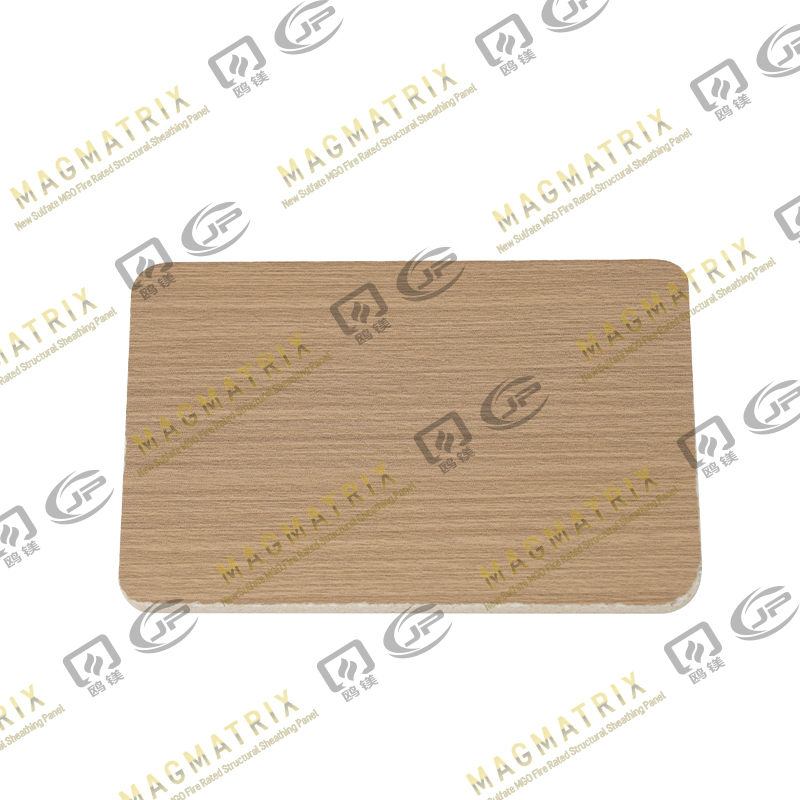
 BMSC 517 New Sulfate MgO Board
 Multi-Support MgO Wall Sheathing Board
 Perseverance MgO Wall Sheathing Board
 Multi-Support MgO Subfloor Sheathing Board
 Perseverance MgO Subfloor Sheathing Board
 MagMatrix MgO Underlayment Panel/board