Suppose you are specifying wall sheathing for a three-story multifamily building with a fire-resistance requirement and a schedule that leaves the framing exposed to weather for weeks. Plywood will weatherproof the opening, but it is combustible. Gypsum will handle the fire rating, but rain will wreck it. Magnesium oxide panels keep getting proposed for exactly this situation, and so do the old warnings about boards that failed after two winters.
Here is the conclusion up front: magnesium oxide panels are a legitimate, code-defensible alternative to drywall, plywood, and OSB when you choose the right formula. Most of the documented failures came from chloride-based boards, not from the MGO category as a whole. A sulfate-based magnesium oxide panel removes the main failure modes while keeping the fire and moisture advantages that make the material worth considering.
What Are Magnesium Oxide Panels?
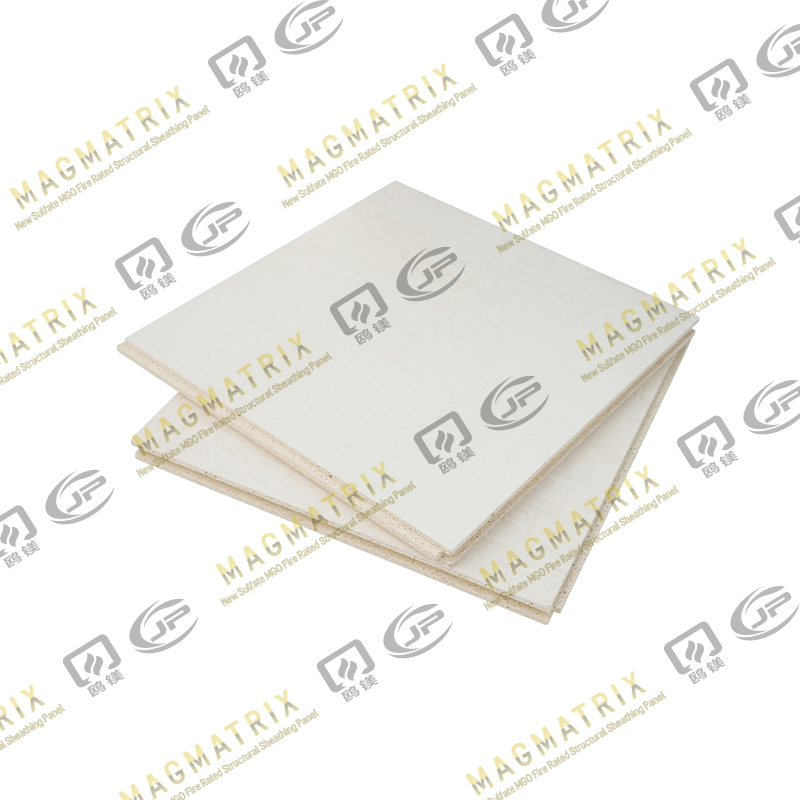
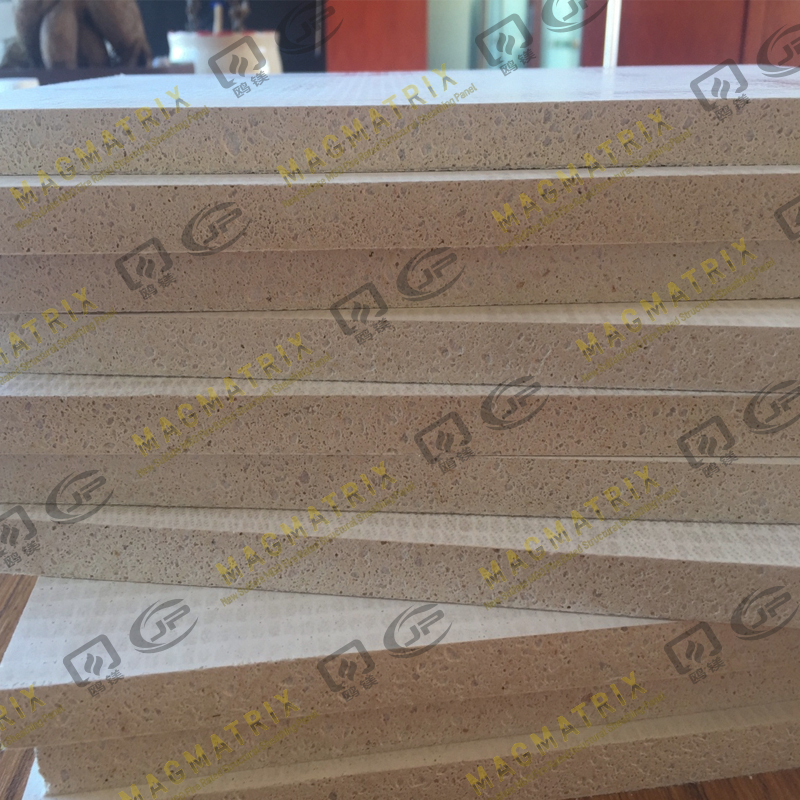
Magnesium oxide panels, often called MGO boards, are rigid cementitious sheets made from magnesium oxide powder, magnesium sulfate, water, lightweight fillers, and reinforcing fibers. The slurry is formed, pressed, cured, and dried into a dense mineral panel that can be cut, screwed, routed, painted, or tiled like a conventional board.
Because the core is inorganic, there is no paper facing and no wood fiber in the panel. Mold, termites, and fire have nothing to feed on. That single fact drives most of the performance differences you will see in comparison testing.
How Magnesium Oxide Panels Compare With Drywall, Plywood, and OSB
The shortest honest comparison is this: MGO panels are heavier and harder to cut than drywall, but they beat it on moisture, impact, and fire. They are less forgiving than plywood on the jobsite, but they do not combust, delaminate, or grow mold the way wood-based sheathing does. The table below summarizes what the properties mean in real assemblies.
Property comparison for typical wall and floor sheathing applications; actual performance varies by product grade and formulation.
| Property |
Magnesium Oxide Panel |
Drywall (Gypsum) |
Plywood / OSB |
| Fire performance |
Noncombustible mineral core; supports 1-hour and 2-hour rated assemblies when tested to ASTM E119 |
Paper facers burn; Type X only delays heat transfer |
Combustible; adds fuel to the fire load |
| Moisture behavior |
Low water absorption in sulfate-based boards; no delamination or edge swell |
Sags, swells, and peels when exposed to water |
Edge swell, delamination, and rot after repeated wetting |
| Mold and mildew |
Mineral core provides no food source for mold |
Paper facers feed mold and mildew |
Organic fibers support fungal growth in damp zones |
| Structural strength |
High density, good flexural strength, and racking shear performance when engineered |
Low impact resistance; not structural |
Strong when dry; strength drops sharply when wet |
| Indoor air quality |
Low emissions; screened against 219 SVHC substances |
Generally low emissions |
Adhesives and resins may release formaldehyde and aldehydes |
The pattern is consistent: magnesium oxide panels trade handling convenience for a large gain in fire, moisture, and durability performance. The risk is not the chemistry of the category; it is the quality of the specific board being specified.
The Failure Stories Are Real, and They Point to a Specific Cause
If you have seen negative job reports about MGO panels, the symptoms were probably weeping, efflorescence, corroded fasteners, cracked tile, or boards that crumbled at the edges. Those symptoms are almost always traced back to one thing: a chloride-based formula. Magnesium chloride reacts with humidity and with steel fasteners, leaving the board damp on the surface, staining the face, and weakening the coating of screws in the assembly.
Sulfate-based boards replace magnesium chloride with magnesium sulfate, which eliminates the chloride reaction. That is the technical reason sulfate MGO products such as the BMSC 517 new sulfate MgO board family exist, and it is why manufacturers who switched to sulfate chemistry are confident about long-term performance in humid climates.
Moisture absorption is still a real consideration even with a good formula. No MGO board is completely waterproof; edges cut on site should be sealed, and exterior installations need the same weather-resistance detailing as any other sheathing. A quality board absorbs much less water than gypsum and recovers without permanent damage, but it is not a substitute for a proper weather barrier.
Quality control is the third issue. Because MGO is a manufactured mineral board without a single global standard, composition varies from factory to factory. The practical answer is to verify documented third-party test reports before you approve a supplier, so the batch you receive matches the performance data shown to you.
How to Select a Magnesium Oxide Panel That Will Last
Use the procurement checklist below when you evaluate suppliers. Each step closes a gap that has caused real project failures.
- Specify sulfate, not chloride. Ask the supplier directly whether the board uses magnesium sulfate or magnesium chloride in the formula. If the answer is slow or vague, move on.
- Demand the test file. Look for ASTM E136 noncombustibility data, ASTM E84 surface-burning results, ASTM E119 assembly ratings, ASTM D2718 shear data, and an SVHC screening report. The documents should come from an independent laboratory, not from a marketing sheet.
- Inspect the core. Cut a sample and look for uniform density, no voids, and consistent thickness across the sheet. Low-cost boards often have a soft core or variable thickness that shows up as lippage in tile installations.
- Do a controlled wet test. Stand a sample in water for 24 hours, then measure thickness and check for weeping. A sulfate-based board should show minimal change.
- Confirm fastening and edge details with the manufacturer before ordering, and keep the installation guidance available for the crew.
For exterior walls, you want a panel that has real assembly test data behind it. A fire-rated MGO wall sheathing board with ASTM E119 documentation is the kind of product that lets an architect close the specification without layering on extra fire protection.
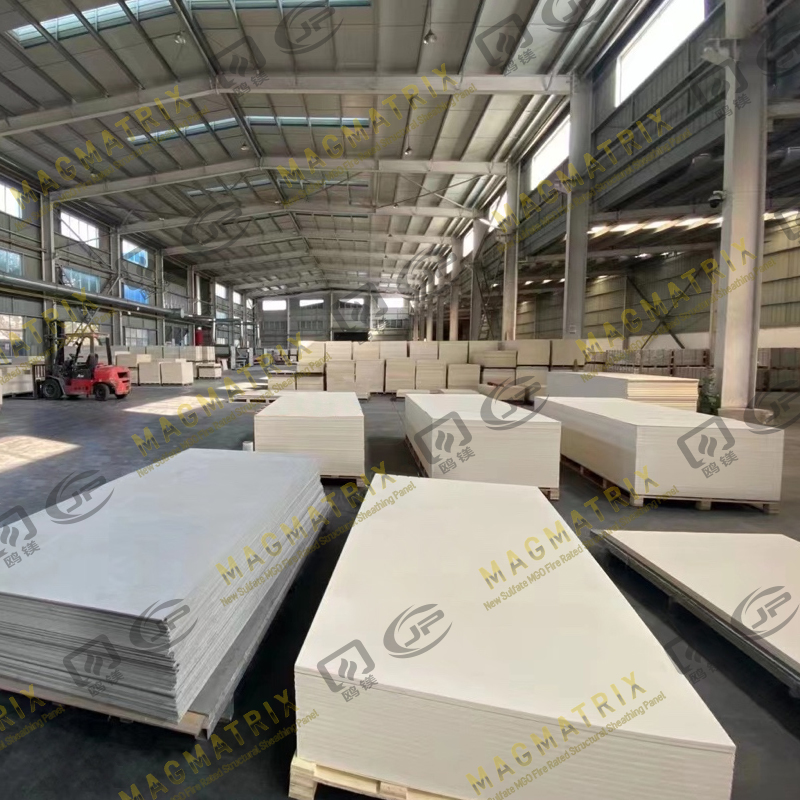 MagMatrix MgO Wall Sheathing Board Manufacturers, FactoryJinpeng are MGO Wall Board Manufacturers and Magnesium Oxide Sheathing Board Factory in China, Custom Magnesium Oxide Wall Sheathing Boar...View Product →
A practical framework for vetting MGO panels, published in our technical blog, walks through these same five checks with sample documents and red flags to watch for during factory audits.
Where Magnesium Oxide Panels Earn Their Keep
In practice, the material performs best where fire, moisture, and durability all matter at the same time.
Exterior wall sheathing
MGO boards provide a stable, noncombustible substrate behind cladding, brick, or weather-resistive barriers. Steel stud assemblies can reach 2-hour fire ratings with the right panel design, and the board resists the rain exposure that has always been the weak point of plywood sheathing in coastal and high-humidity regions.
Floor decks and subfloor sheathing
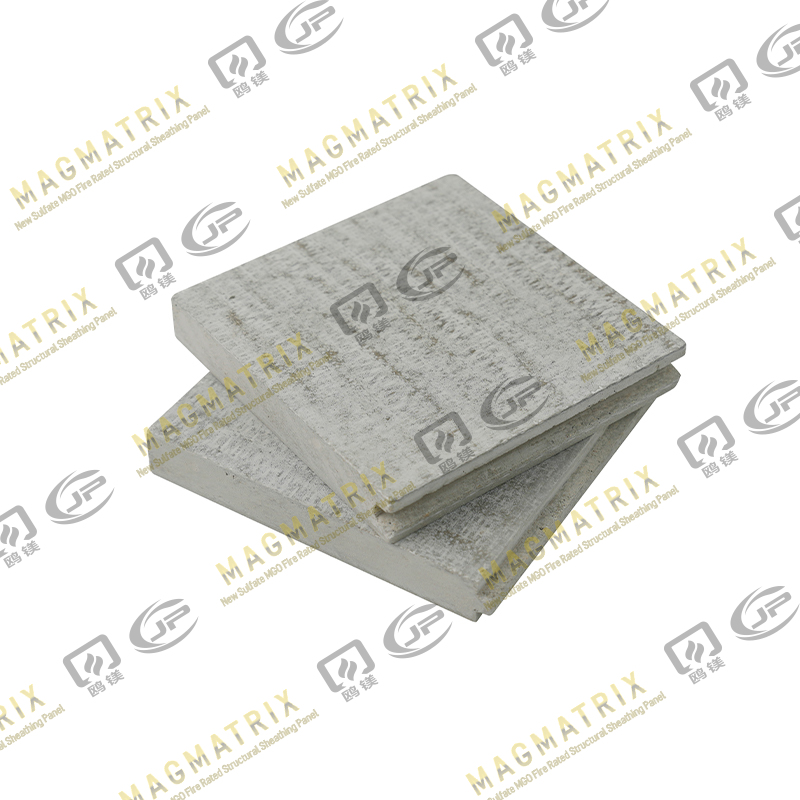
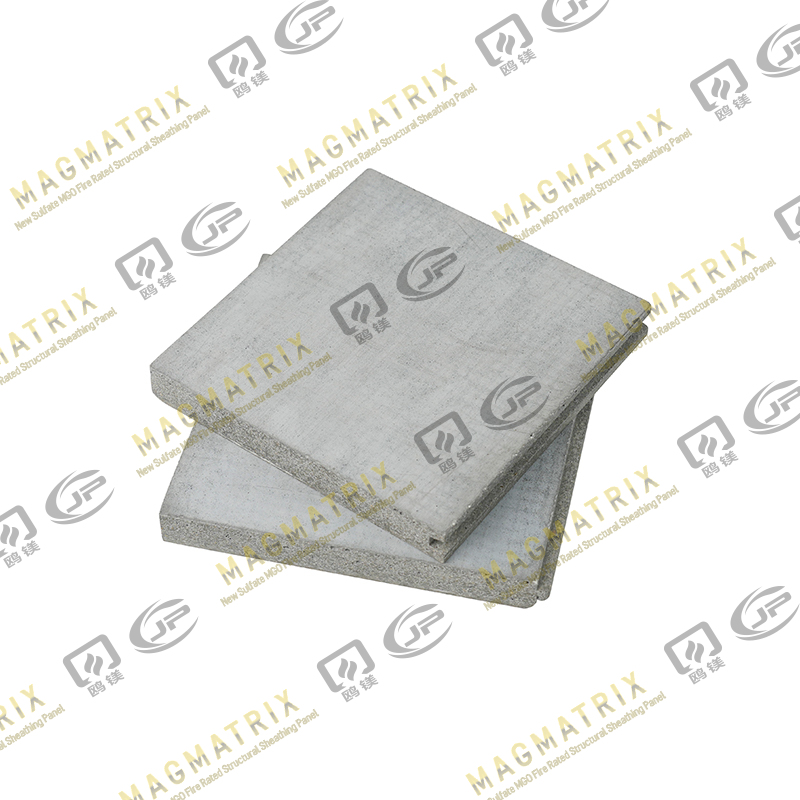
On the horizontal plane, MGO subfloor panels give you the shear resistance of a structural panel without the fire load of a wood-based product. This matters in multifamily buildings where the floor-ceiling assembly has to separate units for a full hour or more. For floor decks, a dedicated MGO subfloor sheathing board delivers the point-load performance and moisture tolerance that a plywood deck loses when the building envelope is open.
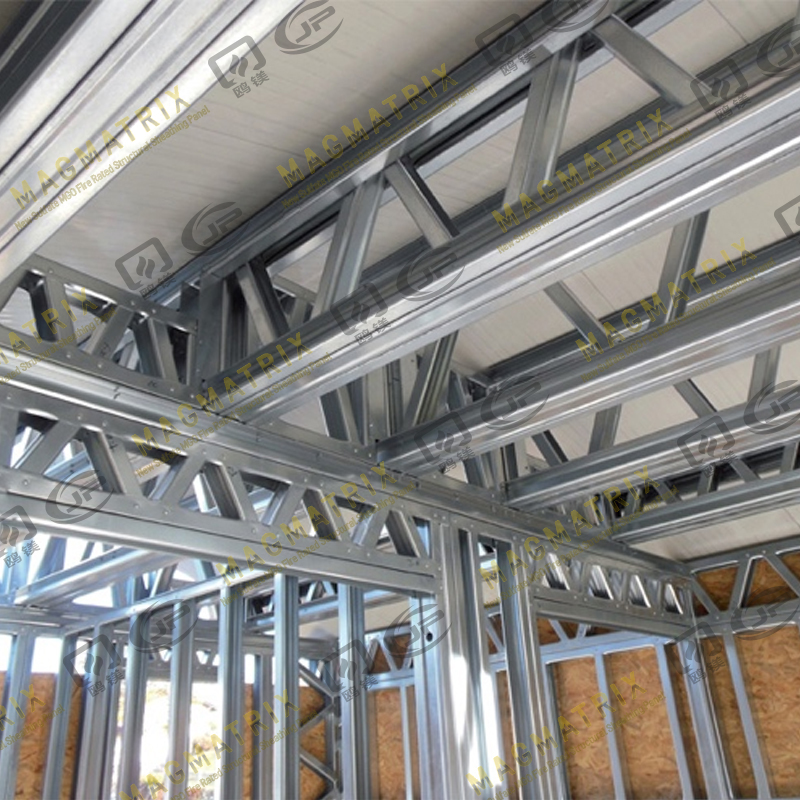 MGO Subfloor Panel Manufacturers, MGO Flooring Board FactoryJinpeng - MagMatrix MgO Subfloor Sheathing Board Manufacturers and MGO Subfloor Panel Factory in China, Supply Custom MGO Flooring Board...View Product →
Underlayment for finished floors
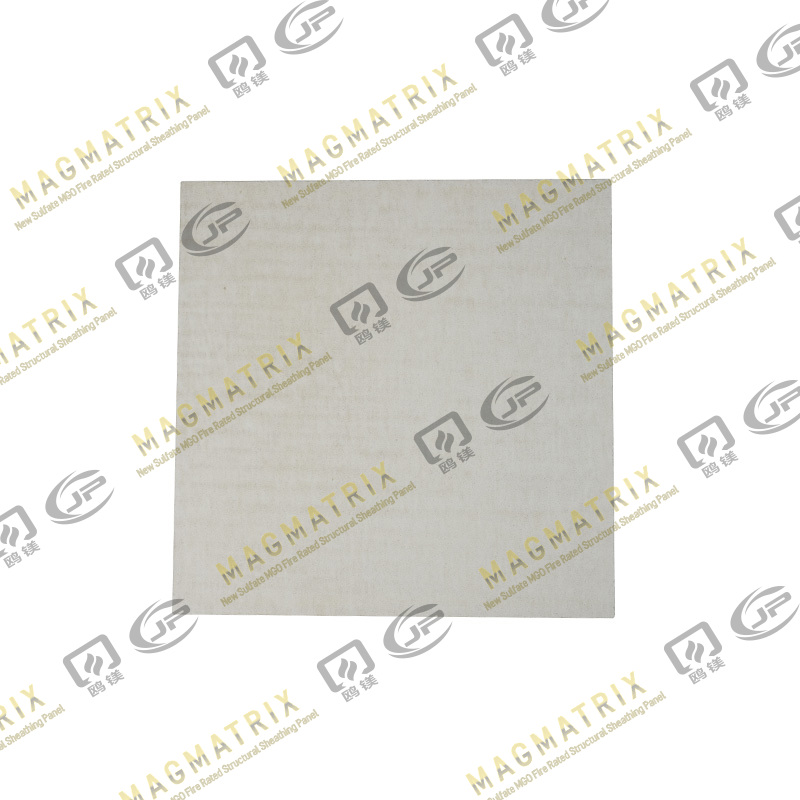
Tile, luxury vinyl, and engineered wood all require a substrate that stays flat and dimensionally stable. An MGO underlayment panel with tight thickness tolerance prevents lippage and telegraphing, and it gives tile installers a mold-resistant, water-tolerant base in wet areas.
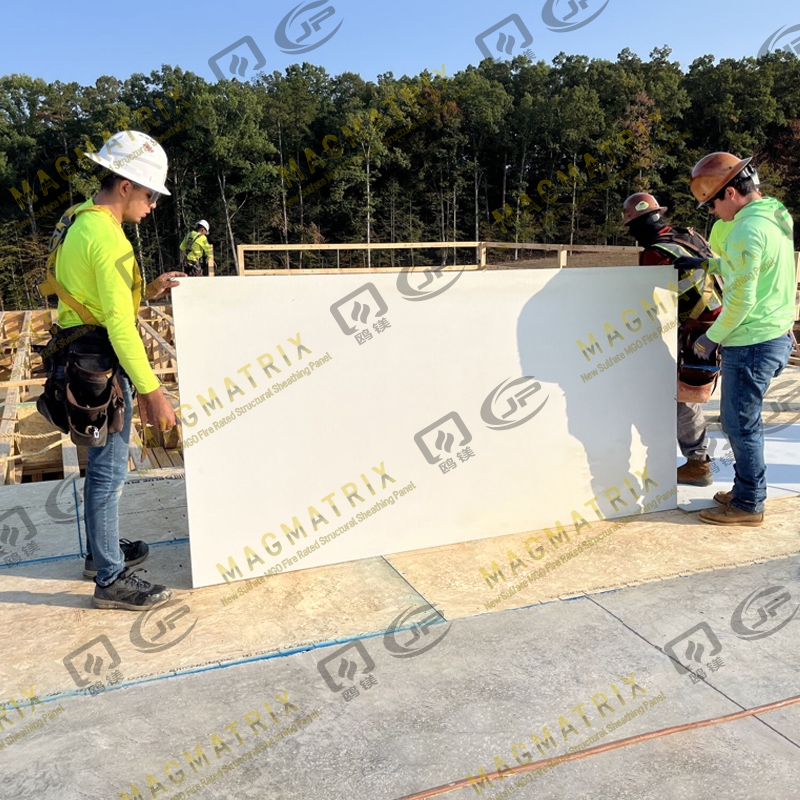 MgO Underlayment Panel Manufacturers, Underlayment Board SuppliersMagMatrix MgO Underlayment Board Manufacturers, Jinpeng are China MgO Underlayment Panel Suppliers and Custom MgO Underlayment Board Fact...View Product →
Modular and prefabricated construction
Factory-built wall, floor, and ceiling panels get handled many times before they reach the site. MGO boards withstand transport vibration, temporary weather exposure, and the rough handling of craning into place better than paper-faced or wood-based alternatives.
The Test Standards That Should Be in a Supplier's File
Anyone can name-drop a standard; the value is in the actual report. The table below lists the documents to request and why each one matters.
Key test methods referenced by reputable MGO panel manufacturers; the report is only meaningful when it matches the formulation delivered to your site.
| Standard |
What It Measures |
Why It Matters |
| ASTM E136 |
Noncombustibility of the core material |
Confirms the board does not contribute to a fire |
| ASTM E119 |
Fire-resistance of complete wall or floor assemblies |
Supports 1-hour and 2-hour rated designs in wood or steel stud systems |
| ASTM E84 |
Surface burning characteristics (flame spread, smoke) |
Needed for code compliance in many interior applications |
| ASTM D2718 |
Shear resistance of structural panels |
Indicates whether the board can act as a structural diaphragm |
| SVHC screening |
Presence of 219 substances of very high concern |
Supports indoor-air-quality claims and green building goals |
Batch traceability is the final check. The report in the marketing binder is credible only if the board on the truck comes from the same formulation that was tested. That is what separates a reliable MGO supply partner from a broker reselling mixed panels.
No construction product fixes a bad detail, and magnesium oxide panels are not an exception. But when the formula is sulfate-based, the test documents are real, and the installation follows the manufacturer's guidance, MGO panels are among the most predictable cementitious boards you can put into a wall or floor assembly. The two-winter failures that kept contractors loyal to plywood came from the old chloride boards. The current generation is a different product, and it behaves like it.



 English
 русский
 Español
 BMSC 517 New Sulfate MgO Board
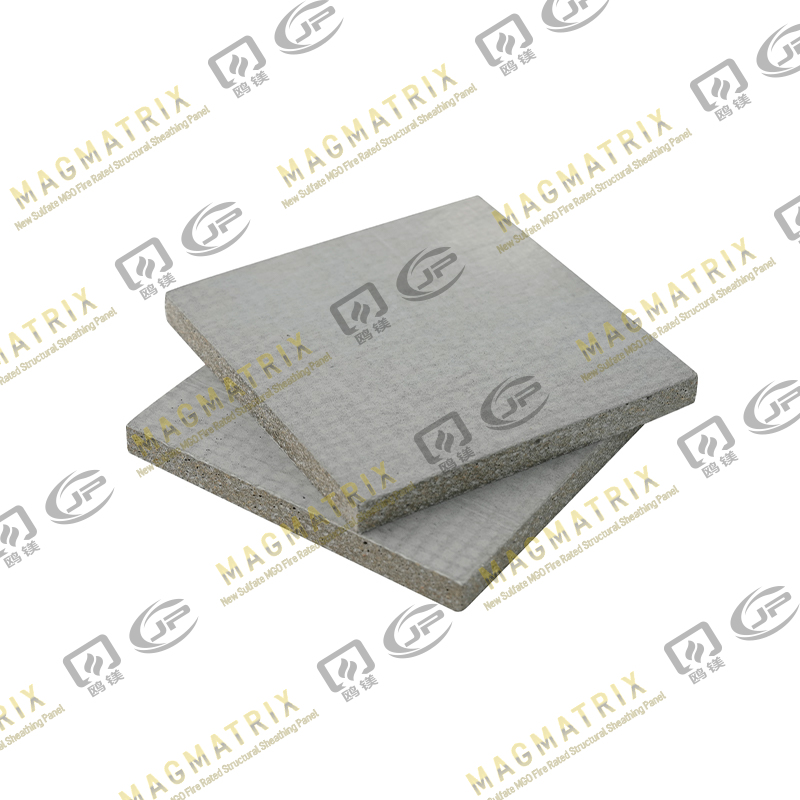 Multi-Support MgO Wall Sheathing Board
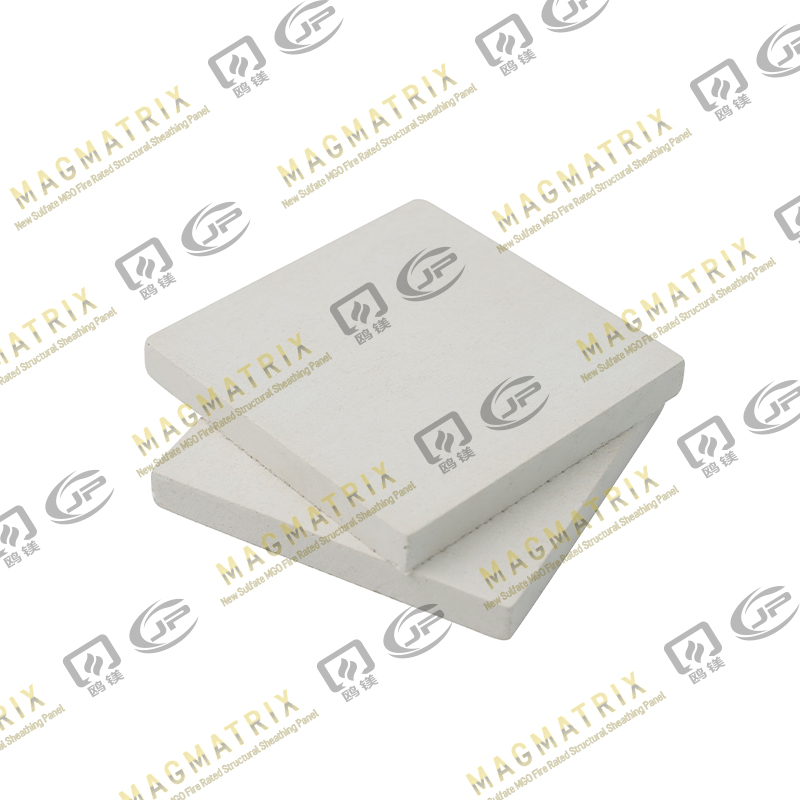 Perseverance MgO Wall Sheathing Board
 Multi-Support MgO Subfloor Sheathing Board
 Perseverance MgO Subfloor Sheathing Board
 MagMatrix MgO Underlayment Panel/board