Picture this: your lamination line stops because a batch of 18 mm substrate boards warped after the hot press cycle. The decorative HPL film was good, the adhesive was correct, but the base board could not hold its shape once heat and moisture were applied. That is exactly the problem an MgO board for decorative lamination is designed to solve. Magnesium oxide boards based on a stable sulfate formula deliver a rigid, flat, and fire-resistant core that stands up to the heat, steam, and pressure used in decorative lamination.
What Is an MgO Board for Decorative Lamination?
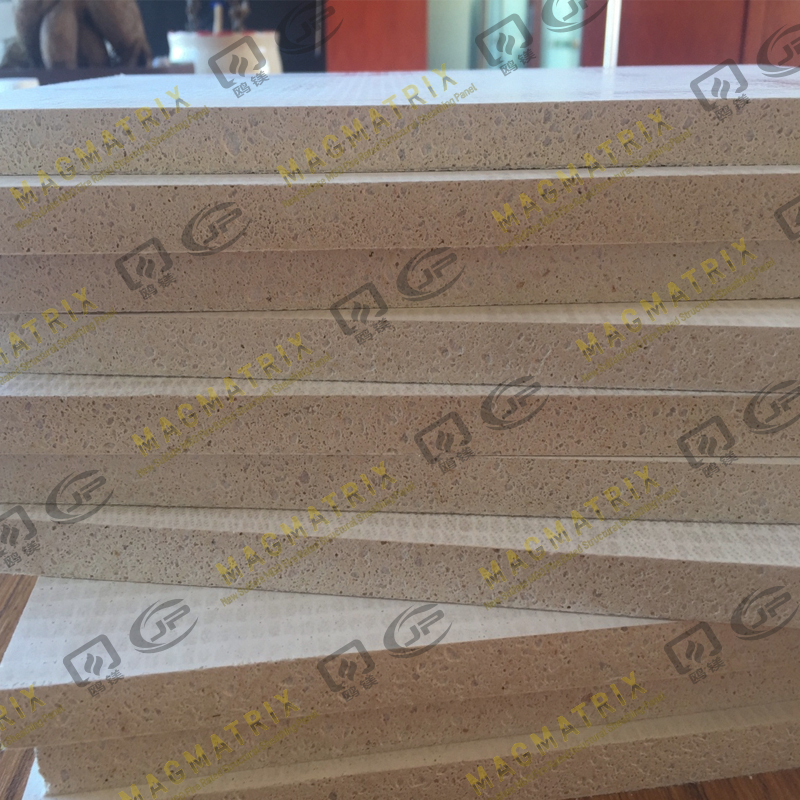
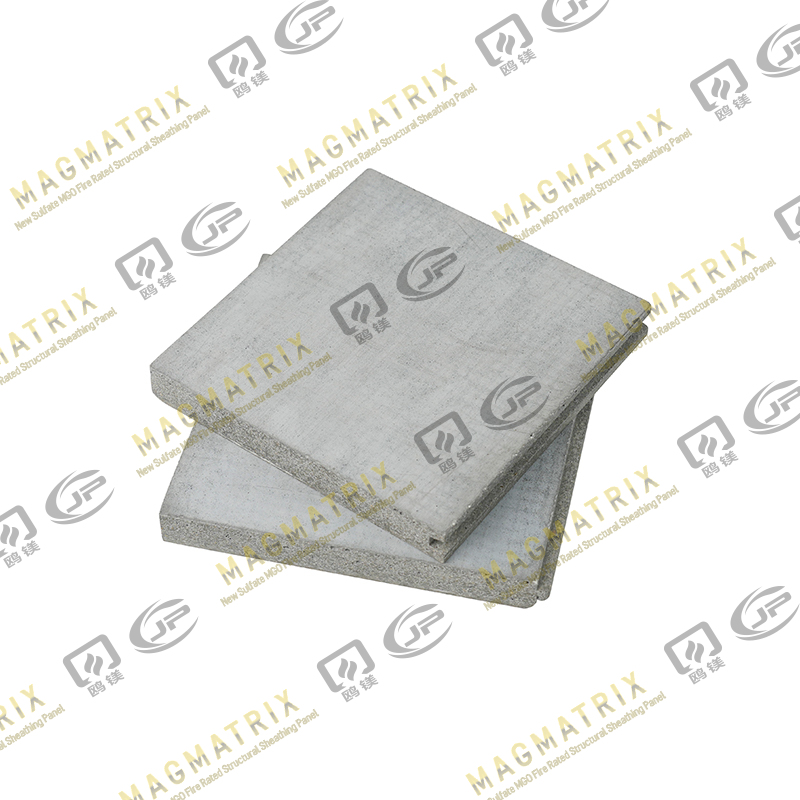
An MgO board for decorative lamination is a non-combustible inorganic panel made from magnesium oxide, a magnesium sulfate binder, lightweight fillers, and glass fiber mesh reinforcement. The board is sanded on both faces to create a clean, even surface that can accept high-pressure laminate, wood veneer, PVC film, or interior wall coatings. It is not the same as a structural sheathing board: decorative lamination grades emphasize flatness, caliper consistency, and a sanded face that produces the same bond across the full panel.
In a typical manufacturing process, the board is cut to size, dust is removed, adhesive is applied, and the decorative layer is pressed onto the panel either in a cold press or a heated press. The substrate must tolerate the heat and moisture of the press without expanding unevenly. That is where sulfate-based MgO board differs from other building panels.
Our MgO board for interior decorative lamination is made in that way: stable core, sanded faces, and controlled thickness for clean lamination.
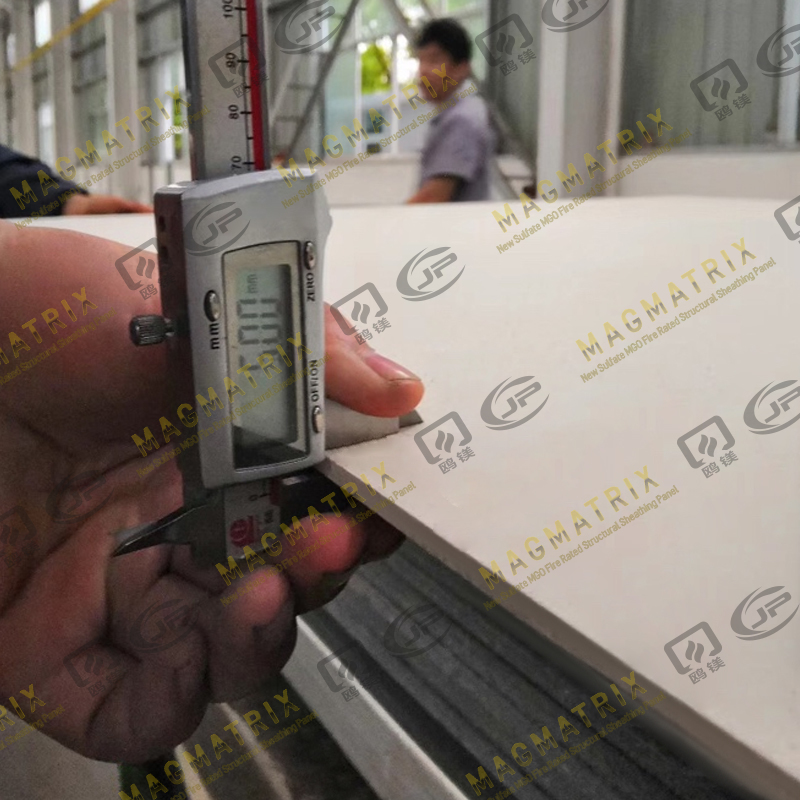 OuMei MgO Backer Board for Fire Retardant Decorative LaminationJiangsu Jinpeng Supply Custom MgO Board for Decorative Lamination, Fire Retardant Decorative Lamination MgO Backer Board Manufacturers an...View Product →
Key Properties That Determine Lamination Results
A board that looks good in a warehouse can still produce rejects after pressing. Before you commit to a production order, verify these six properties.
Table 1: Lamination-critical parameters to review before buying an MgO board for decorative lamination
| Property |
Why it matters |
How to evaluate |
| Surface flatness |
The decorative film must contact the substrate evenly; high or low spots create shiny patches and bonding voids. |
Measure with a straightedge and feeler gauge; inspect the sanding pass on every incoming batch. |
| Thickness tolerance |
Uneven caliper shows through as telegraphing on thin laminates and complicates edge banding. |
Check thickness at multiple points; a reliable grade holds a tight tolerance across the panel. |
| Dimensional stability under heat |
During hot pressing, the core must not warp, creep, or expand. |
Ask the supplier for linear expansion data and humidity conditioning behavior. |
| Moisture resistance |
Moisture absorbed by the edge or core can trigger adhesive failure and edge swelling after lamination. |
Expose edge samples to high humidity and inspect for softness or salt bloom. |
| Internal bond strength |
The surface layers must not peel away from the core when the laminate shrinks after pressing. |
Use binder performance reports and bond testing on finished laminate samples. |
| Fire performance and low emissions |
For interior public spaces, you need a board that meets the project’s fire class and indoor air quality requirements. |
Request ASTM E84 and ASTM E136 results, plus an SVHC report. |
If a supplier cannot provide third-party documentation for fire performance, formaldehyde, and heavy-metal content, treat the claim as unresolved. Review the actual reports before placing an order.
Sulfate-Based MgO Board vs. Chloride-Based Alternatives
Not every magnesium oxide board performs equally. Some magnesium boards on the market use magnesium chloride as the primary binder. Chloride-based products can absorb humidity from the adhesive or from the room, produce salt efflorescence on the surface, and corrode metal fasteners. In decorative lamination, this appears as white deposits under the film, poor adhesion, or a weak edge seal.
The BMSC 517 new sulfate formula used by Jinpeng Group is different. It replaces the chloride pathway with a stable magnesium sulfate system, which reduces the risk of moisture absorption and salt migration. That makes it a safer substrate for long-term interior lamination projects.
For a more detailed comparison of the selection factors for fire-retardant panels, see our selection guide for fire-retardant decorative lamination boards.
Using MgO Board in Decorative Walls, Door Skins, and Furniture
The most common uses are door skins, interior partition walls, feature walls, column cladding, and custom furniture. Because the board is non-combustible, it helps an interior project meet fire codes without giving up a finished decorative surface. It also handles the humidity that sometimes appears around windows, kitchens, and bathrooms.
If your project involves interior feature walls, our article on three ways MgO board decorative walls can improve your space shows how to combine the board with paints, veneers, and wall panels.
For projects that need a finished surface with one less lamination step, the pre-finished fire-resistance interior decorative board gives you a factory-applied color surface while keeping the same MgO core benefits.
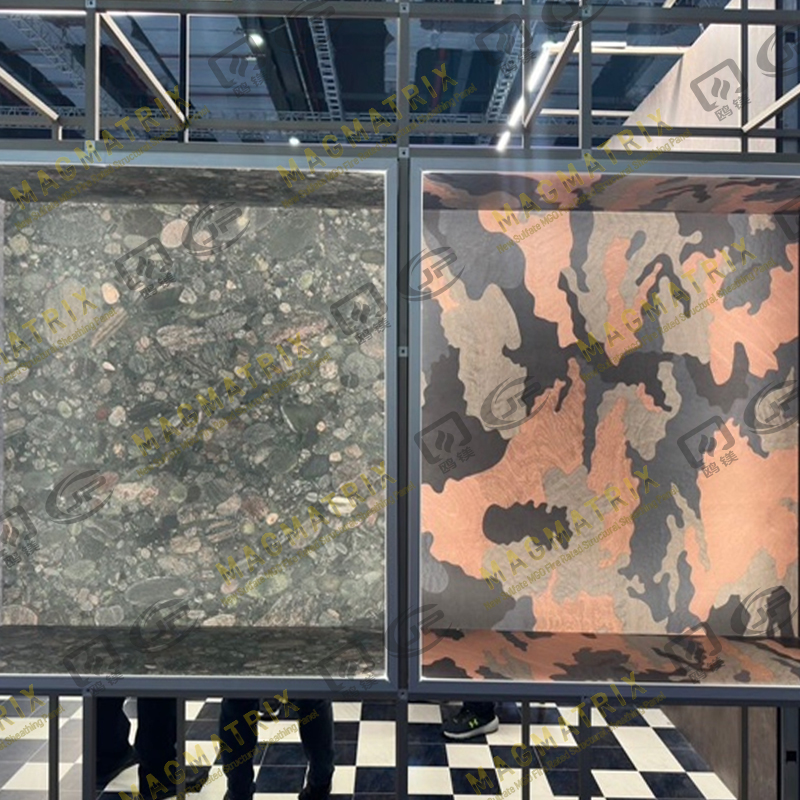 OuMei MgO Fire Resistance Interior Decorative Wall Board ManufacturersJiangsu Jinpeng Fireproof Board Co., Ltd. are Custom MgO Fire Resistance Interior Decorative Wall Board Manufacturers and Suppliers, Fact...View Product →
Process Tips for Reliable Lamination
Successful lamination starts before the adhesive is applied. Store the boards in a dry area at the same temperature as the lamination shop. If the board has been shipped in cool weather, let it condition for at least 24 hours. Then cut with a carbide-tipped or diamond blade, remove dust with a vacuum or brush, and inspect the edges for chipping or loose particles.
Use an adhesive matched to a moisture-resistant inorganic substrate. Moisture-cured polyurethane and structural epoxy adhesives generally provide a stronger bond than simple contact adhesive when the substrate is non-porous. Apply an even coat and avoid excessive clamping pressure that could compress the board.
During hot pressing, keep the temperature within the range recommended by your adhesive supplier. Because MgO board is inorganic, it conducts heat differently from plywood or MDF. Run a small pilot test before a full production batch to record the ideal press time, temperature, and pressure for your film and glue system.
Sourcing Criteria and Cost Reality
The cheapest board is rarely the cheapest installed. A low-priced chloride-based board can create rejects, edge swelling, and salt bloom. The cost of wasted film, adhesive, and production time is often higher than the saving on substrate price.
When you evaluate a supplier, ask for actual plant name, production capacity, test reports, and a description of the formula. Jinpeng Group has focused on magnesium oxide and sulfate board development since 2015 and operates a 100,000-square-meter factory in Taixing. The third-party test reports cover ASTM E136 non-combustibility, ASTM E84 surface burning characteristics, 2-hour fire resistance in wall assemblies, and a 219-item SVHC screening report. These documents allow a procurement team to compare the product with their project specification.
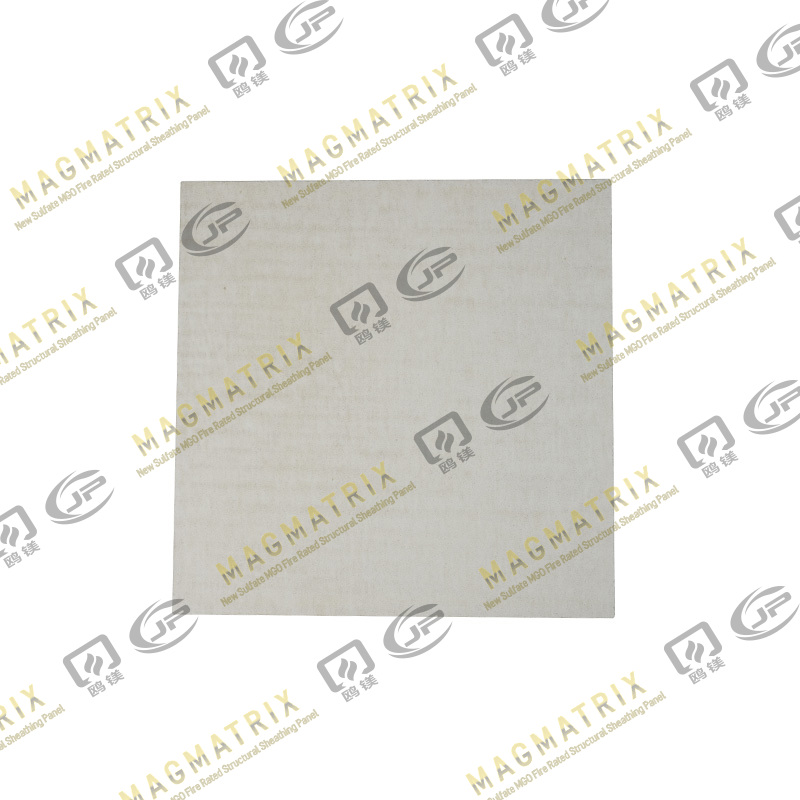
Also evaluate the board visually: the sanded face should be uniform, the core should not show large voids, and the edge should be clean after cutting. Ask for a sample from the production lot you will actually receive, not a separated quality control sample.
An MgO board for decorative lamination is more than a surfacing substrate; it is a fire-rated, dimensionally stable base that prevents the most common lamination defects. Start with a pilot test using your own adhesive and decorative film, then inspect the finished panel for flatness, adhesion, and edge quality. By choosing a verified sulfate-based board and testing it under your actual press conditions, you avoid the risk of discovering problems after the laminate has already been produced.



 English
 русский
 Español
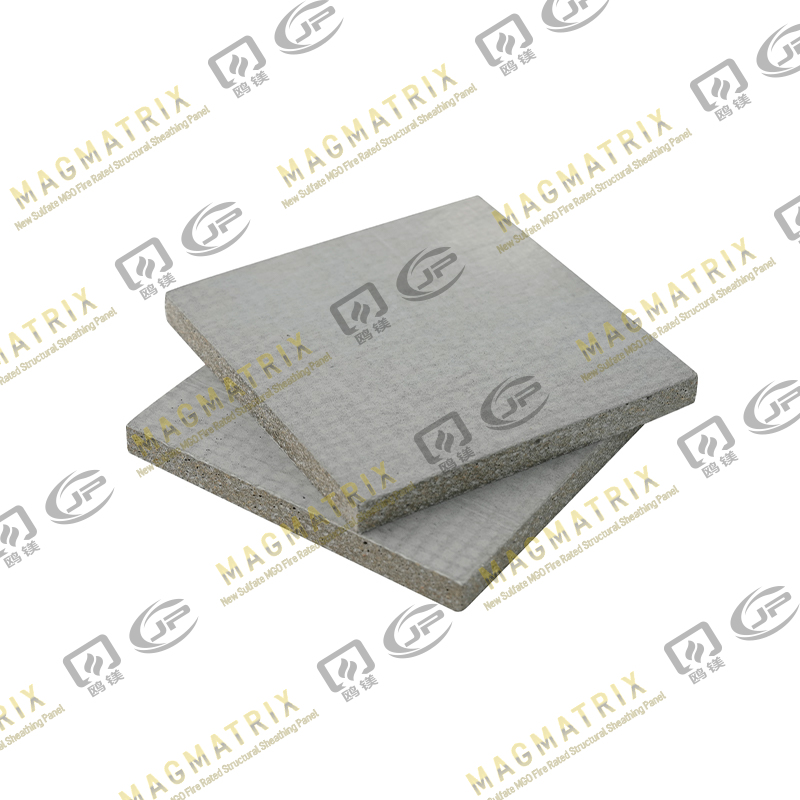
 BMSC 517 New Sulfate MgO Board
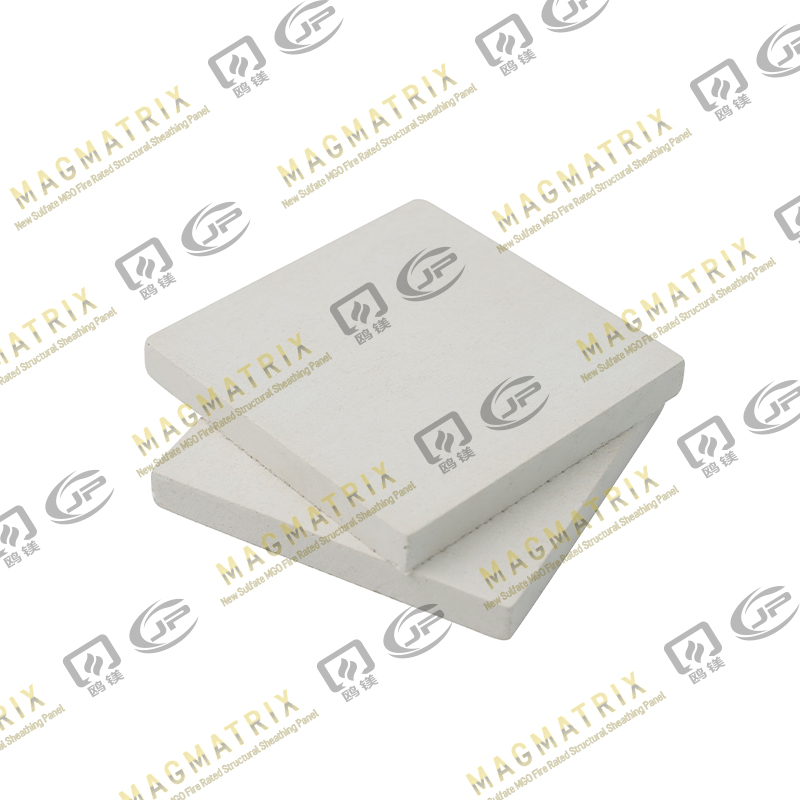
 Multi-Support MgO Wall Sheathing Board
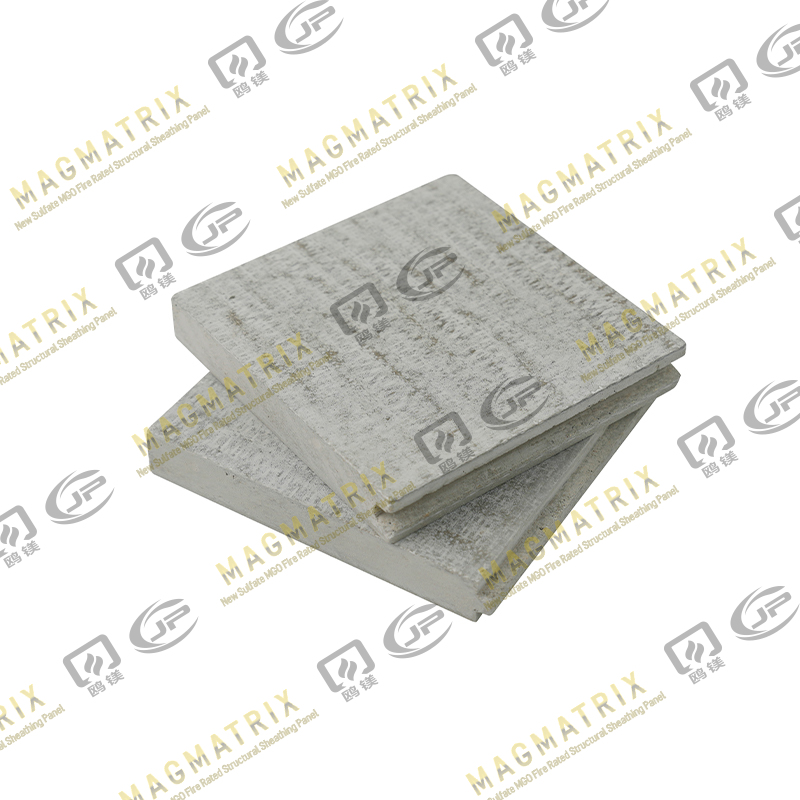
 Perseverance MgO Wall Sheathing Board
 Multi-Support MgO Subfloor Sheathing Board
 Perseverance MgO Subfloor Sheathing Board
 MagMatrix MgO Underlayment Panel/board