Most decorative panel failures come down to one thing: the wrong substrate. Laminate peels, edges blister, screws corrode — and the root cause is almost always the backer board absorbing moisture or transferring chloride ions onto adjacent metal. Choosing an MgO backer board specifically engineered for decorative lamination eliminates these failure modes at the source.
Why MgO Outperforms Gypsum and Cement as a Lamination Substrate
Gypsum board softens when exposed to moisture, which undermines adhesive bonds over time. Cement board is dimensionally stable but heavy, dusty to cut, and offers limited fire resistance beyond passive protection. MgO board — particularly sulfate-based MgO — combines the structural density needed for laminate adhesion with a surface that stays flat in humid environments.
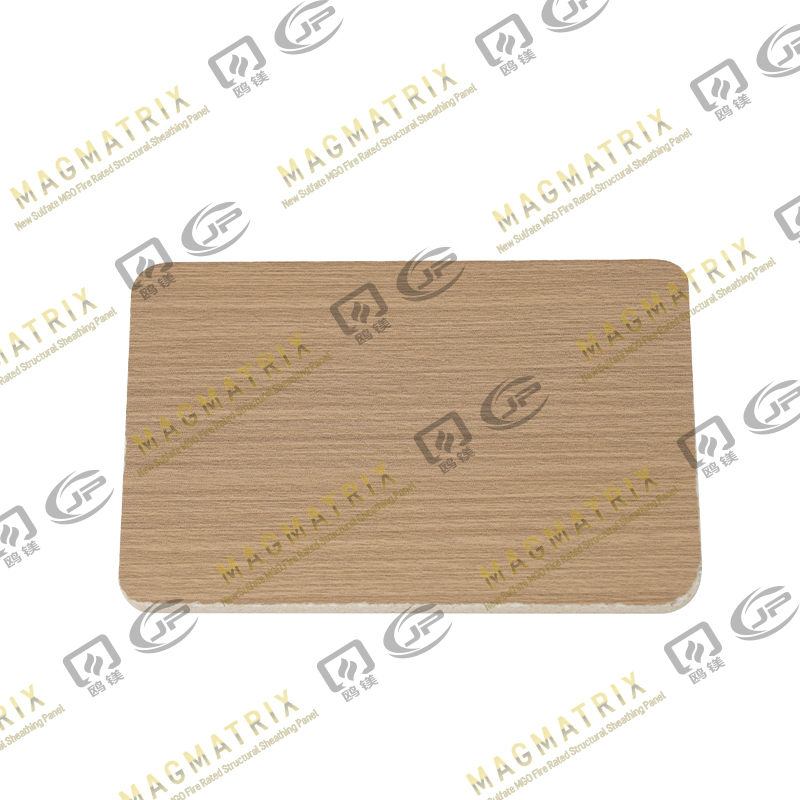
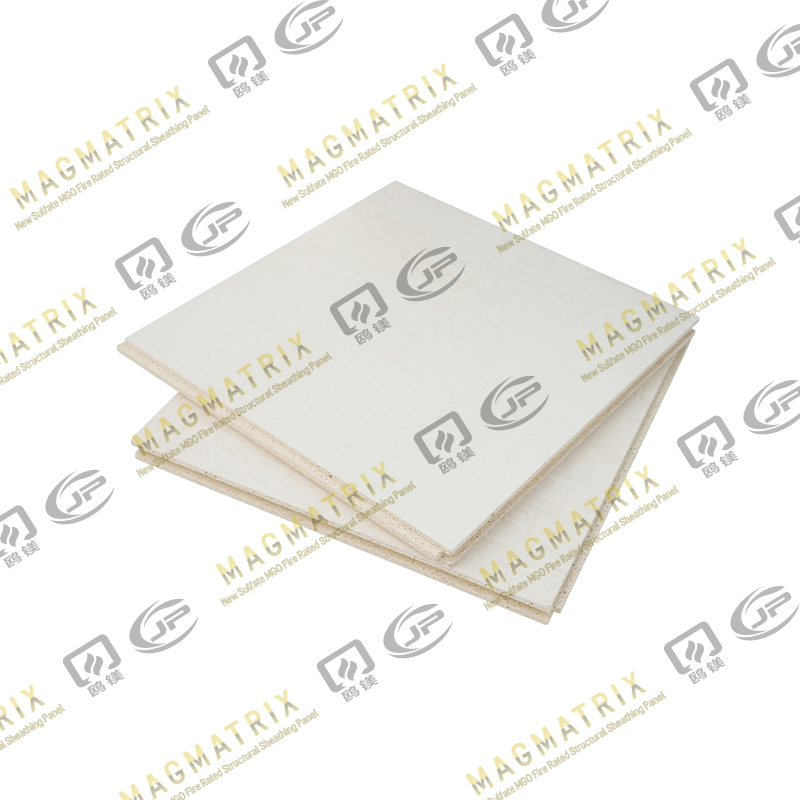
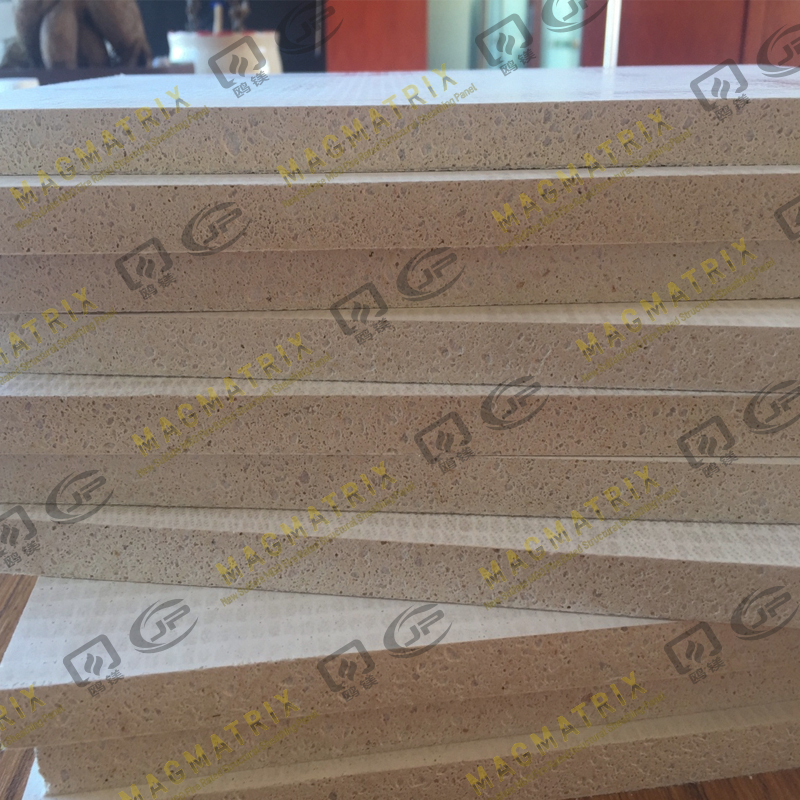
The sanded face of a purpose-built MgO backer board for fire retardant decorative lamination provides consistent porosity for adhesive penetration. This means wood veneers, high-pressure laminates (HPL), vinyl films, and melamine papers all bond securely — without the bubbling or delamination caused by substrate moisture movement.
Fire Resistance: What the Certifications Actually Mean
MgO boards are inherently non-combustible. Under ASTM E119 standard fire testing for building construction materials, MgO wall assemblies have been tested to achieve up to 2 hours of fire resistance — meaning the assembly maintains structural integrity and limits heat transfer for that duration. For laminated applications, this translates directly: the decorative finish is backed by a substrate that will not feed a fire, collapse a partition, or release toxic gases.
For projects requiring compliance with fire codes — commercial offices, hotels, hospitals, school interiors — this is not a bonus feature. It is a specification requirement. Using a certified MgO backer board means the finished laminated panel can be presented alongside test documentation (such as Intertek CCRR or ASTM E84 reports) rather than relying on the laminate manufacturer's fire data alone.
Sulfate vs. Chloride MgO: A Critical Distinction for Lamination Projects
Not all MgO boards perform equally. Chloride-based MgO boards — still common in the market — are prone to moisture absorption and chloride ion migration. In laminated applications, this causes screw corrosion, adhesive failure, and efflorescence visible through surface films. Sulfate-based MgO board eliminates chloride entirely, which is why it is the preferred substrate for decorative lamination in commercial environments.
The distinction matters particularly in kitchens, bathrooms, healthcare spaces, and any high-humidity interior where moisture cycling is routine. Sulfate MgO boards maintain dimensional stability across humidity fluctuations, keeping laminated surfaces flat and joint lines tight.
Where MgO Backer Board for Decorative Lamination Gets Specified
The applications fall into three main categories:
- Interior wall panels and partitions — office lobbies, hotel corridors, hospital corridors, retail interiors. The MgO substrate provides fire protection; the laminate (HPL, PVC, wood veneer, or metallic film) delivers the design finish. The combination meets both aesthetic and fire code requirements in a single assembly.
- Ceilings and soffits — suspended ceiling systems in commercial buildings and theaters that require fire-rated ceiling assemblies. MgO laminated panels are significantly lighter than concrete alternatives and faster to install.
- Furniture and cabinetry substrates — cabinet doors, shelving, and countertops in spaces where fire resistance is mandated, such as school laboratories or hospital casework. The smooth sanded surface accepts the same laminate films used on conventional particleboard, without the formaldehyde off-gassing.
For display and exhibition environments, laminated MgO boards also offer an advantage: they are lightweight relative to their fire performance, reducing freight and handling costs for temporary installations.
Surface Preparation and Lamination: Getting It Right
Even the best backer board produces poor results if the lamination process is rushed. Three steps determine bond quality:
Surface condition: The sanded face must be free of dust, oil, and loose particles before adhesive application. Wipe with a dry cloth; do not wet-clean immediately before laminating, as residual moisture disrupts adhesive cure.
Adhesive selection: Use a contact adhesive or PU adhesive rated for mineral substrates. Standard wood-panel adhesives may underperform on MgO due to the board's surface chemistry. Confirm compatibility with a small test piece before full production runs.
Edge sealing: MgO board edges are more porous than the face. In moisture-prone environments, seal cut edges with a compatible edge tape or sealant to prevent moisture ingress and maintain the integrity of the laminated finish over time.
Cutting MgO boards requires a carbide-tipped blade. Standard wood saw blades dull quickly and produce ragged edges that complicate laminate application. Score-and-snap is possible for thin boards but not recommended for finished lamination work where edge precision matters.
Specifying the Right Board: Key Parameters to Check
Before ordering, confirm these four parameters match your project requirements:
- Base chemistry: Sulfate (MgSO₄) rather than chloride (MgCl₂) for lamination applications
- Surface preparation: Sanded face with thickness tolerance ≤ 0.3 mm for consistent laminate adhesion
- Fire certification: Verify ASTM E119 (2-hour wall assembly), ASTM E84 (flame spread / smoke density), or EN13501-1 A1/A2 depending on your project's applicable code
- Formaldehyde status: Confirm zero formaldehyde content — a requirement for occupied interior spaces in most jurisdictions
Jiangsu Jinpeng's OuMei MgO board for decorative lamination is a sulfate-based board with a factory-sanded face, formaldehyde-free composition, and certifications including Intertek CCRR-0457 and ASTM E119 2-hour assemblies. It is available in custom dimensions for project-specific requirements.
When fire safety and design quality both appear on the specification sheet, MgO backer board is the substrate that handles both — without compromise on either.



 English
 русский
 Español
 BMSC 517 New Sulfate MgO Board
 Multi-Support MgO Wall Sheathing Board
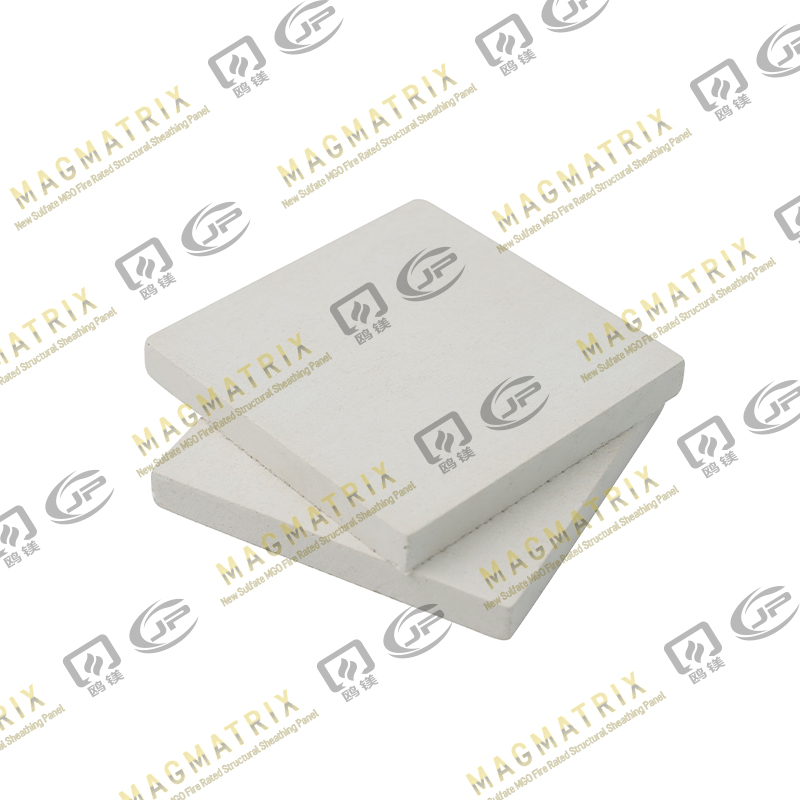 Perseverance MgO Wall Sheathing Board
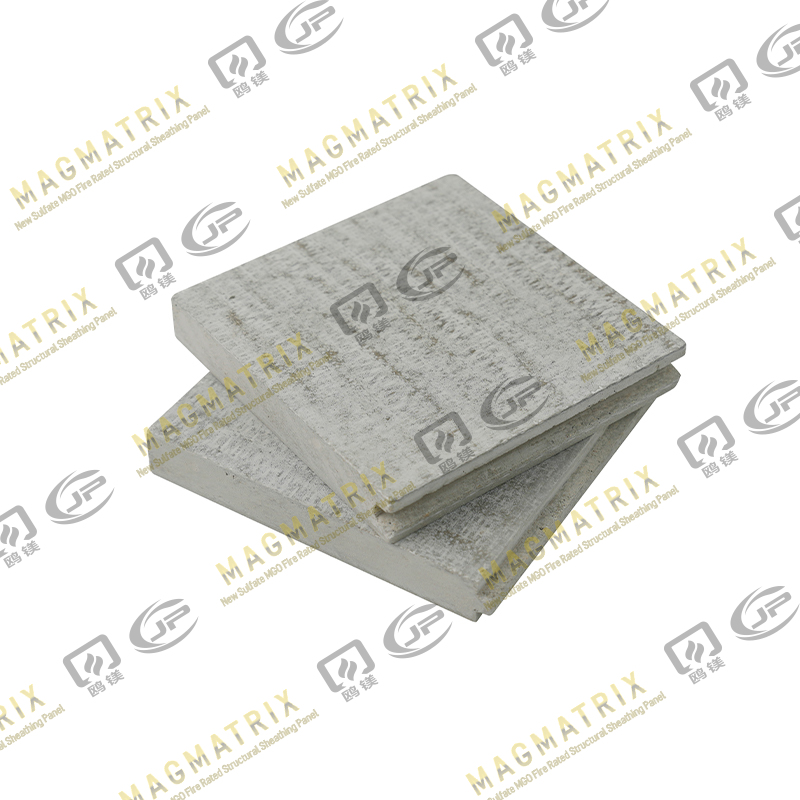 Multi-Support MgO Subfloor Sheathing Board
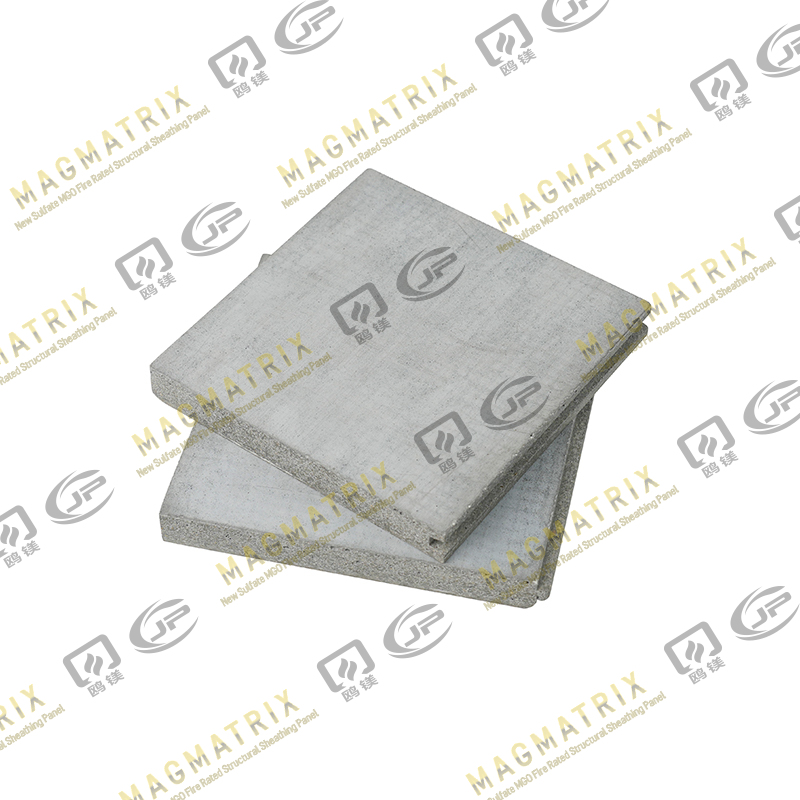 Perseverance MgO Subfloor Sheathing Board
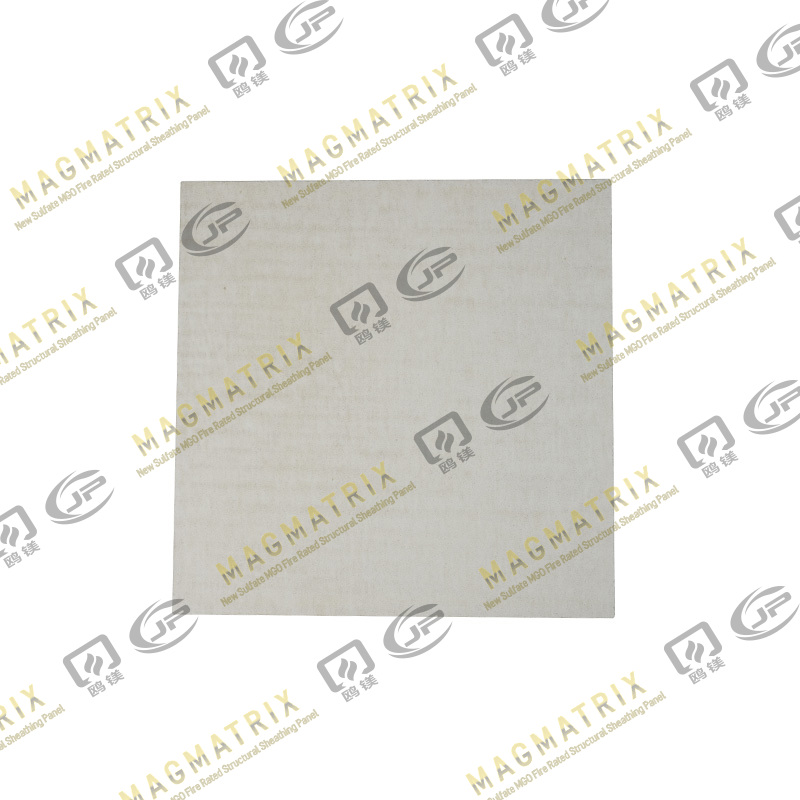 MagMatrix MgO Underlayment Panel/board