Two structural insulated panel quotes can look identical on paper and behave nothing alike on site, and the difference usually sits in the facing. A magnesium oxide SIP panel swaps the oriented strand board skins used on most SIPs for magnesium oxide board, which changes how the assembly responds to fire, how it copes with rain during construction, and which fasteners you can count on over the life of the building. It does not make the panel fireproof, and it does not remove the need to check the board's chemistry before signing a purchase order. Both caveats matter, because the gap between a properly made MgO-skinned panel and a cheap chloride-based one appears years later as rust stains and loose screws, not on delivery day.
What a Magnesium Oxide SIP Panel Actually Is
A structural insulated panel is a sandwich: a rigid insulation core, most commonly expanded polystyrene, graphite EPS, or polyurethane, bonded between two structural skins. In a magnesium oxide SIP, those skins are MgO board rather than a wood composite. The skins do three jobs at once. They carry shear and racking loads, they accept screws and finish systems, and they form the surface that meets a fire first. The core sets the thermal numbers: EPS-based cores sit near R-4 per inch of thickness, while polyurethane cores approach R-6, so the insulation choice still drives energy performance.
Panels arrive factory-bonded and cut to project dimensions, then assemble quickly with splines, cam locks, and surface screws. Walls are the primary use, followed by roofs and, in lighter applications, floors. For anyone who has stood a room-height wall panel in under an hour, the appeal is obvious, and the facing board is what makes that panel a structural unit rather than insulation with decoration.
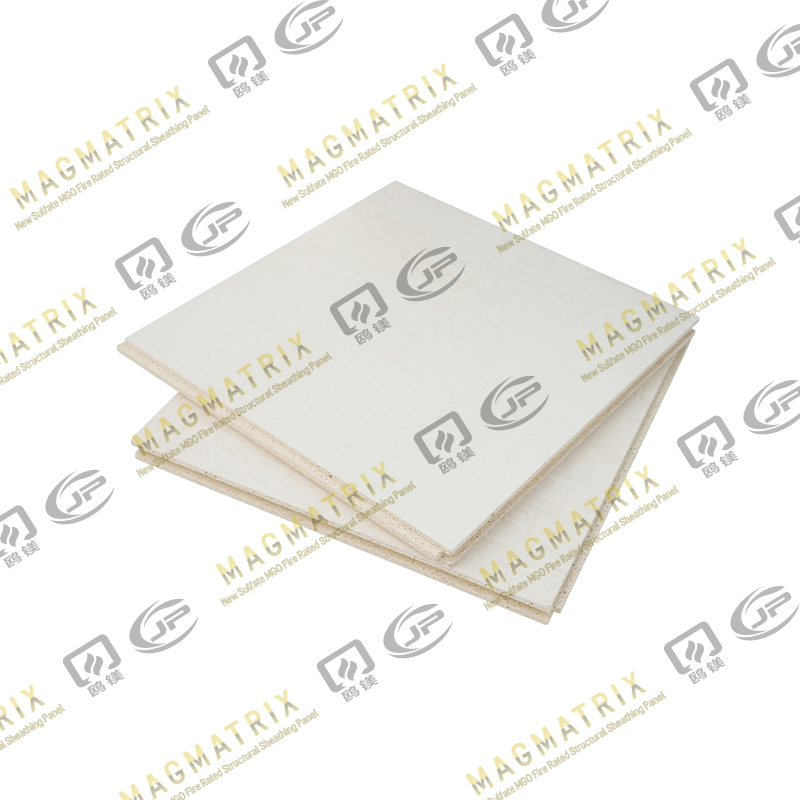
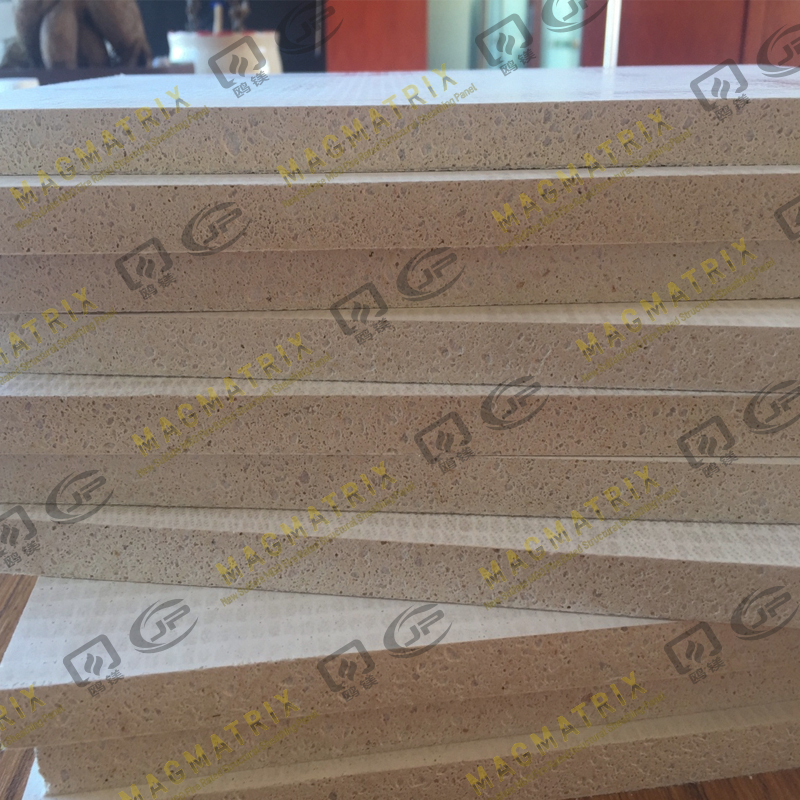
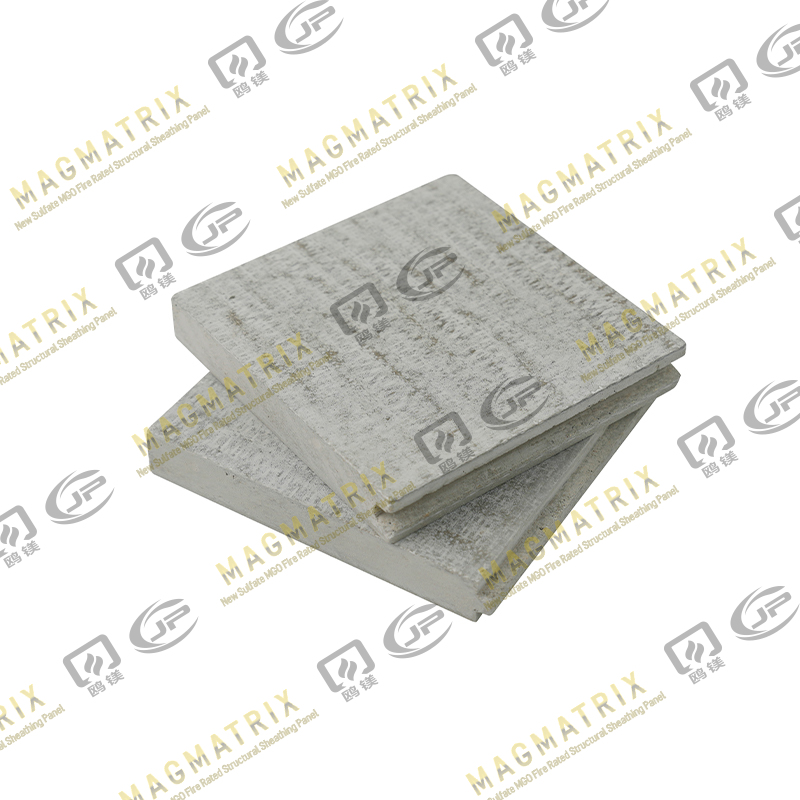
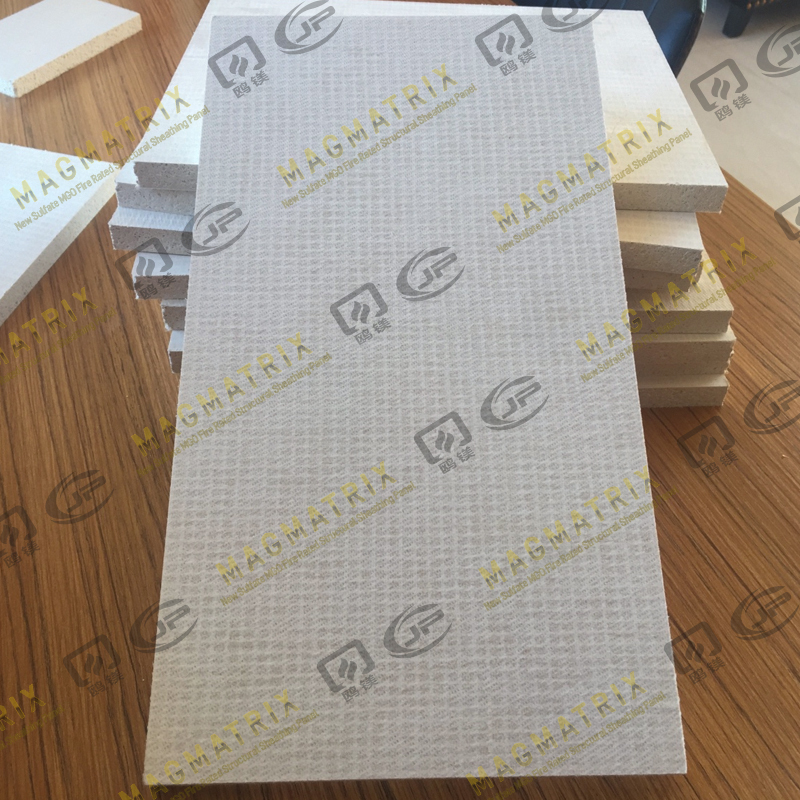 BMSC 517 New Sulfate MgO BoardThis magnesium sulfate cementitious board uses a 5·1·7 phase with low water solubility for moisture resistance. It suits structural panels where non-combustible, Class A-rated skins are specified for wildfire-exposed sites.View Product →
Fire Performance: What the Skins Change, and What They Do Not
The headline fact is that MgO board passes ASTM E136, the standard test for non-combustibility, while OSB is a resin-bonded wood product that adds fuel to a fire. In surface-burning tests under ASTM E84, quality MgO boards post Class A results with very low flame spread and smoke development. For a panel assembly, that means the skins neither ignite nor feed flames, and they hold their position instead of delaminating the way wood skins can under heat. This is why MgO-skinned panels get specified for wildfire-exposed sites and for buildings where plan reviewers push back on combustible facings.
Two limits deserve equal attention. First, a fire-resistance rating belongs to the whole assembly, not to the skin alone, so ask panel suppliers for assembly-level data such as ASTM E119 wall tests rather than board certificates alone. Some MgO manufacturers publish 2-hour results for wood- and steel-stud walls built with their boards, and that is the kind of evidence worth requesting. Second, the foam core inside is still combustible insulation. Most codes require a thermal barrier on the interior side, and while an MgO skin provides meaningful protection, the panel as a whole should never be described as fireproof.
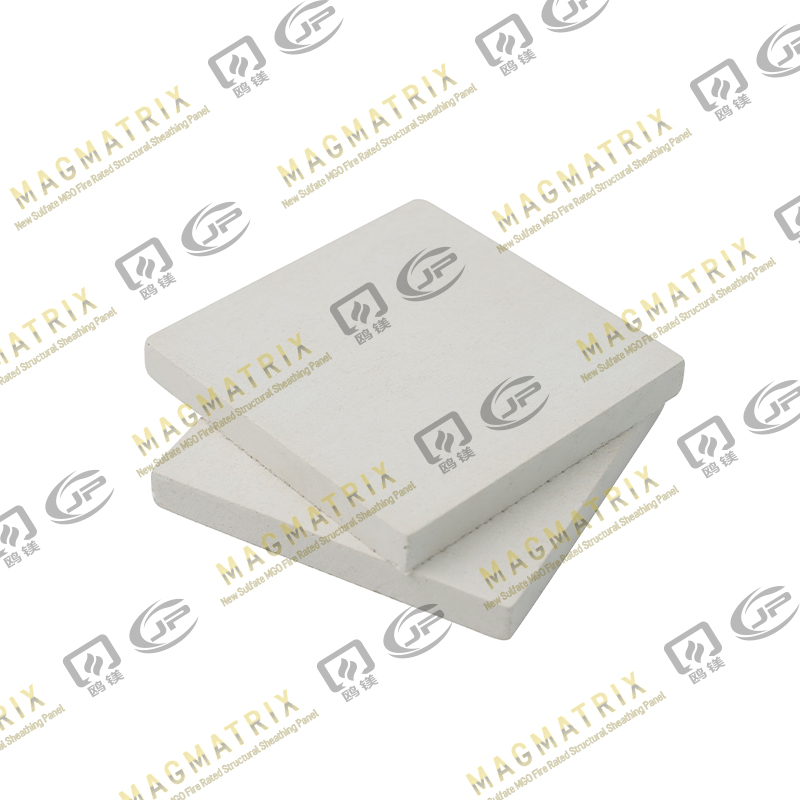
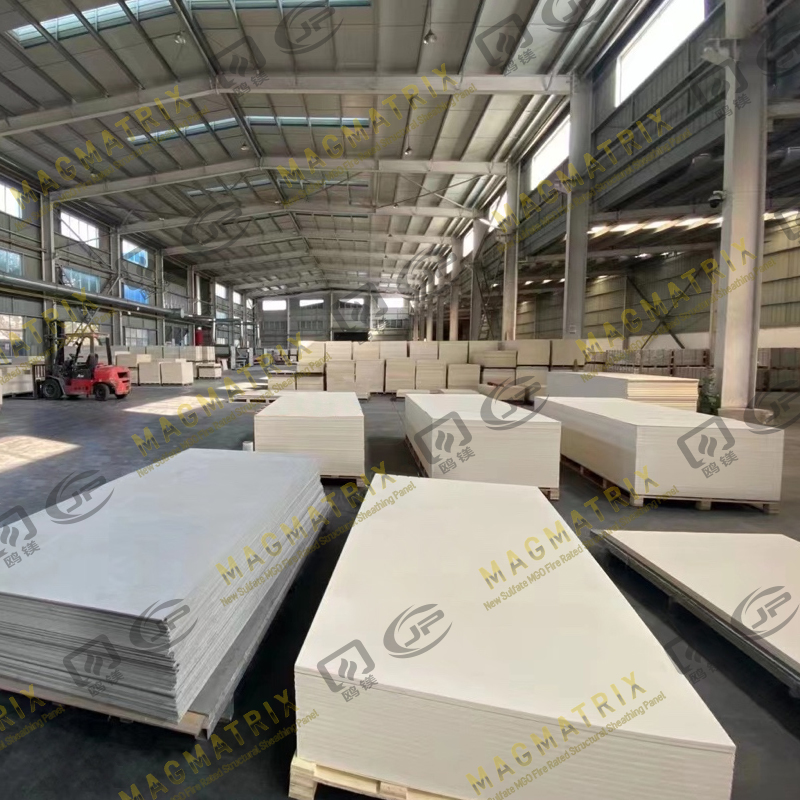 Magnesium Oxide Wall Sheathing BoardSulfate-based MgO sheathing avoids the chloride corrosion risk of oxychloride boards and resists water, mold, and mildew. It is a practical facing choice where humid conditions and metal fasteners are concerns.View Product →
Skin Chemistry: Sulfate Versus Chloride
Here is the check most buyers miss. There are two chemical families of MgO board. Chloride-based boards, the older magnesium oxychloride type, can release chloride ions when exposed to moisture, and those ions attack galvanized coatings and steel. The result, documented on failed projects, is corrosion of screws, corner beads, studs, and metal connectors, plus white efflorescence blooming through finishes. Sulfate-based boards were developed to remove that risk, and newer sulfate MgO products pair it with better behavior in humid conditions.
Inside a SIP, the stakes are higher than in a drywall-type application, because the skins are fastened with hundreds of metal screws into splines and tied to steel or timber structure that stays concealed for decades. A chemistry problem inside a closed panel assembly is expensive to reach. Put the question in writing before ordering: is this board chloride-based or sulfate-based, and can the supplier document it? The two chemistries differ enough to change fastener and finish decisions, so it is worth reviewing a direct comparison of sulfate and chloride-based MgO boards before finalizing specifications.
Structure, Fastening, and Site Handling
MgO board is denser than OSB, so MgO-skinned panels weigh more for the same footprint. Most wall panels lift easily with a telehandler or light crane, but labor estimates should assume mechanical handling for full-height units, and site access should be checked early. The skins also behave differently under fasteners. MgO accepts screws well, though coarse-thread screws designed for cementitious boards and the manufacturer's spacing pattern give the best hold, and core density governs pull-out strength between the skins, which is one more reason to ask for core density figures, not just R-value.
On site, the advantage shows up when schedules get wet. OSB skins swell at the edges and can delaminate after repeated soaking; MgO skins absorb some surface water and dry back without swelling, which protects panel joints through a rainy framing stage. Store panels flat and off the ground, keep factory edge seals intact, and the material rewards the crew.
A side-by-side look at the two most common SIP skin materials, in the areas where long-term cost differences appear
| Property |
OSB Skins |
MgO Skins |
| Contribution to fire |
Combustible; adds fuel load and can delaminate when heated |
Non-combustible (ASTM E136); does not feed the fire |
| Surface burning |
Higher flame spread; treated variants vary |
Class A results (ASTM E84) with low flame spread and smoke |
| Wet-stage behavior |
Edge swelling and delamination risk on repeated wetting |
Takes some surface water and dries back without swelling |
| Mold and pests |
Wood fiber supports mold growth when damp |
Inorganic; resistant to mold, mildew, and termites |
| Fastener corrosion risk |
Low, but screws rely on coating quality |
Low with sulfate chemistry; chloride-based boards can corrode steel fasteners |
| Weight |
Lighter skins; easier manual handling |
Denser skins; plan mechanical lifting for large panels |
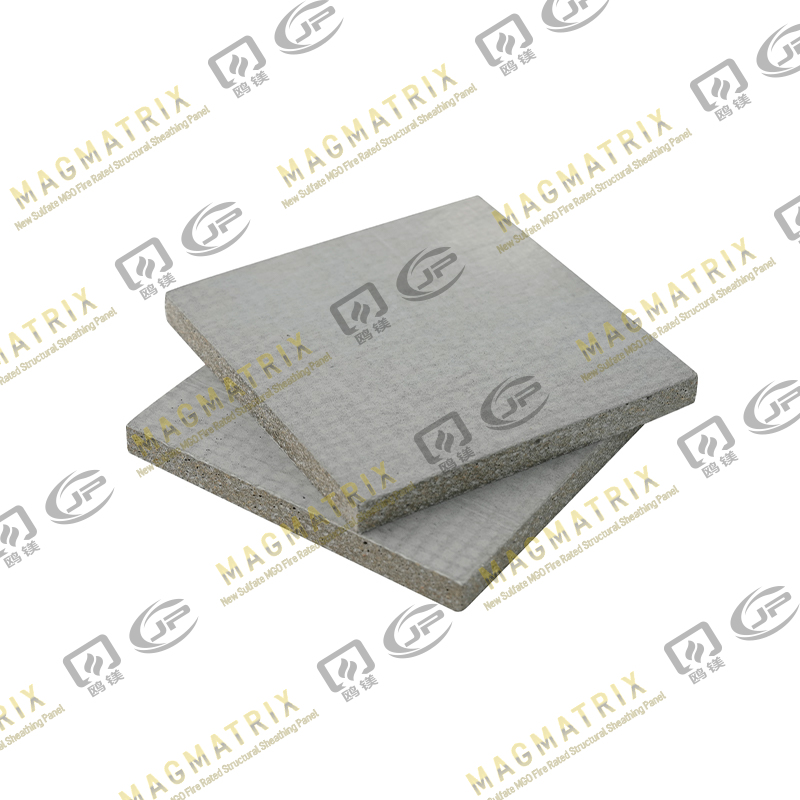
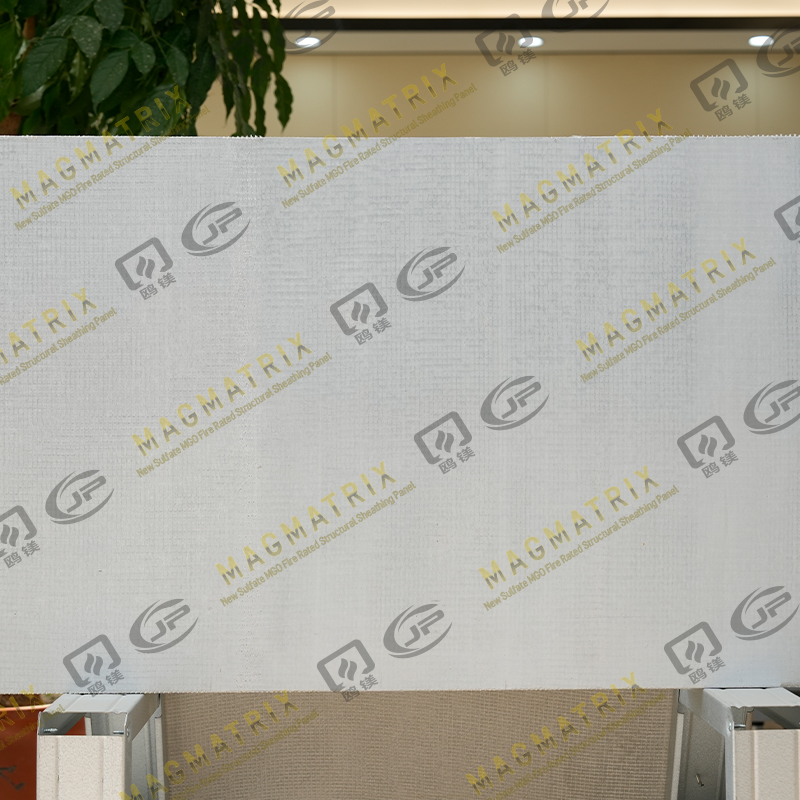 Multi-Support MgO Wall Sheathing BoardThis medium-density MgO sheathing handles occasional dampness without the edge swelling OSB shows after wet framing stages, and can replace multiple sheathing layers in Type III exterior wall construction.View Product →
A Specification Checklist Before You Order
Most problems with MgO SIPs trace back to documents nobody asked for. Put this list into the inquiry itself:
- Which chemistry is the board, chloride-based or sulfate-based? Ask for the formulation in writing.
- An ASTM E136 non-combustibility pass report for the actual skin product, not a generic brochure claim.
- Surface burning values from ASTM E84, including both flame spread and smoke developed.
- Assembly-level fire data, such as ASTM E119 wall tests, since the panel's rating depends on the full build-up.
- Skin thickness tolerance, density range, and dimensional stability data such as linear thermal expansion for large skins.
- Core type and R-value per inch, plus the adhesive and connector system, splines or cam locks, that bonds skins to core.
- Third-party certification and inspection records, for example Intertek CCRR files, plus any EN 13501-1 classification needed for European projects, and export packaging that keeps boards dry in transit.
Serious manufacturers hold documentation for exactly these questions, and reviewing a supplier's published certificates and test reports answers several of the items above faster than an email exchange ever will.
Where Magnesium Oxide SIPs Earn Their Keep
Four project types get the most from MgO-skinned panels. Modular and prefab factories value the combination of non-combustible skins and fast assembly, because a fire event in a finished unit is a business risk and punch lists shrink when facings tolerate wet trades. Coastal and humid-climate builds benefit from skins that resist mold, mildew, and termites. Wildfire-prone regions specify them because the facing does not feed an ember-driven fire. Multi-family and light commercial projects gain a material that plan reviewers recognize for fire compliance.
Sourcing the skins is its own decision. Jiangsu Jinpeng Fireproof Board Co., Ltd., through its MagMatrix brand, manufactures sulfate MgO boards in Taixing, China, including the BMSC 517 new sulfate board used for exterior wall sheathing, subfloors, and roof sheathing, and publishes third-party reports covering ASTM E136 non-combustibility, ASTM E84 surface burning, and 2-hour ASTM E119 wall assemblies on both wood and steel studs. For SIP fabricators, the practical route is to start from a board with documented chemistry and assembly testing, then build the panel system around it, because the skin's paper trail becomes the panel's paper trail.



 English
 русский
 Español
 BMSC 517 New Sulfate MgO Board
 Multi-Support MgO Wall Sheathing Board
 Perseverance MgO Wall Sheathing Board
 Multi-Support MgO Subfloor Sheathing Board
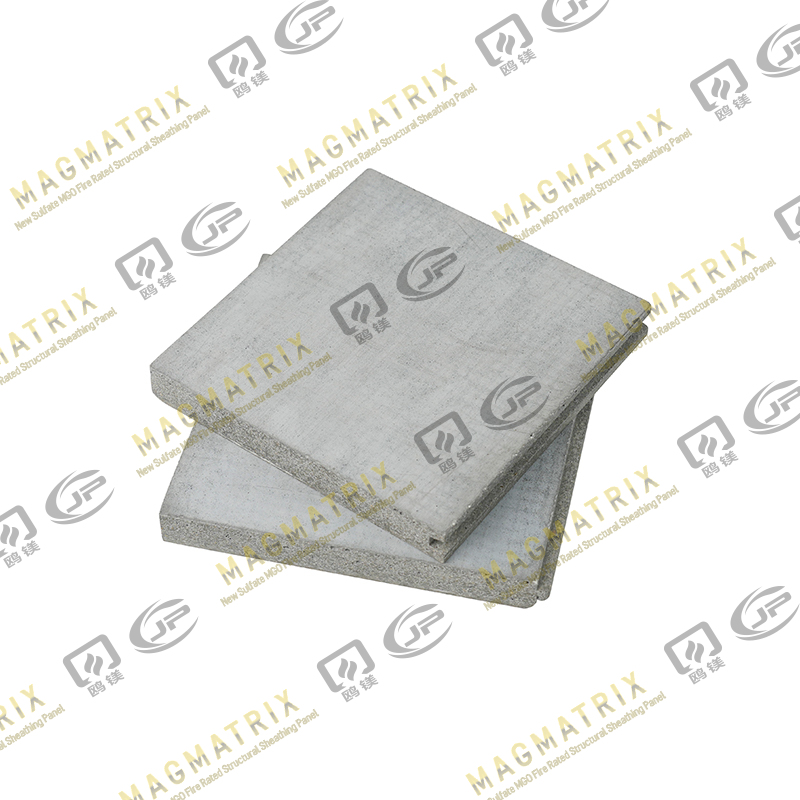 Perseverance MgO Subfloor Sheathing Board
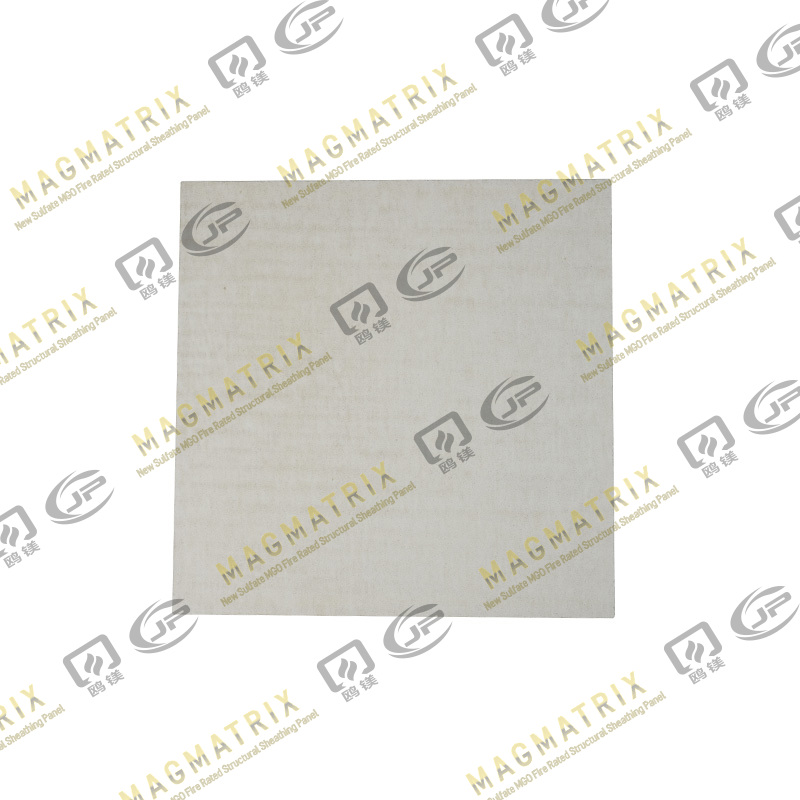 MagMatrix MgO Underlayment Panel/board