A contractor in a coastal county pulled the siding off a three-year-old house and found the gypsum sheathing soft, dark, and covered with mold. The paper facer had stayed wet after a season of wind-driven rain, and the core had turned to paste. The replacement material was not a better grade of gypsum; it was MGO wall board. Magnesium oxide wall board is a dense, mineral-based panel that remains dimensionally stable in wet conditions and passes ASTM E136 noncombustibility testing, which means it does not burn the way wood-based or paper-faced panels do. That combination of moisture tolerance and fire performance is the reason it keeps replacing drywall, plywood, and OSB in wall assemblies. But not all MGO wall board is the same. The difference between sulfate-based and chloride-based boards can determine whether a building enclosure performs for decades or begins corroding fasteners and weeping salts within two winters.
What MGO Wall Board Is and How It Differs from Drywall
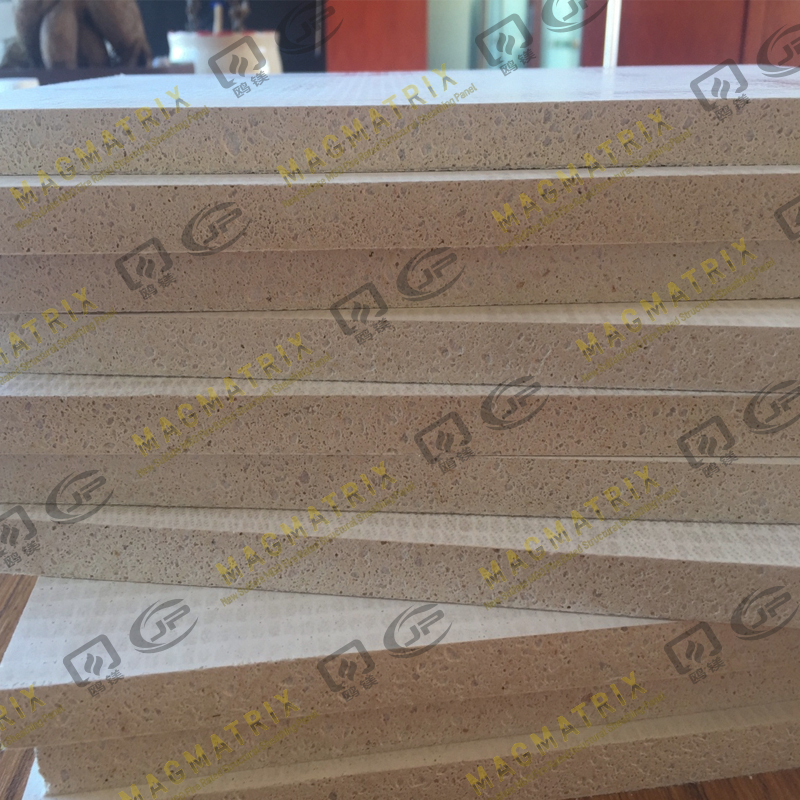
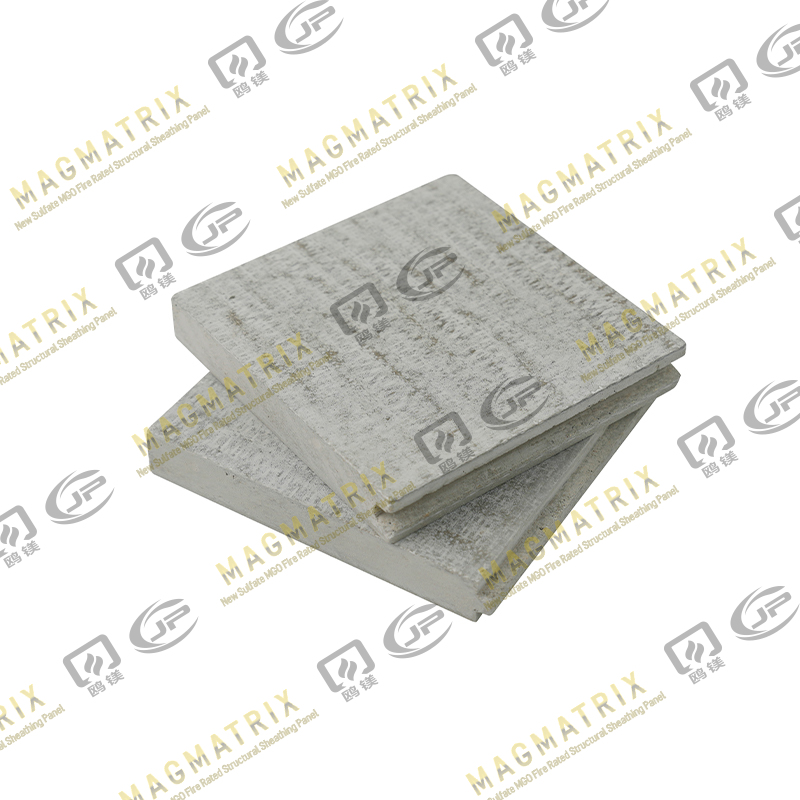
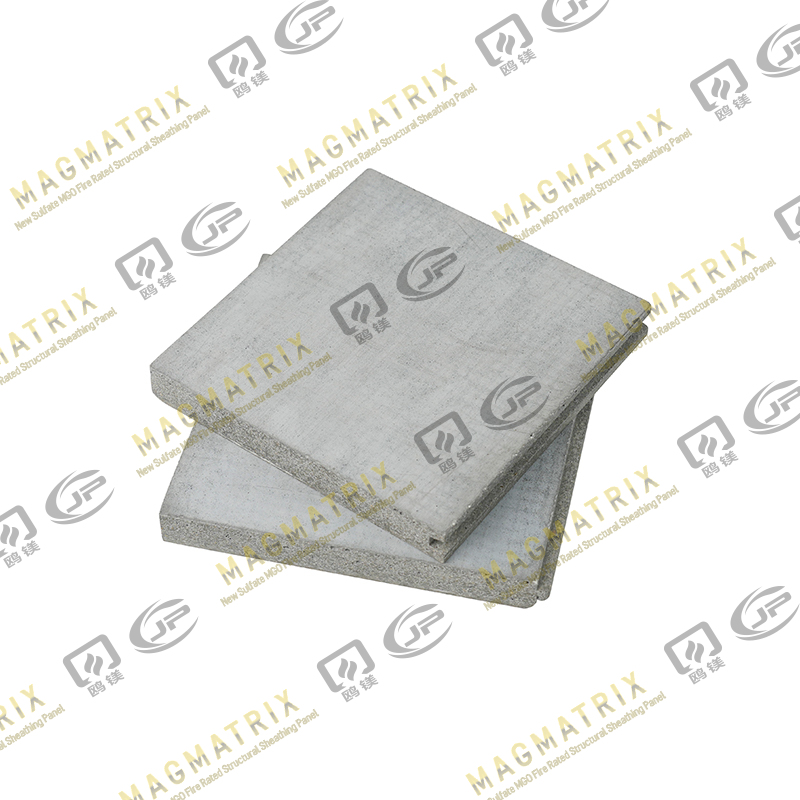
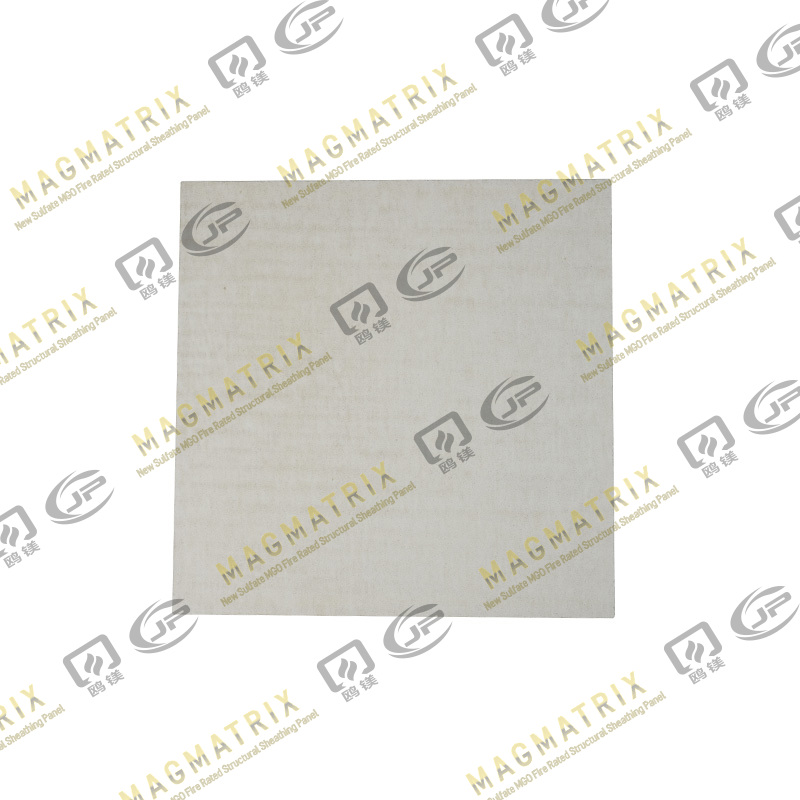
MGO wall board is a rigid panel made from magnesium oxide, magnesium sulfate, lightweight mineral fillers, and embedded fiberglass mesh. A slurry of these ingredients is cast as a flat sheet, cured, and cut to size. The finished panel has no paper face and no organic core, so it does not provide food for mold and does not lose its structure when saturated.
Gypsum drywall depends on paper facing for tensile strength. Once the paper is damaged or wet, the core crumbles. Plywood and OSB are organic materials that swell, delaminate, and feed mold when exposed to moisture over time. MGO wall board is closer in behavior to a fiber-reinforced cement panel, but it is lighter and easier to cut with standard construction tools. Builders who have worked with cement board will recognize the density; builders who have worked only with drywall notice the extra weight per sheet and the need for better fasteners.
Fire Performance: What the Ratings Actually Mean
Fire ratings get misquoted more than almost any other performance claim. A material rating and an assembly rating answer different questions, and both matter for a wall specification. MGO wall board is one of the few sheet materials that can deliver both at levels suitable for fire-rated construction.
ASTM E136 determines whether a material is noncombustible. Because the mineral core of MGO wall board contains no flammable constituents, it passes. ASTM E84 measures surface burning characteristics; a Class A result means low flame spread and low smoke development. ASTM E119 is the assembly-level test: a complete wall system, including studs and board layers, is exposed to fire while carrying a structural load. Wall systems built with MGO sheathing on both faces of wood or steel studs have achieved two-hour fire-resistance ratings under this standard.
The practical impact for a project is significant. An exterior wall with MGO sheathing and an interior layer of the same board can meet a two-hour rating in steel-frame construction. Buildings under fire code limits can use those assembly ratings to justify taller wood-frame designs, and renovation projects can upgrade an existing wall without adding thick fireproofing layers. The board also removes the fire risk during the construction phase, when combustible sheathing often sits exposed before finishes are installed. For a closer look at how panels perform in exterior envelopes, see our guide to MGO wall sheathing with application details and installation notes.
How MGO Wall Board Compares to Common Alternatives
MGO wall board vs. the materials it most often replaces; values vary by manufacturer, thickness, and formulation.
| Property |
MGO wall board |
Gypsum drywall |
Plywood / OSB |
| Noncombustible (ASTM E136) |
Passes |
Core passes; paper facer burns |
Fails |
| Moisture resistance |
High; no paper, mineral core |
Poor; facer and core degrade |
Moderate; swells and supports mold |
| Mold support |
No organic food source |
Facer supports mold |
Supports mold |
| Surface burning (ASTM E84) |
Class A |
Class A |
Class C or lower |
| Impact resistance |
Good; dense core |
Low; dents and punctures |
Fair; depends on thickness |
Sulfate-Based or Chloride-Based? The Distinction That Determines Durability
The most important purchasing decision is not thickness or price; it is the chemical formulation. Early MGO boards were made with magnesium chloride as the setting agent. Chloride is hygroscopic: it pulls water from the air. In service, chloride-based boards have been documented weeping moisture, forming white efflorescence on surfaces, corroding steel studs and screws, and losing surface hardness. Site reports from contractors describe boards that failed within two winters. The failure came from chloride chemistry combined with under-cured panels, not from magnesium oxide itself.
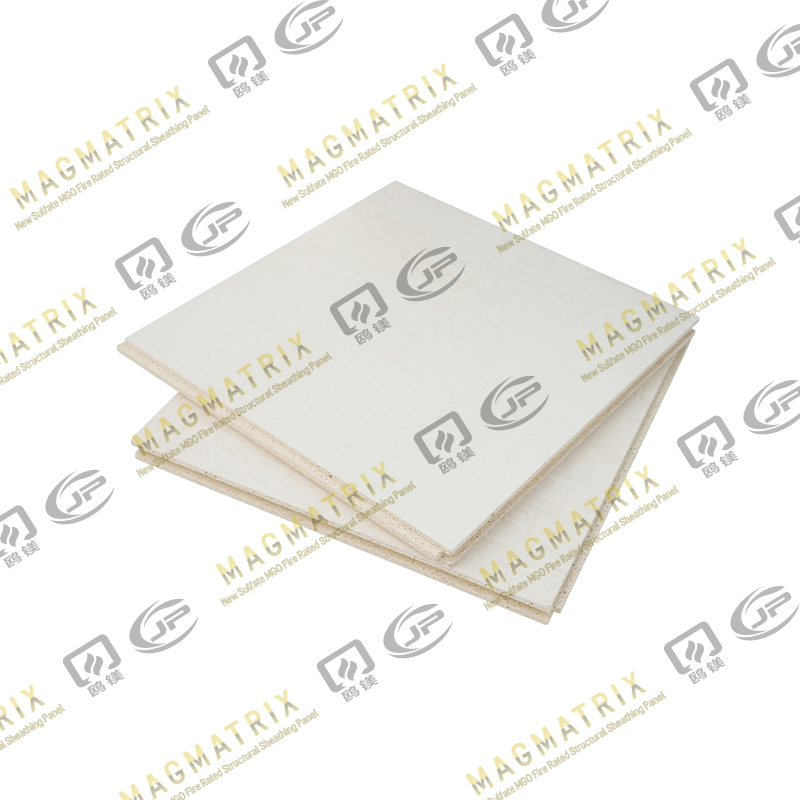
Sulfate-based MGO boards use magnesium sulfate instead. The sulfate chemistry does not actively absorb atmospheric moisture, which removes the corrosion and weeping mechanisms that damaged the reputation of the earlier boards. This is the formulation that buyers should insist on, and it is the basis of the BMSC 517 new sulfate MGO board chemistry. Panels built on this chemistry, such as the MagMatrix MgO wall sheathing board, come with third-party test documentation covering fire performance and mechanical properties.
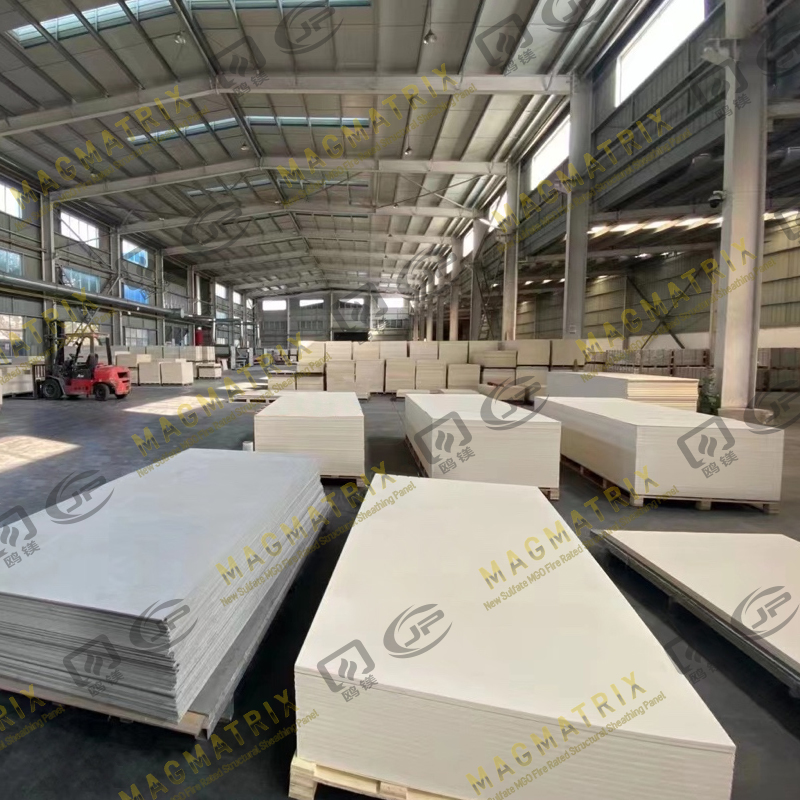 MagMatrix MgO Wall Sheathing Board Manufacturers, FactoryJinpeng are MGO Wall Board Manufacturers and Magnesium Oxide Sheathing Board Factory in China, Custom Magnesium Oxide Wall Sheathing Boar...View Product →
When you evaluate a supplier, ask directly whether the board is sulfate-based, ask for the formulation in writing, and check the test reports. If the answer involves magnesium chloride, the project inherits a long-term corrosion risk that is difficult to fix after installation.
Where MGO Wall Board Earns Its Price
MGO wall board costs more than drywall and slightly more than commodity plywood in most markets. It earns that premium in applications where moisture, fire, or both would otherwise cause damage. The following are the most common situations where the higher initial cost is justified:
- Exterior wall sheathing in humid, coastal, or rainy climates, where no paper face means no mold and no rot.
- Modular and prefabricated construction, where panels sit exposed to weather during transport and on-site installation without losing strength.
- Bathrooms, laundry rooms, and shower surrounds, where the board serves as a stable tile substrate.
- Fire-rated corridors, stairwells, elevator lobbies, and utility rooms, where assembly ratings matter.
- Projects with indoor air quality requirements, since the board does not contain formaldehyde-based binders or organic facers.
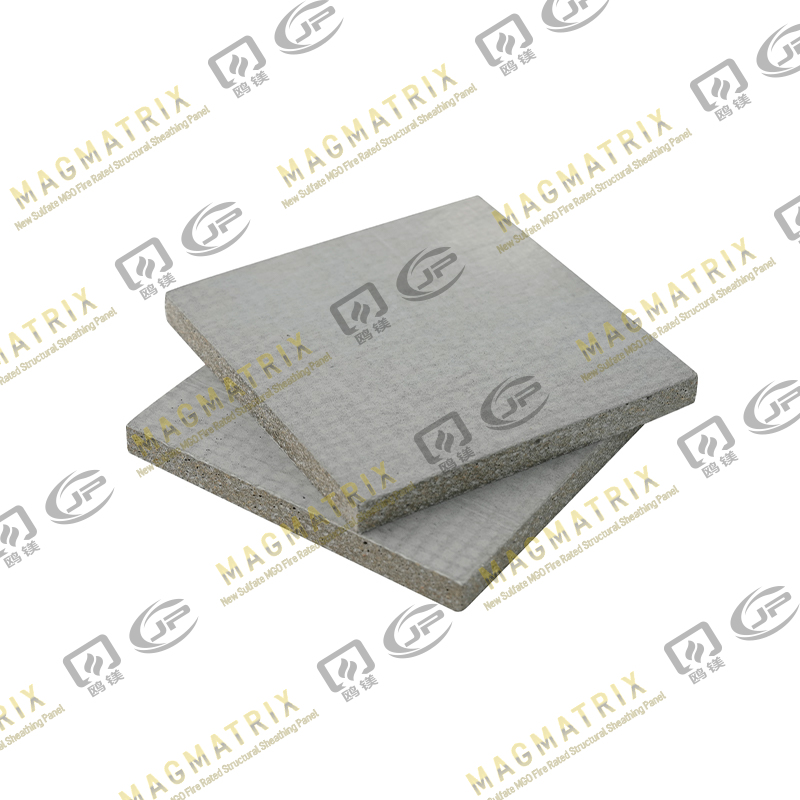
For structural exterior walls in particular, a board with documented racking shear performance adds value, because it combines sheathing and fire protection in one installation. The Multi-Support MGO wall sheathing board is one example of a product with published structural and fire data for Type III and Type V building applications. Specifying one board system simplifies procurement and reduces the number of suppliers a general contractor has to coordinate.
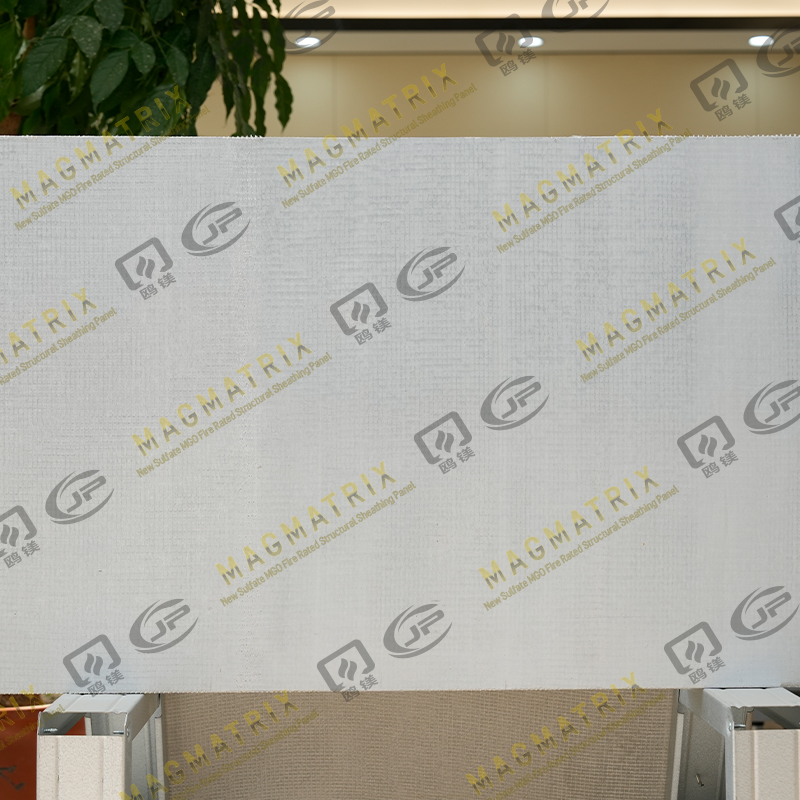 Multi-Support MgO Wall Sheathing Board Suppliers, Company - Jiangsu Jinpeng FireJiangsu Jinpeng Fireproof Board Co., Ltd. - China Multi-Support MgO Wall Sheathing Board Suppliers and Company, Wholesale Multi-Support M...View Product →
Installation and Fastening: Working with a Dense Mineral Panel
MGO wall board behaves differently from drywall on site. The core is dense and abrasive. Wood saw blades dull quickly, so crews should use carbide-tipped blades or a scoring cutter for straight cuts. Cutting produces alkaline dust, so eye protection and a dust mask are required. The board can be scored and snapped for clean cuts, similar to cement board but with less effort.
Fastening is where most installation problems start. The board is heavier than drywall, so screws must be seated correctly and framing must be properly spaced. Recommended practices include:
- Use corrosion-resistant screws; chloride-based boards corrode standard fasteners, and even sulfate boards should be fastened with coated or stainless steel screws in wet areas.
- Support all panel edges on framing; unsupported edges crack under impact or foot traffic.
- Leave a 3 mm gap at joints to allow for thermal and moisture movement.
- Reinforce joints with fiberglass mesh tape and setting-type joint compound; paper tape does not adhere as reliably to the mineral surface.
- Pre-drill near edges in dense panels to prevent edge splitting and to avoid over-driving screws.
For exterior applications, seal or flash cut edges so water cannot enter the core. The board itself will not rot, but water migration through poorly detailed penetrations remains a building science issue.
Documents and Checks Before You Commit to a Supplier
The reputation problem with MGO boards was never the material concept; it was inconsistent manufacturing and missing verification. A supplier that cannot provide third-party test reports should not be allowed on a project with fire-rating or moisture-performance requirements. Before ordering, collect and review the following documents; treat the list as a screening checklist for procurement.
Documents to request from an MGO wall board supplier before purchase and what each one verifies.
| Document |
What it verifies |
| ASTM E136 noncombustibility report |
The material does not burn or contribute heat or fuel to a fire. |
| ASTM E119 assembly report |
A complete wall system achieves a rated fire resistance, such as two hours. |
| ASTM E84 surface burning report |
Class A flame spread and smoke development values. |
| ASTM D2718 shear report |
Racking shear capacity for structural wall design. |
| ASTM E228 linear thermal expansion evaluation |
Expected dimensional movement under temperature changes. |
| 219-item SVHC report |
Restricted substances are below reporting thresholds, supporting green building credit documentation. |
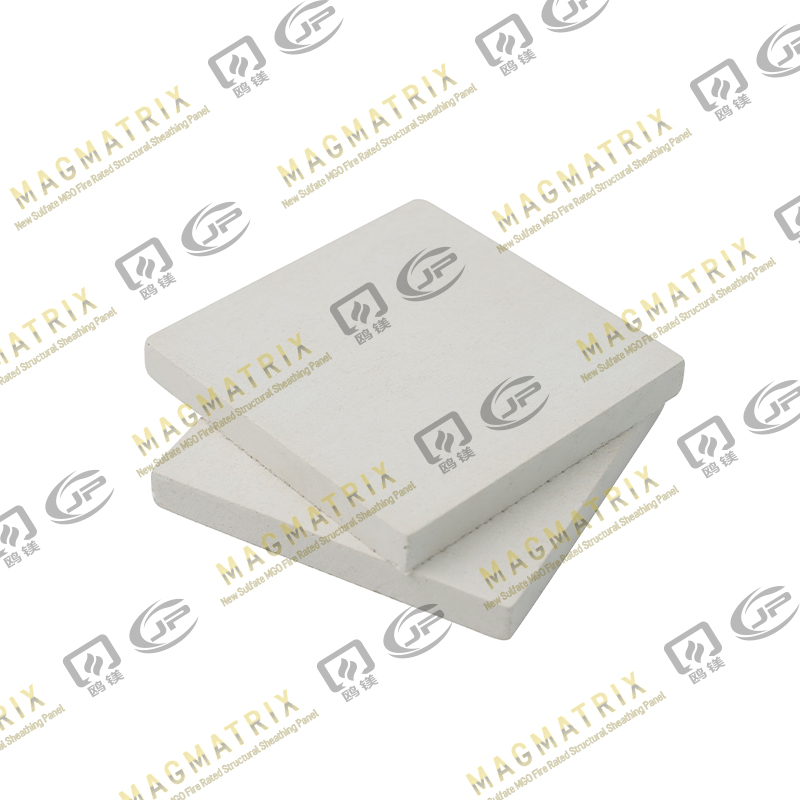
Beyond documents, confirm that the formulation is sulfate-based, verify the certification documentation kept by the manufacturer, and request an independent report for the specific board name you are buying. The Perseverance MGO wall sheathing board, for example, is backed by published test reports so that a specifier can trace the exact product to its claims.
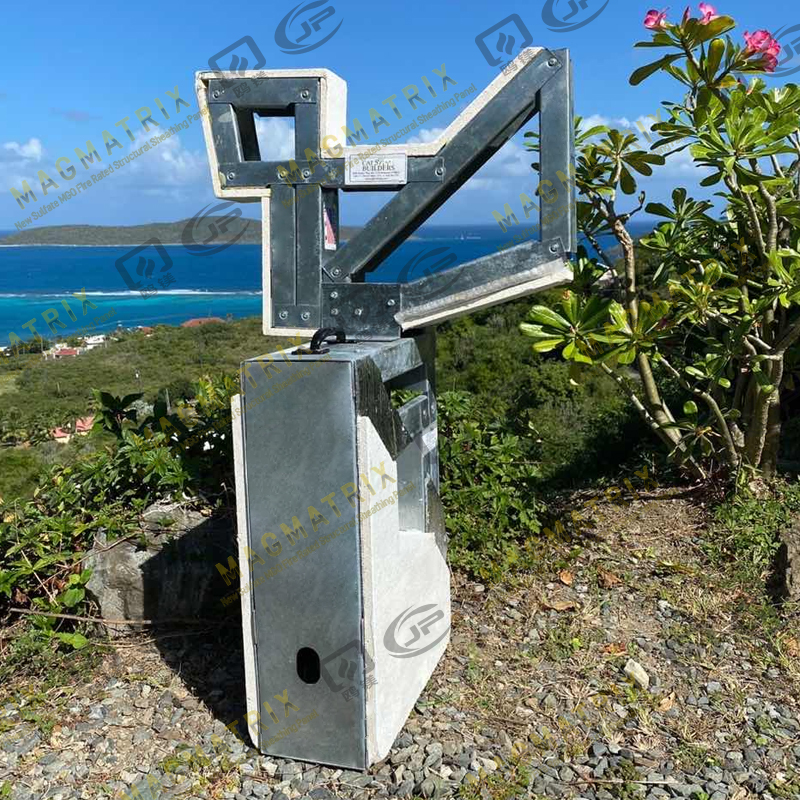 Perseverance MgO Wall Sheathing Board Suppliers, Company - Jiangsu Jinpeng FirepJiangsu Jinpeng Fireproof Board Co., Ltd. - China Perseverance MgO Wall Sheathing Board Suppliers and Company, Wholesale Perseverance MgO...View Product →
If a supplier can show noncombustible material performance, sulfate-based chemistry, documented assembly ratings, and consistent quality control, MGO wall board is a defensible specification. If a supplier cannot show those, that gap is the risk signal. The fix is to find a different supplier, not to fall back on a paper-faced product that cannot match the same performance envelope.



 English
 русский
 Español
 BMSC 517 New Sulfate MgO Board
 Multi-Support MgO Wall Sheathing Board
 Perseverance MgO Wall Sheathing Board
 Multi-Support MgO Subfloor Sheathing Board
 Perseverance MgO Subfloor Sheathing Board
 MagMatrix MgO Underlayment Panel/board