A framing crew on a coastal project installed magnesium oxide wall sheathing board in early spring. After two months of rain, the panels wept moisture around screw heads, the cores softened at the edges, and the wall had to be opened for inspection. The product carried the MgO label, but it was built on chloride chemistry with weak density control and no meaningful water-resistance data. That pattern explains most of the complaints you hear about MgO sheathing.
The conclusion is simple: performance depends less on the category name and more on the magnesium salt used, the core density, the quality of the fiberglass reinforcement, and the factory's willingness to publish test evidence. A well-made sulfate-based MgO board behaves completely differently from a cheap chloride board, and it deserves a real place in the exterior wall specification.
What Is Magnesium Oxide Wall Sheathing Board?
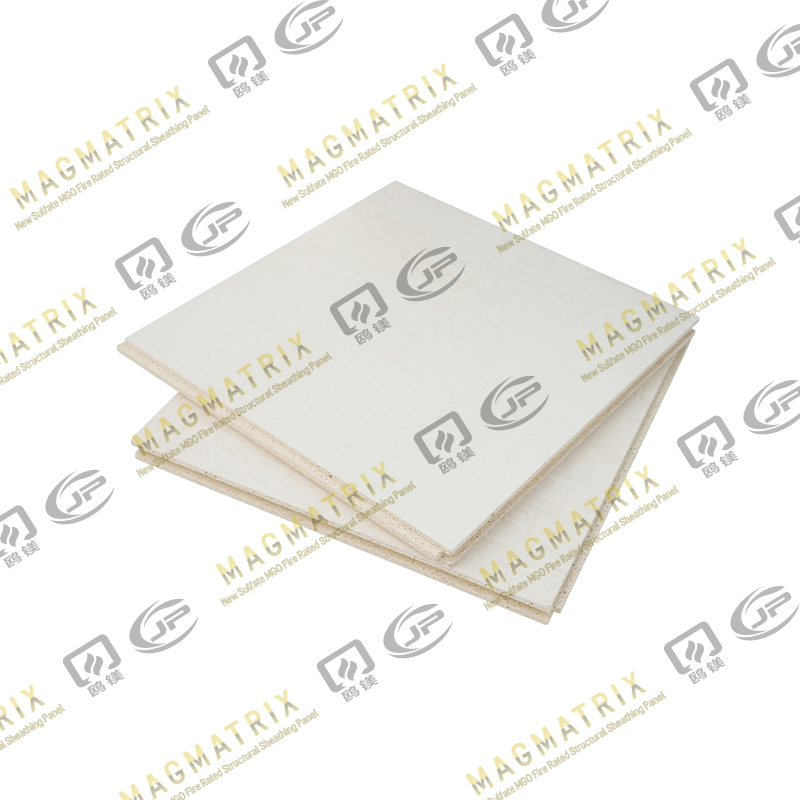
Magnesium oxide wall sheathing board is a rigid mineral panel made from magnesium oxide, a magnesium salt, additives such as perlite or fiber, and a reinforcing fiberglass mesh. It is pressed into large sheets, typically 1220 by 2440 mm or 1200 by 2400 mm, with thicknesses from 8 mm to 12 mm for wall applications. It is used behind exterior cladding, as a substrate for siding, stucco, thin brick, or EIFS, and as a fire-rated layer in wall assemblies.
The product category splits into two chemistries. Chloride-based MGO board is older and cheaper, but chloride migration can cause efflorescence and metal corrosion. Sulfate-based board, such as the BMSC 517 chemistry used in the MagMatrix MgO wall sheathing board, was developed to avoid those failure modes while keeping the fire resistance and stiffness of the mineral core.
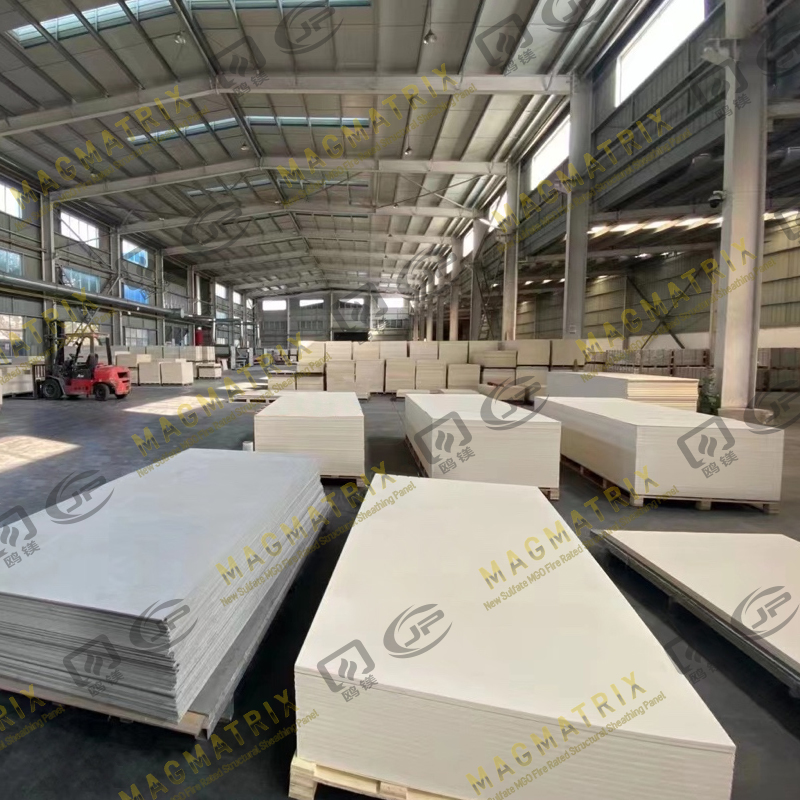 MagMatrix MgO Wall Sheathing Board Manufacturers, FactoryJinpeng are MGO Wall Board Manufacturers and Magnesium Oxide Sheathing Board Factory in China, Custom Magnesium Oxide Wall Sheathing Boar...View Product →
Where the Board Earns Its Place in a Wall Assembly
Magnesium oxide wall sheathing earns its place in three areas that builders deal with on every project: fire safety, moisture and mold resistance, and structural impact or racking behavior.
Fire performance
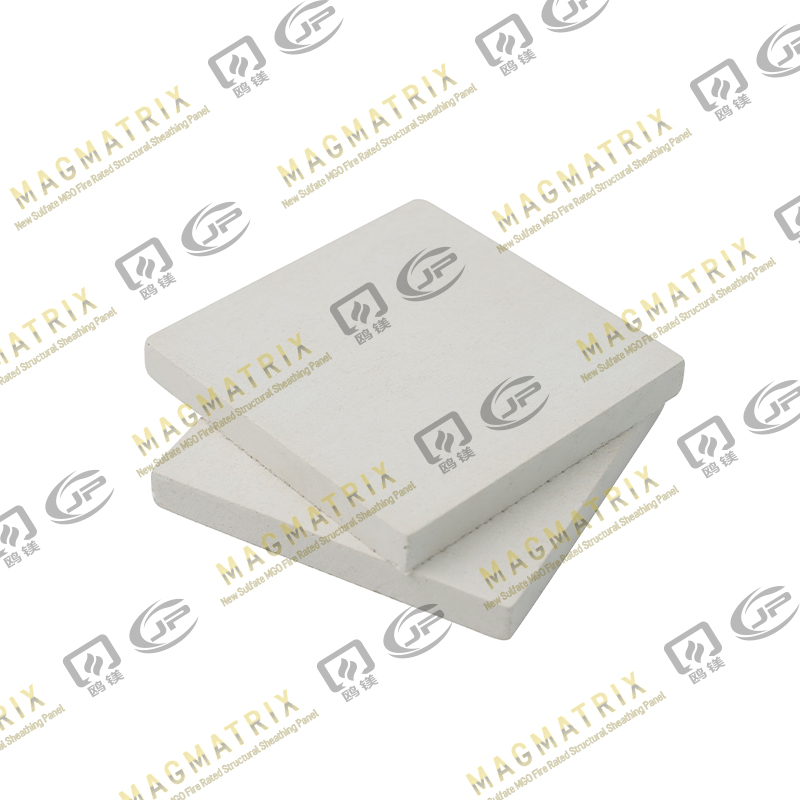
The core does not feed a fire. MgO wall sheathing is noncombustible in ASTM E136 testing, and complete wall assemblies have reached one- and two-hour fire ratings in ASTM E119 tests. Surface burning characteristics in ASTM E84 testing are typically evaluated as low flame spread versions, which gives designers a practical alternative to combustible wood panels in code-restricted situations. For projects where the fire rating is the deciding factor, the Perseverance MgO wall sheathing board is one example of a line supported by dedicated fire test documentation.
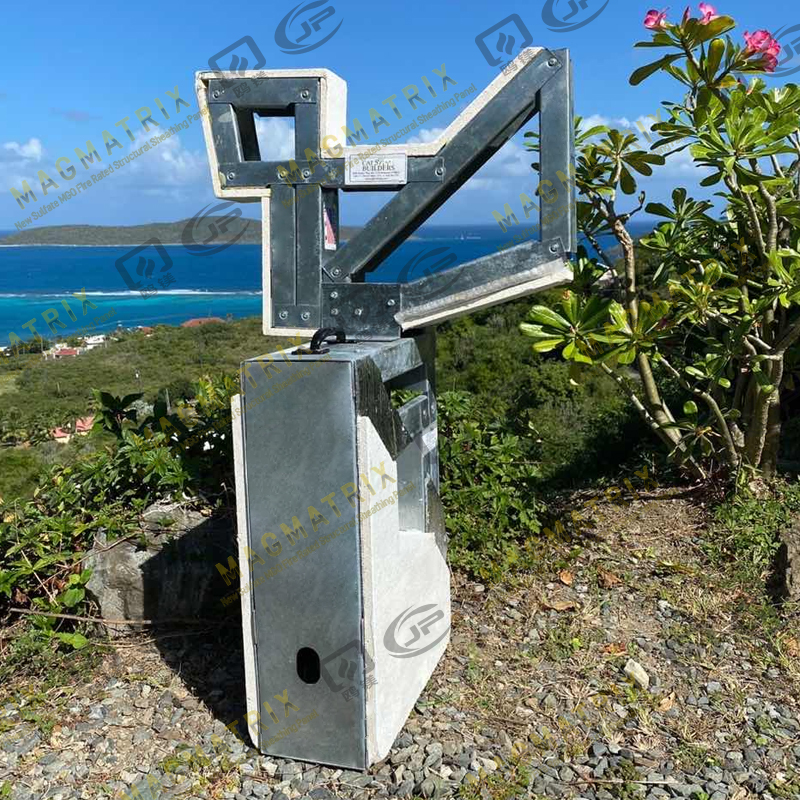 Perseverance MgO Wall Sheathing Board Suppliers, Company - Jiangsu Jinpeng FirepJiangsu Jinpeng Fireproof Board Co., Ltd. - China Perseverance MgO Wall Sheathing Board Suppliers and Company, Wholesale Perseverance MgO...View Product →
Moisture and mold resistance
Because the core is mineral, it provides no organic food source for mold. A dense sulfate formulation absorbs less moisture than gypsum sheathing and behaves more predictably than OSB when exposed to jobsite rain. The practical limits are edge sealing, exposure time, and fastener selection, not the board's inherent wet performance.
Impact resistance and structural contribution
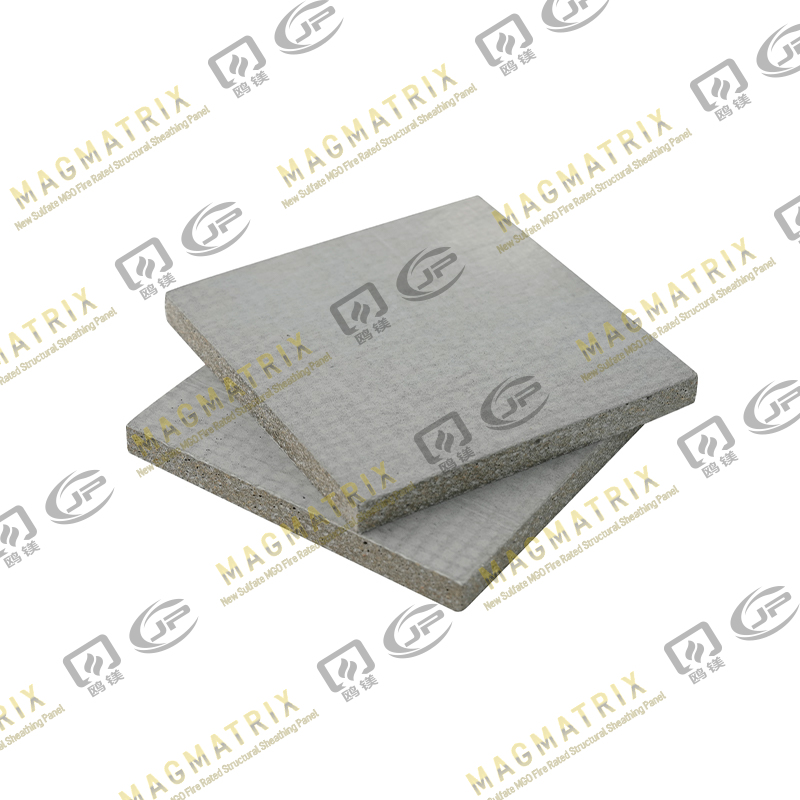
A dense mineral panel handles the impact damage that dents gypsum and scuffs wood panels during construction. It also contributes racking resistance when it is properly fastened to the framing. When the wall needs documented structural performance, the Multi-Support MgO wall sheathing board is positioned as a structural-grade panel with shear and wall-load test reports behind it.
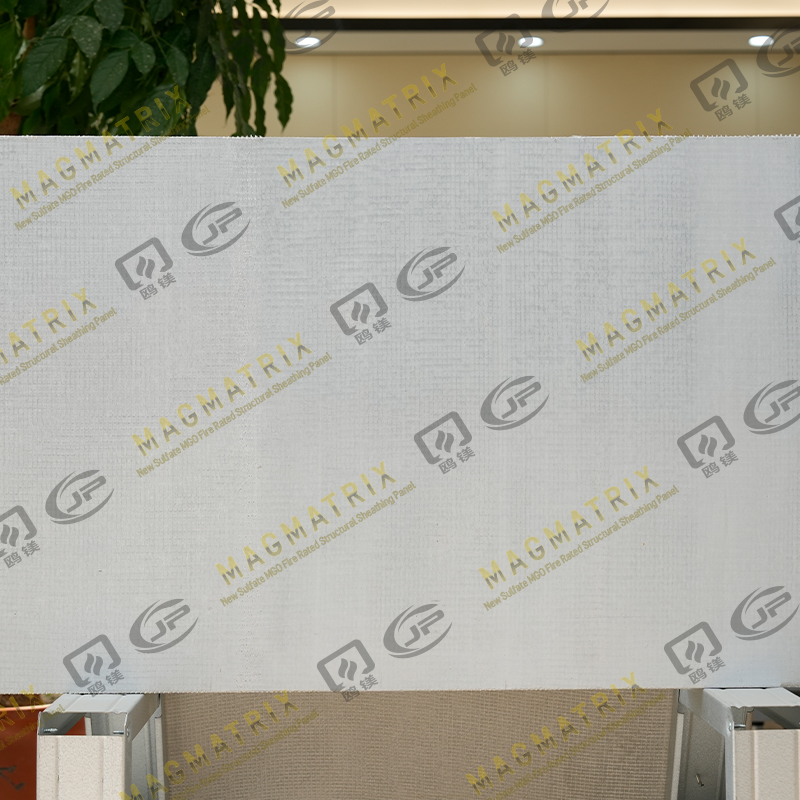 Multi-Support MgO Wall Sheathing Board Suppliers, Company - Jiangsu Jinpeng FireJiangsu Jinpeng Fireproof Board Co., Ltd. - China Multi-Support MgO Wall Sheathing Board Suppliers and Company, Wholesale Multi-Support M...View Product →
How MgO Wall Sheathing Compares to Standard Materials
The comparison that matters on a real project is not one MgO board versus another. It is MgO versus gypsum sheathing, OSB, and plywood under the same conditions. The table below summarizes what can be expected in typical exterior wall service.
A practical comparison of magnesium oxide wall sheathing with the materials it is often asked to replace behind exterior cladding.
| Property |
MgO wall sheathing |
Gypsum sheathing |
OSB |
Plywood |
| Fire behavior |
Noncombustible core; 1-2 hour rated assemblies |
Paper-faced core with limited fire contribution |
Combustible wood strands |
Combustible veneers |
| Water response |
Low moisture pickup; stable when edges are sealed |
Sags, swells, and softens after wetting |
Edge swell after wetting |
Delamination after prolonged wetting |
| Mold and rot |
No organic food source |
Facings can support mold |
Susceptible to mold and rot |
Susceptible to mold and rot |
| Impact strength |
Dense core resists construction impact |
Low to moderate impact strength |
Moderate impact strength |
Moderate impact strength |
| Typical role |
Exterior and interior sheathing; fire-rated walls |
Interior walls; limited exterior exposure |
Wall and roof sheathing; subflooring |
Wall sheathing; subflooring |
These differences do not mean MgO should replace every material in every project. Cost, code, and availability still matter. However, when fire and moisture are the two dominant risks on a building site, a noncombustible and moisture-stable panel removes both problems at once. For a more detailed treatment, read our side-by-side comparison of MgO wall sheathing, OSB, and drywall.
Why Chloride-Based Boards Fail and What to Check
Most early MgO sheathing problems trace back to one source: magnesium oxychloride chemistry. Chloride-based boards are cheaper to produce, but chlorides migrate toward the surface with moisture and cause efflorescence, weeping at fasteners, corrosion of steel components, and long-term strength loss. A sulfate-based board, sometimes called new sulfate MGO or BMSC 517, avoids that failure path because magnesium sulfate does not produce the same aggressive leachate.
When you evaluate a supplier, ask for evidence on the following points:
- The exact magnesium salt chemistry: sulfate rather than chloride.
- A water absorption or moisture resistance test report for the specific board grade.
- Leachable chloride analysis such as ASTM C871-18.
- Racking shear, wall-load calculation, or fastener pull-out data if the board is part of the structural wall.
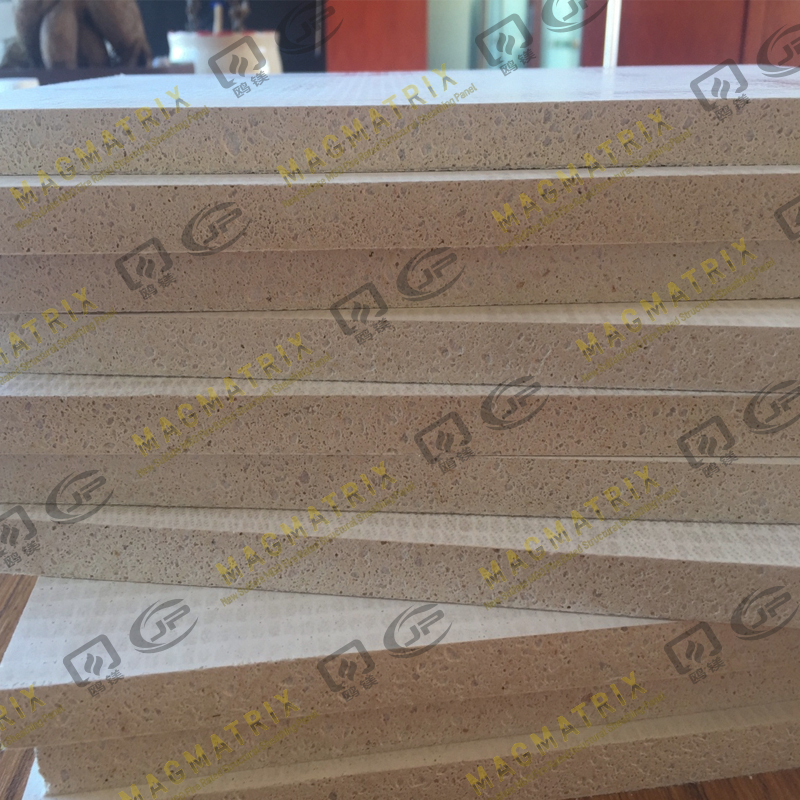
- Visual inspection of the cross-section for uniform density and a continuous fiberglass mesh layer.
Fire Reports and Quality Documentation to Request
Fire resistance is only as useful as the evidence behind it. The standards used most often for MgO sheathing include ASTM E136 for noncombustibility, ASTM E119 for wall assembly ratings, ASTM E84 for flame spread and smoke development, and ASTM C871-18 for leachable chlorides. A reliable supplier should share the actual report for each of these standards, not just a brochure summary.
That rule is also the fastest way to separate a manufacturer from a trader. If the report names the exact product, thickness, and formulation being supplied, it has practical value. If it is a generic certificate with no link to the product, treat it as a warning. You can review the third-party test reports and certificates published by the factory as a reference for what complete documentation looks like.
Installation and Fastening: Where Good Boards Go Wrong
A high-quality MgO wall sheathing board can still cause trouble if it is installed with the wrong tools or fasteners. Four points matter more than the rest:
- Cut the board with a sharp carbide-tipped blade, scoring the face and snapping where possible; a standard saw blade wears quickly on the mineral core.
- Use corrosion-resistant fasteners, preferably stainless steel or coated screws, because the alkaline MgO surface accelerates corrosion of untreated steel.
- Set screw heads just below the surface without crushing the core; over-torquing creates local cracks that become moisture paths.
- Seal cut edges and exposed ends with a compatible primer, tape, or joint treatment in wet areas, and limit weather exposure before the cladding goes on.
How to Choose Magnesium Oxide Wall Sheathing Board with Confidence
The final decision comes down to a short checklist. Confirm sulfate chemistry, ask for independent fire and moisture reports, inspect the density and surface finish, and match the board grade to the structural role of the wall. A general-purpose panel covers many projects, while a structural-grade panel is justified when the wall is bracing the building or the local wind load is demanding. Keep water resistance expectations realistic: no MgO board should be left exposed for months, and cut edges should always be protected in high-humidity assemblies.
Magnesium oxide wall sheathing board can be the strongest single component in an exterior wall assembly when the chemistry is right and the documentation is complete. It will not solve every framing problem, and it should not be purchased on price alone. Choose the version with test data, a dense and uniform cross-section, and supplier support that matches the label. That is the sort of MgO sheathing a builder can stand behind, and the sort that does not come back to the site after two winters.



 English
 русский
 Español
 BMSC 517 New Sulfate MgO Board
 Multi-Support MgO Wall Sheathing Board
 Perseverance MgO Wall Sheathing Board
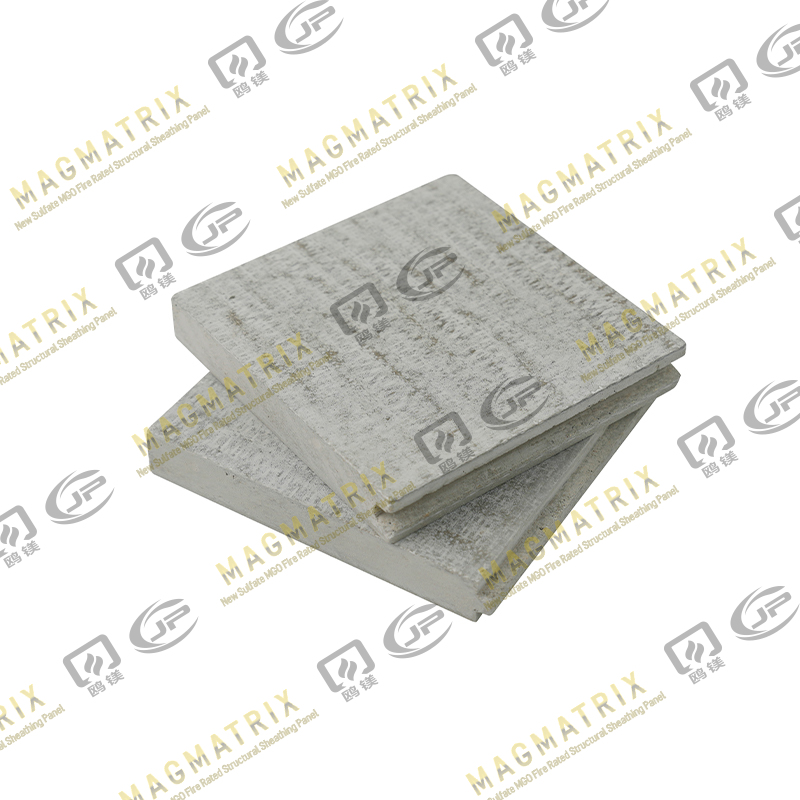 Multi-Support MgO Subfloor Sheathing Board
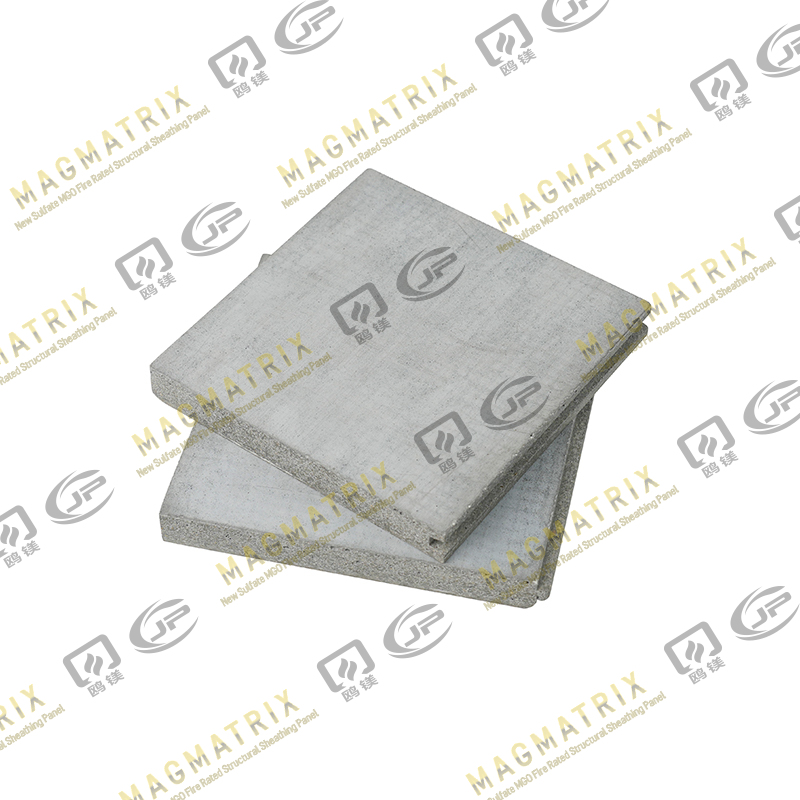 Perseverance MgO Subfloor Sheathing Board
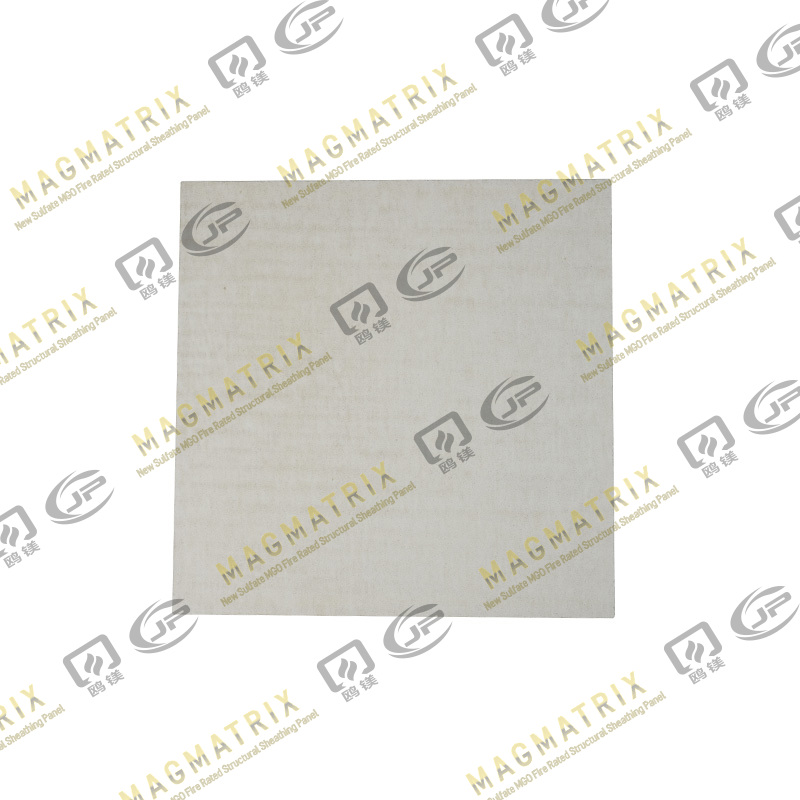 MagMatrix MgO Underlayment Panel/board