OSB ignites at around 230°C. Drywall crumbles under sustained heat. Yet both materials still dominate wall assemblies in residential and commercial construction — largely because alternatives weren't available at scale. That's changed. fire-rated, non-combustible MgO Wall Sheathing Board now ships at competitive volumes, passes the same structural tests builders rely on, and eliminates the fire and moisture risks that wood-based panels can't escape.
This article walks through what the performance data actually shows — so you can make a confident material decision before the next spec is locked.
Why Traditional Sheathing Has a Fundamental Weakness
Plywood, OSB, and standard drywall are organic or semi-organic materials. That means they can burn, absorb moisture, and support mold growth. OSB loses roughly 40% of its structural strength after repeated wet-dry cycles. Drywall absorbs water and loses dimensional stability. Fire-retardant chemical treatments help but don't eliminate combustibility — they simply slow ignition.
For low-risk single-family builds in dry climates, this may be acceptable. For multi-family construction, modular housing, or any project subject to IBC fire-resistance requirements, these limitations create real liability. A material that requires chemical treatment to meet fire codes is solving the wrong problem at the wrong stage.
The Core Difference: Mineral vs. Wood
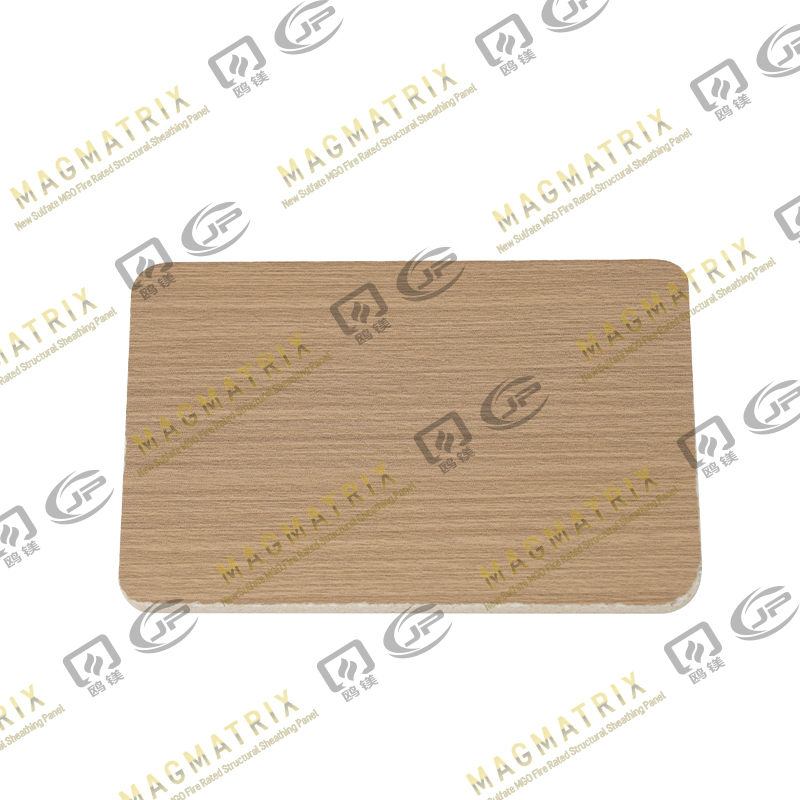
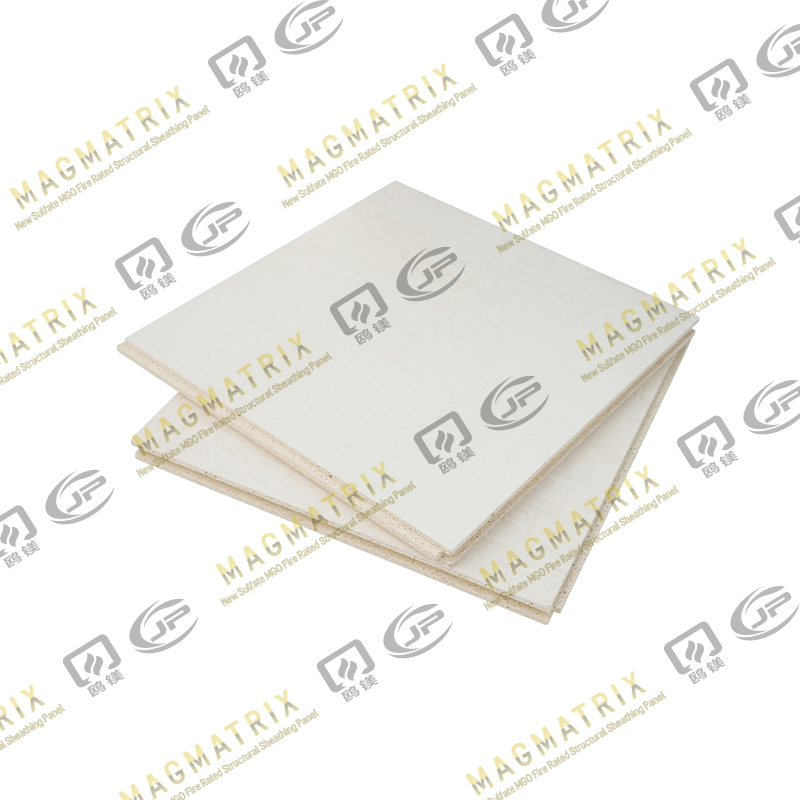
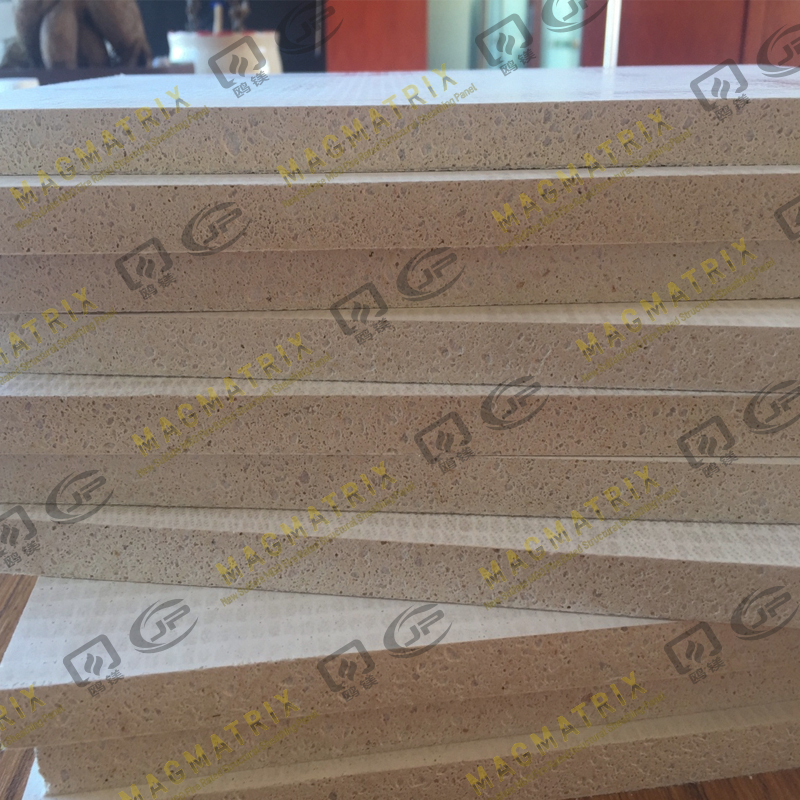
MgO wall sheathing is manufactured from magnesium oxide combined with alkaline-resistant fiberglass mesh — inorganic by composition, non-combustible by nature. There is no wood fiber to ignite, no organic binder to release smoke, and no cellulose structure for mold to feed on. The material achieves its strength through a cold-fusion curing process rather than autoclaving, which keeps its environmental footprint significantly lower than fiber cement alternatives.
The result is a panel that behaves structurally like OSB — it can be cut with standard tools, fastened with screws or nails, and installed directly onto wood or steel stud framing — but with performance characteristics that wood-based panels simply cannot match.
Fire Performance: What the Tests Show
MagMatrix MGO Wall Board achieves a flame spread index of 0 and a smoke developed index of 0 under the ASTM E84 surface burning characteristics standard — the most stringent possible result. In practical terms: flames do not travel across the panel surface, and the board releases no measurable smoke when exposed to fire. This is also confirmed by ASTM E136 non-combustible classification.
Under ASTM E119 assembly testing, MgO sheathing walls deliver up to 2 hours of fire resistance in both wood stud and steel stud assemblies. These are verified test results, not projections. For multi-story or mixed-use buildings where code demands 1- or 2-hour rated wall assemblies, MgO sheathing meets those requirements as a structural component — without added gypsum layers or fire-retardant coatings.
Key fire performance comparison across common sheathing materials
| Material |
ASTM E84 Flame Spread |
ASTM E119 Fire Rating |
Non-Combustible |
| MgO Wall Sheathing |
0 |
Up to 2 hours |
Yes |
| OSB |
~75–200 |
Requires assembly design |
No |
| Standard Drywall |
~15 |
Requires additional layers |
No |
| Plywood |
~75–200 |
Requires fire treatment |
No |
Moisture and Mold: Silent Structural Threats
Moisture damage is slow, invisible, and expensive. By the time wall cavities show mold, the structural framing is often already compromised. MgO sheathing absorbs minimal moisture — maintaining structural integrity through repeated wet-dry cycles that would cause OSB to swell, delaminate, or lose load capacity. It is also inherently mold-resistant, with no organic substrate for biological growth to establish.
For builders working in coastal climates, high-humidity zones, or on projects with extended construction timelines where panels are exposed to weather, this matters. MgO sheathing has also passed the 219-item SVHC (Substances of Very High Concern) screening, confirming no heavy metals, no asbestos, no VOCs, and no toxic antifungal additives — relevant for any project pursuing healthy building certifications or LEED points.
Choosing the Right Model: Multi-Support vs. Perseverance
Not all MgO sheathing panels are interchangeable. MagMatrix offers two distinct wall sheathing configurations, each designed for a different construction context.
The Multi-Support model, engineered for high-density fire-resistant wall assemblies in timber frame construction, is rated for Type III, IV, and V buildings and is approved under NFPA 285 for multi-story structures exceeding 40 feet. It is specifically designed to replace multiple layers of traditional sheathing in one panel — simplifying the assembly and reducing material cost on wood-frame modular and offsite construction projects. It also functions as a structural sheathing replacement for OSB and plywood in SIP panel systems.
The Perseverance model, built for the most demanding fire-rated structural applications, targets Type I and II construction — the highest IBC classification, used in high-rise and heavily regulated commercial projects. It represents a higher-specification formulation, combining structural sheathing performance with non-combustible fire resistance in a single panel.
Selecting between them is straightforward: match the panel to your building type classification and local code fire-resistance requirements. Both carry independent third-party certification through Intertek CCRR-0457, providing code officials and inspectors with verified documentation.
Practical Installation: Same Process, Better Material
MgO sheathing installs the same way as OSB or plywood. It cuts with standard carbide tools, fastens with screws or nails into wood or steel studs, and accepts paint, plaster, tile, or paper finishes. For semi-exposed external applications, an acrylic primer on edges and faces before fixing is recommended to maximize long-term performance. No specialized subcontractors, no exotic adhesives, no modified framing required.
The panel is lighter than fiber cement, which reduces handling fatigue on-site and lowers labor costs per square foot installed. For interior finishing, MgO sheathing can receive any standard surface treatment without additional priming beyond acrylic edge sealing — unlike cement board, which often requires specific bonding agents for certain finishes.
The Bottom Line for Specifiers and Builders
Specifying Magnesium Oxide Wall Sheathing Board is not a niche decision for specialty projects. With ASTM E119 2-hour fire ratings, zero flame spread, confirmed non-combustibility, and a field installation method identical to conventional panels, MgO sheathing fits standard construction workflows while closing performance gaps that wood-based materials can't close. For any project where fire resistance, moisture durability, or indoor air quality is a specification requirement — and not an afterthought — MgO sheathing is the panel that meets the spec without compromise.



 English
 русский
 Español
 BMSC 517 New Sulfate MgO Board
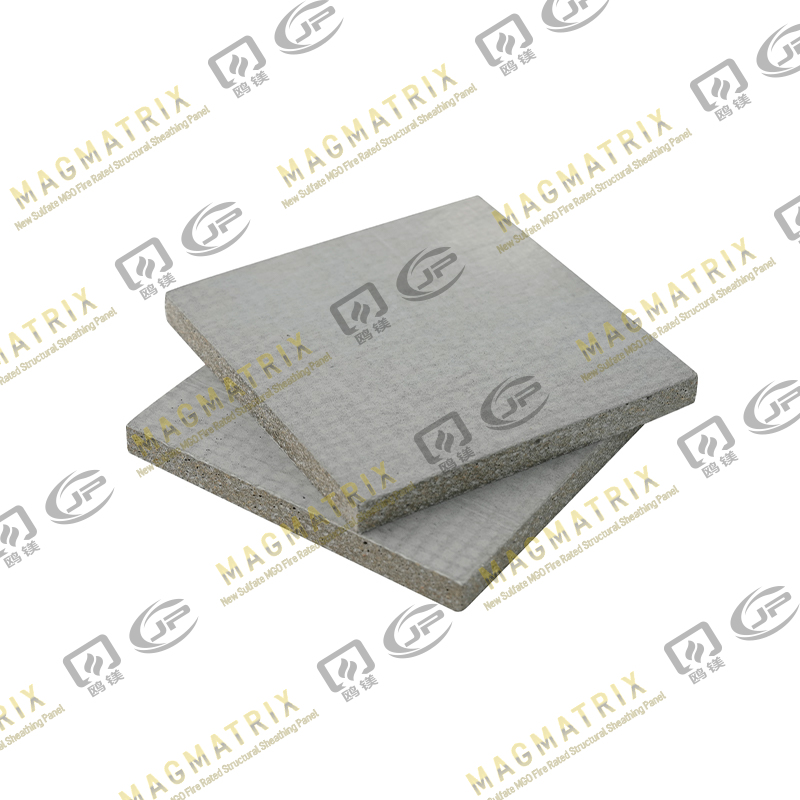 Multi-Support MgO Wall Sheathing Board
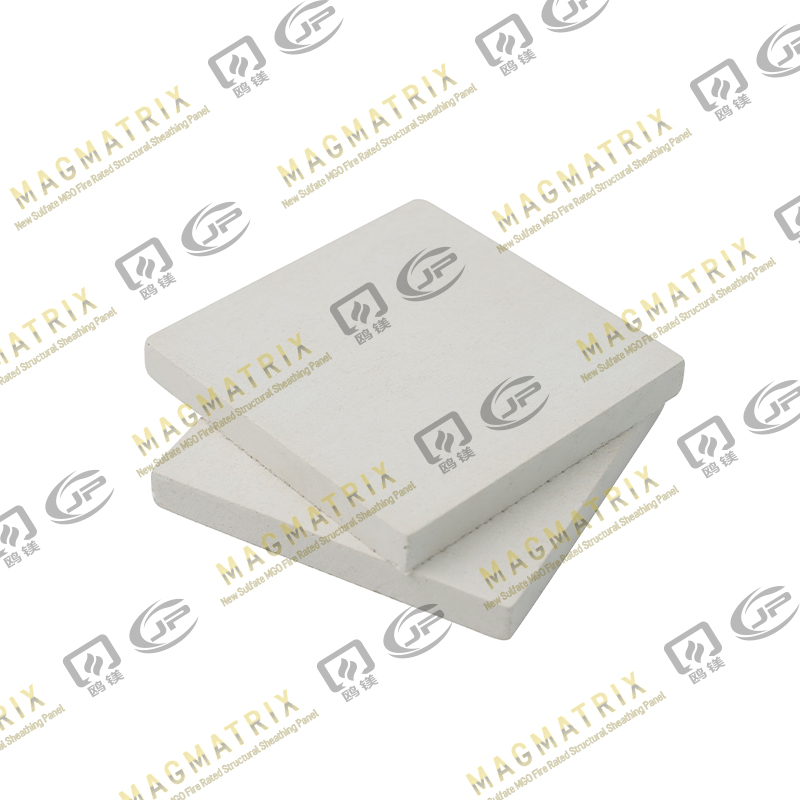 Perseverance MgO Wall Sheathing Board
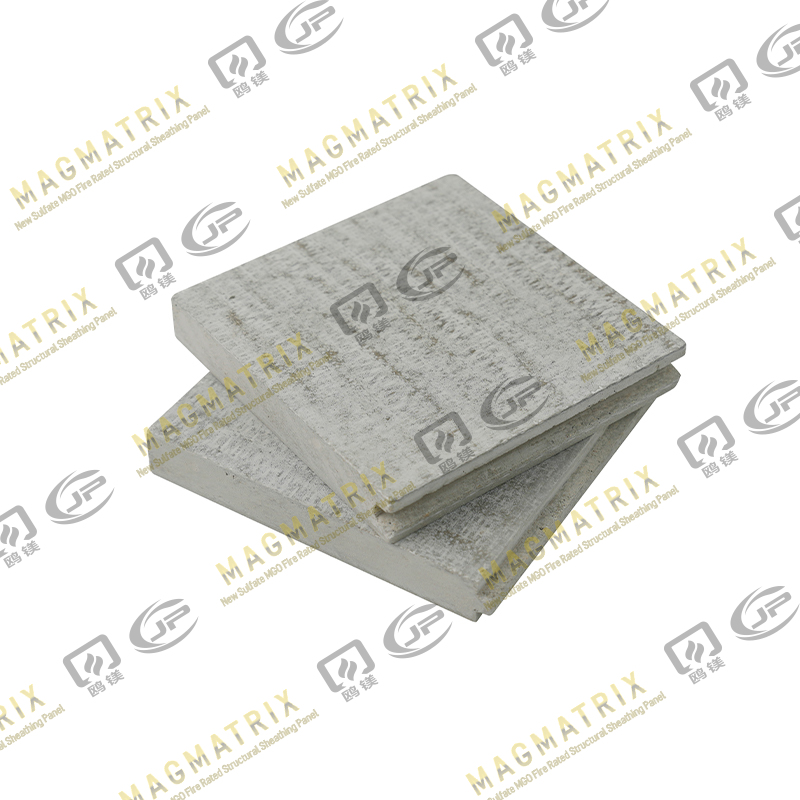 Multi-Support MgO Subfloor Sheathing Board
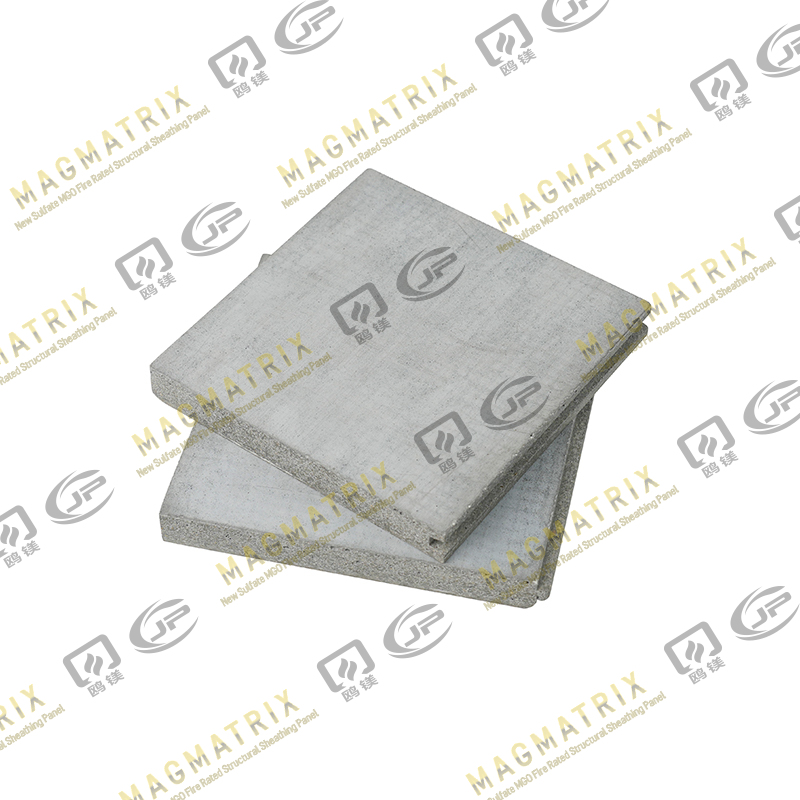 Perseverance MgO Subfloor Sheathing Board
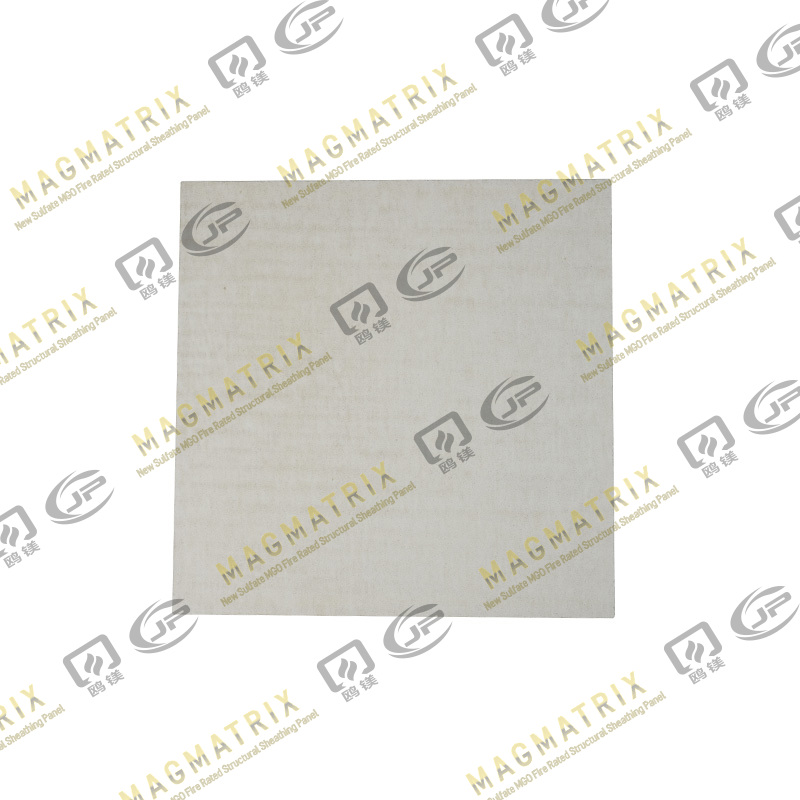 MagMatrix MgO Underlayment Panel/board