The Core Functions of Sheathing in Construction
Sheathing does far more than cover a wall. Applied directly over the structural frame before any siding or cladding goes on, it is the layer that turns a skeleton of studs and joists into a building capable of standing up to real-world forces — wind pressure, seismic movement, snow loads, and the slow creep of moisture. Strip it away, and even a perfectly framed structure becomes vulnerable to racking, shifting, and collapse.
The three core functions sheathing performs are structural reinforcement, weather resistance, and surface preparation. On the structural side, sheathing panels tie individual framing members together into a unified diaphragm. Engineers rely on this diaphragm effect when calculating a wall's ability to resist lateral forces — the kind generated by a hurricane or an earthquake. On the weather side, sheathing acts as the first hard barrier between the outdoors and the building interior, stopping wind-driven rain before it reaches insulation or framing. And as a surface, it provides the continuous, nail-able substrate that exterior siding, roofing, and flooring materials require to be properly attached.
These three functions work together. A wall that resists racking but leaks moisture will fail over time. A wall that is well-sealed but structurally weak will not survive a high-wind event. Sheathing is the layer that addresses all three concerns simultaneously — which is why building codes in every jurisdiction require it.
Where Sheathing Is Used: Walls, Roofs, and Floors
Sheathing appears in three distinct locations within a building envelope, each with its own performance requirements.
Exterior walls are the most common application. Wall sheathing is nailed or screwed to the exterior face of the stud framing, covering the entire surface including areas above and below windows and door openings. It resists the lateral racking forces that try to push a wall out of plumb, and it provides the base onto which a weather-resistant barrier and finished siding are installed. In wood-framed construction, panels are typically oriented vertically so their long edge runs parallel to the studs, maximizing coverage and shear strength.
Roof sheathing, sometimes called roof decking, is applied across the rafters or trusses to form the continuous deck that supports the final roofing material — whether asphalt shingles, metal panels, or tile. It transfers the weight of the roof covering and any accumulated snow load down through the rafters and into the wall framing below. Roof sheathing also acts as a structural diaphragm at the roof level, resisting the uplift forces that wind exerts on overhangs and eaves.
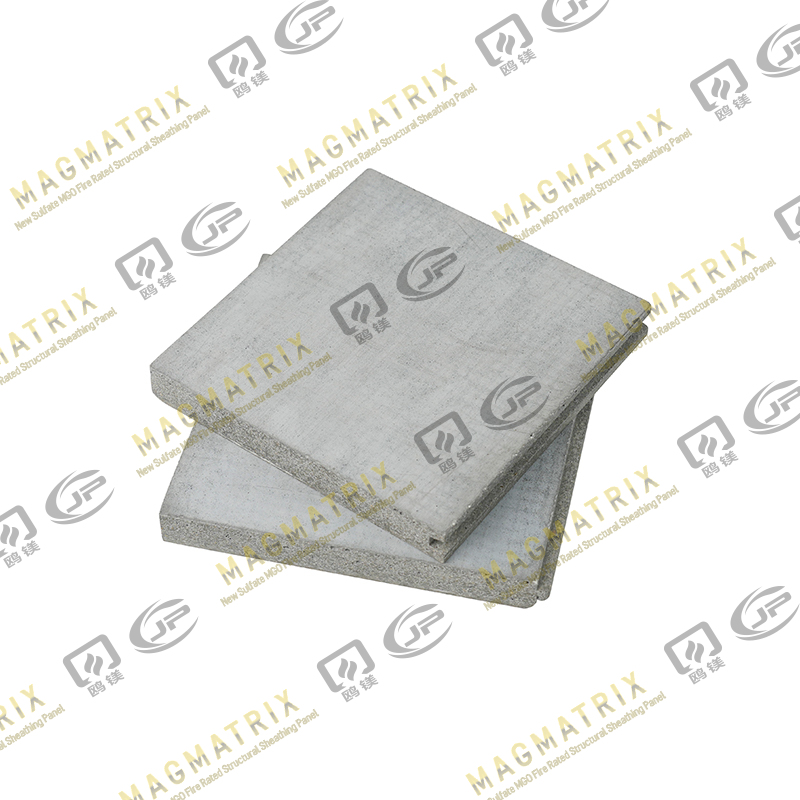
Floor sheathing, or subfloor sheathing, is laid across the floor joists to create the platform on which everything above — walls, furniture, flooring finishes — ultimately rests. It must resist concentrated loads without deflecting, and in moisture-prone areas such as basements and ground-floor assemblies over crawl spaces, it must also resist the humidity that rises from below. For projects where floor performance and moisture protection are both priorities, high-performance MgO subfloor sheathing panels built for load-bearing floor systems offer a significant upgrade over conventional wood-based options.
Structural vs. Non-Structural Sheathing: What's the Difference?
Not all sheathing panels are created equal, and the distinction between structural and non-structural sheathing is one of the most important concepts a builder or specifier needs to understand.
Structural sheathing is engineered to contribute directly to the load-bearing capacity of the wall or floor assembly. It connects individual studs to one another, resists shear forces, and in many designs qualifies as a shear wall component that engineers count on when calculating wind and seismic resistance. Structural panels must meet specific strength and stiffness standards — in the United States, this typically means compliance with DOC PS 1 or PS 2 performance standards. OSB and plywood are the most common structural sheathing materials, though magnesium oxide (MgO) panels have increasingly earned structural ratings through third-party testing.
Non-structural sheathing, by contrast, is installed primarily to improve thermal performance, sound attenuation, or moisture management. Rigid foam board, fiberboard, and gypsum-based panels fall into this category. They are not counted toward a wall's shear capacity and must be used in conjunction with either structural sheathing or diagonal bracing. The value they add is real — reducing thermal bridging through metal studs, lowering energy bills, and improving interior comfort — but they cannot stand alone as the sole sheathing layer in most code-compliant assemblies.
Some manufacturers now produce hybrid panels that fulfill both functions in a single board, eliminating the need for a separate layer of rigid insulation over the structural sheathing. This approach simplifies installation and reduces labor costs on projects where both structural performance and energy efficiency are priorities.
Common Sheathing Materials and Their Use Cases
The choice of sheathing material shapes the long-term performance of the entire building envelope. Each option comes with its own profile of strengths, limitations, and ideal applications.
Oriented Strand Board (OSB) is the dominant structural sheathing material in residential construction across North America. Made from compressed wood strands bonded with resin and wax adhesives, OSB delivers consistent density and strong shear performance at a lower cost than plywood. Its primary weakness is susceptibility to edge swelling when exposed to moisture during construction — a manageable issue with proper sequencing and a weather-resistant barrier applied promptly after installation.
Plywood is assembled from cross-laminated wood veneers, giving it excellent nail-holding strength and superior resistance to moisture compared to OSB. CDX-grade plywood — rated for exterior exposure — has been the material of choice for builders in high-humidity regions for decades. It costs more than OSB but holds up better when construction schedules expose the sheathing to rain for extended periods.
Gypsum board is a non-structural option used primarily on interior walls and in applications where fire resistance is the priority. It is affordable and lightweight but absorbs moisture readily, making it unsuitable for exterior applications without additional protection. Glass mat gypsum — which replaces the paper facing with a fiberglass mat — solves the moisture problem and is widely used as a non-structural exterior sheathing in commercial construction.
Cement board provides a dense, moisture-resistant base for masonry veneer, ceramic tile siding, and stucco systems. It is non-combustible and dimensionally stable in wet conditions, but its weight makes it more labor-intensive to handle on large wall areas.
Rigid foam board serves as non-structural insulation sheathing, interrupting the thermal bridging that occurs through metal or wood studs. Polyisocyanurate (polyiso), expanded polystyrene (EPS), and extruded polystyrene (XPS) are the most common varieties, each with a different R-value per inch and moisture resistance profile.
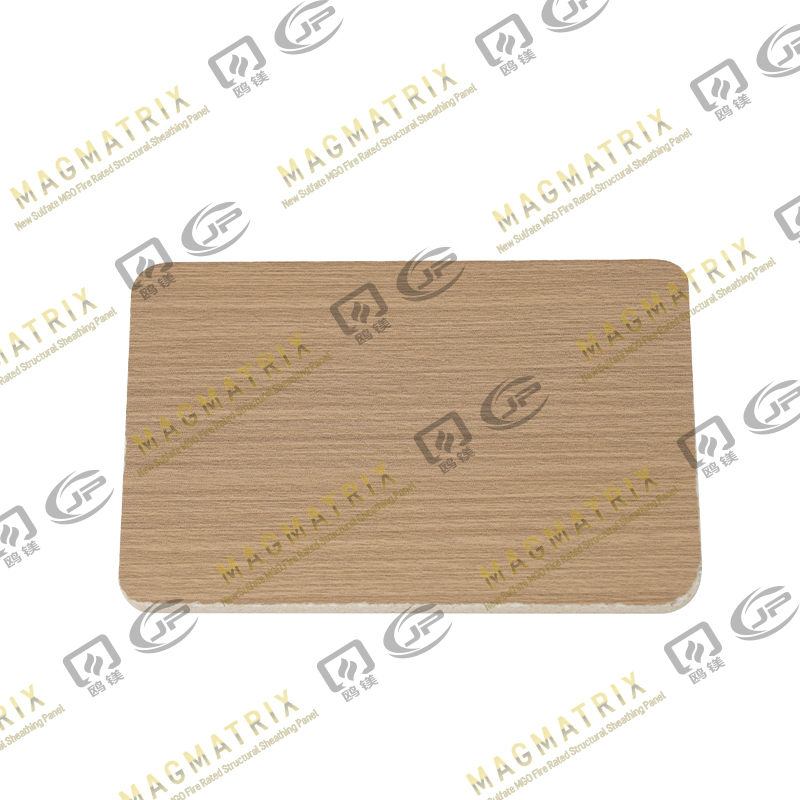
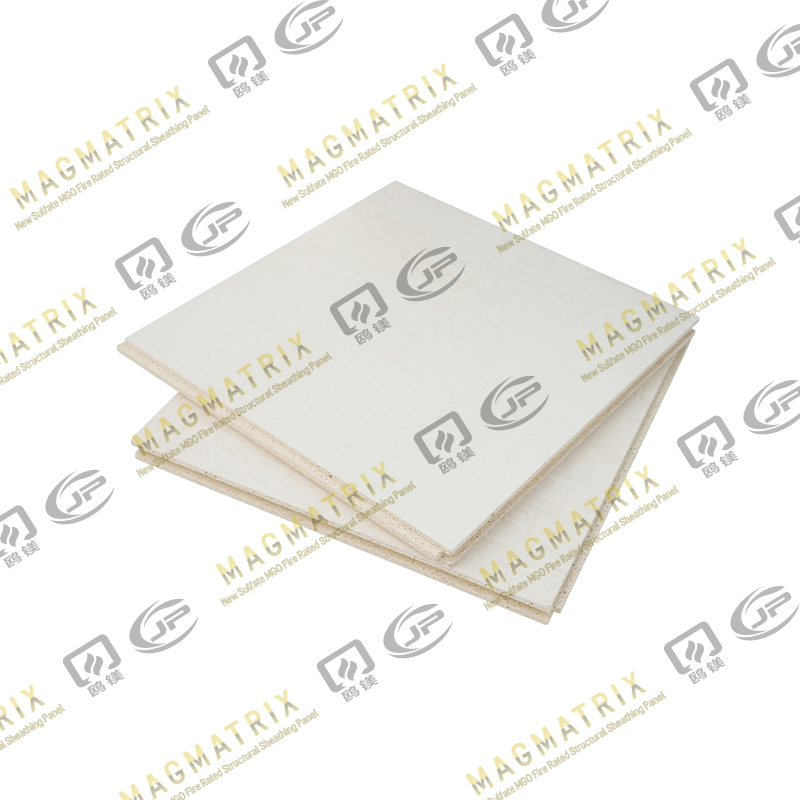
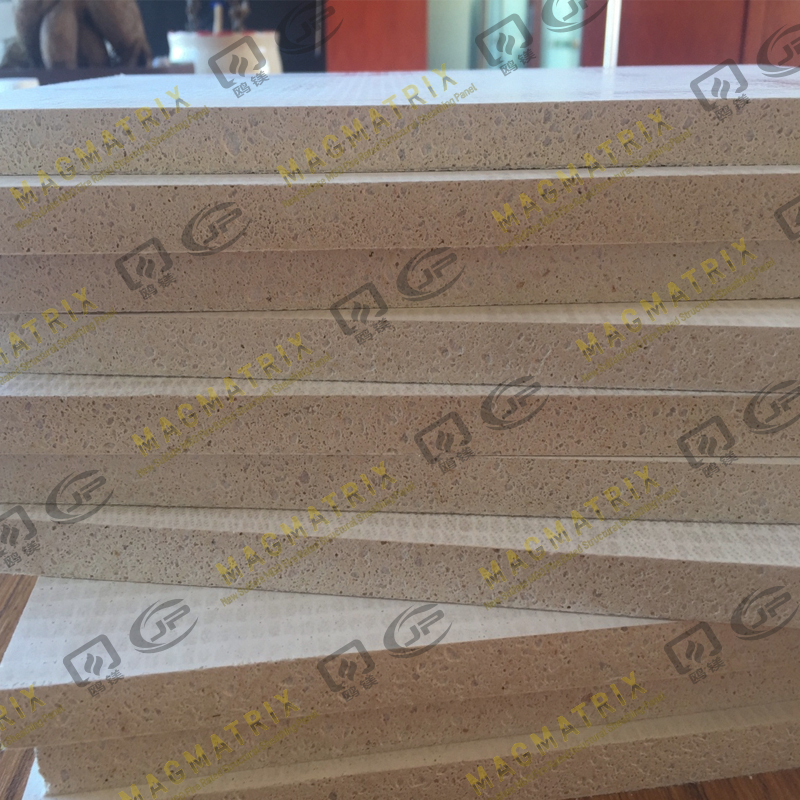
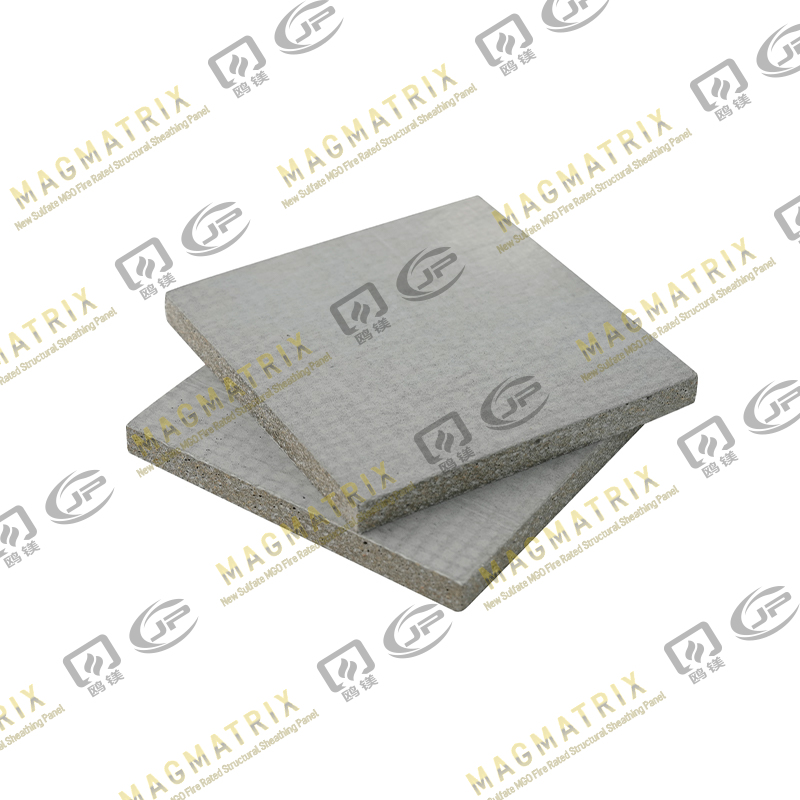
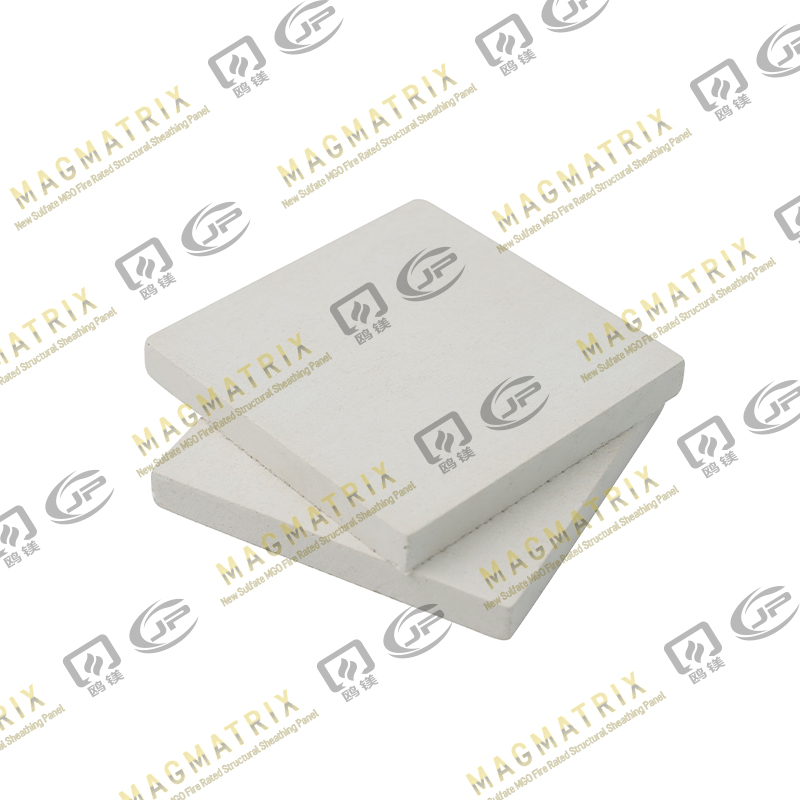
Magnesium oxide (MgO) board has emerged as a high-performance alternative that addresses the combined limitations of wood-based and gypsum-based panels. MgO panels are non-combustible, moisture-resistant, dimensionally stable, and — depending on the formulation and thickness — capable of achieving structural ratings that allow them to replace OSB or plywood in shear wall assemblies. For builders seeking a single panel that handles structural, fire, and moisture requirements simultaneously, fire-resistant MgO wall sheathing boards engineered for exterior structural applications represent a compelling upgrade path. For more on how MgO compares to conventional materials, see whether MgO boards can replace plywood or OSB sheathing.
Sheathing material comparison by primary use case and key characteristics
| Material |
Type |
Best Application |
Key Limitation |
| OSB |
Structural |
Exterior walls, roofs, floors |
Edge swelling when wet |
| Plywood (CDX) |
Structural |
High-humidity regions, roofs |
Higher cost than OSB |
| Gypsum board |
Non-structural |
Interior fire-rated walls |
Not moisture-resistant |
| Glass mat gypsum |
Non-structural |
Commercial exterior walls |
Lower structural strength |
| Cement board |
Structural |
Masonry/tile cladding base |
Heavy, labor-intensive |
| Rigid foam |
Non-structural |
Thermal bridging reduction |
Requires supplemental bracing |
| MgO board |
Structural / Hybrid |
Exterior walls, floors, fire-rated assemblies |
Higher upfront cost |
Building Code Requirements for Sheathing
Sheathing installation is not discretionary — it is governed by national model codes and local amendments that specify minimum panel thickness, fastener size, and nailing schedules. Understanding the baseline requirements helps builders select the right product and avoid costly inspection failures.
Under the International Residential Code (IRC), the standard minimum thickness for structural wall sheathing is 7/16 inch for OSB and 15/32 inch for plywood when studs are spaced 16 inches on center. Walls framed at 24 inches on center require thicker panels — typically at least 1/2 inch — to maintain stiffness between supports. Gable end walls are an exception where 3/8-inch panels may be acceptable in lower wind zones.
Fastening schedules are equally codified. The standard requirement for structural panels calls for nails spaced 6 inches on center at panel edges and 12 inches on center in the field (the interior of the panel, away from edges). In high-wind zones — particularly along the Gulf Coast, Atlantic seaboard, and in hurricane-prone regions — both the nail size and spacing requirements are tightened. The Building America Solution Center guidance on structural sheathing in exterior walls provides detailed IRC table references for nail specifications by wind speed and exposure category.
Beyond thickness and fastening, codes also address panel orientation, edge blocking, moisture ratings, and the use of weather-resistant barriers over the sheathing layer. Panels installed at exposed roof overhangs, for example, must carry an exterior exposure rating — standard sheathing panels rated for interior use are not permitted at eaves and rakes where they would face direct weather exposure.
Local jurisdictions frequently adopt amendments that exceed the model code minimums, particularly in seismic zones and coastal areas. Always confirm requirements with the local building department before specifying sheathing for a project.
Why More Builders Are Choosing MgO Sheathing Board
The limitations of conventional sheathing materials have become harder to ignore as building performance standards rise. OSB and plywood absorb moisture during construction and in service, creating conditions favorable to mold and structural degradation. Gypsum products crack under impact. Cement board is heavy and slow to install. Each material requires trade-offs that project teams must manage carefully.
Magnesium oxide sheathing board was developed specifically to address these compounding limitations. The chemistry of MgO — a mineral binder derived from magnesium and oxygen — produces a panel that is inherently non-combustible, dimensionally stable in the presence of moisture, and resistant to mold, mildew, and pest damage. These properties hold up over the life of the building, not just during initial construction.
On the structural side, certified MgO sheathing panels have demonstrated racking shear resistance comparable to OSB in independent third-party testing. This means they can be specified as the structural sheathing layer in wood-framed and steel-framed assemblies, eliminating the need for a separate fire-rated overlay in applications where fire resistance is required. The result is a simpler wall assembly with fewer layers, faster installation, and a more predictable performance record.
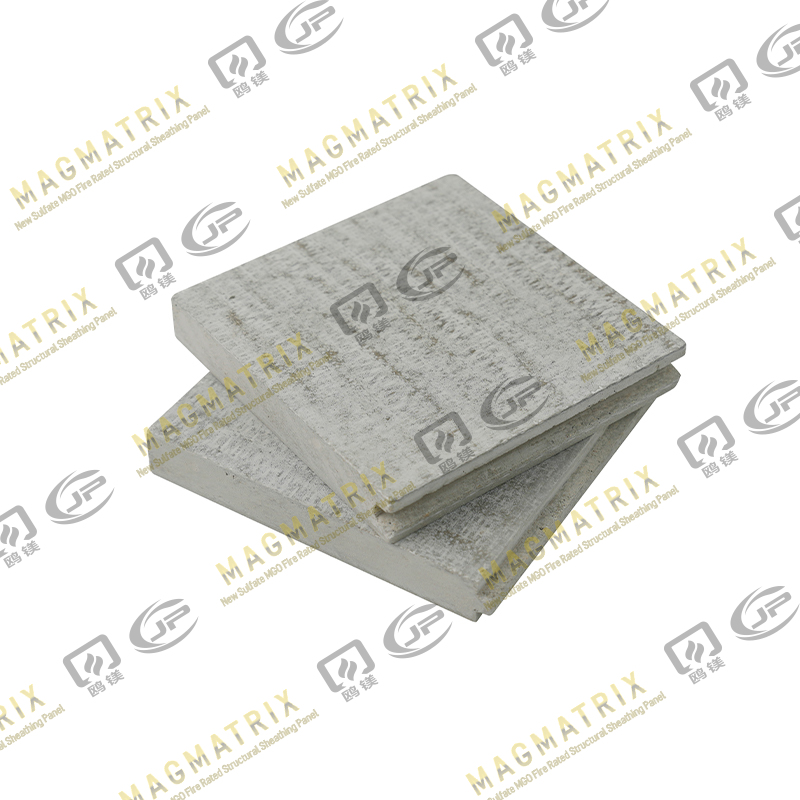
Two product lines in particular reflect the breadth of available MgO sheathing options for modern construction. The Multisupport MgO wall sheathing board designed for superior racking resistance is engineered for applications where lateral load performance is a primary design requirement. For projects where long-term structural durability under variable climate conditions is the priority, the Perseverance MgO wall sheathing board for long-term structural durability delivers consistent performance across temperature and humidity cycles.
As energy codes push builders toward tighter, better-insulated assemblies, and as insurance requirements in wildfire and hurricane zones tighten, the case for MgO sheathing continues to strengthen. The question for most projects is no longer whether MgO board can perform — it is whether the project team is ready to move beyond the defaults of the past.



 English
 русский
 Español
 BMSC 517 New Sulfate MgO Board
 Multi-Support MgO Wall Sheathing Board
 Perseverance MgO Wall Sheathing Board
 Multi-Support MgO Subfloor Sheathing Board
 Perseverance MgO Subfloor Sheathing Board
 MagMatrix MgO Underlayment Panel/board