Most chloride-based MgO boards fail silently — screws corrode, edges blister, and moisture migrates through the panel long before anyone notices. Sulfate MgO board was engineered specifically to fix that problem, and the chemistry behind it is worth understanding before you specify materials for your next project.
What Is Sulfate MgO Board?
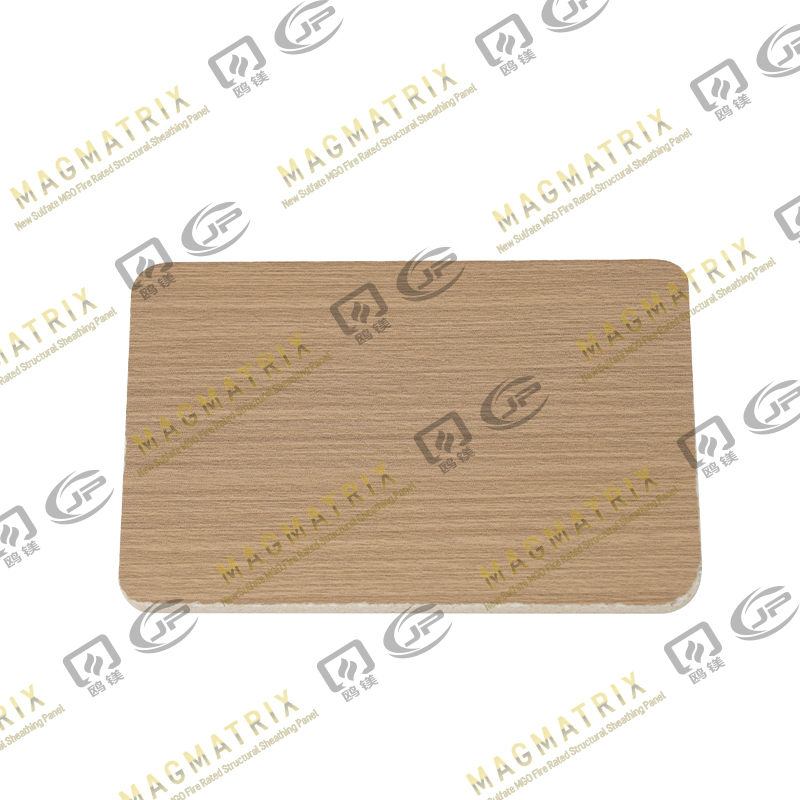
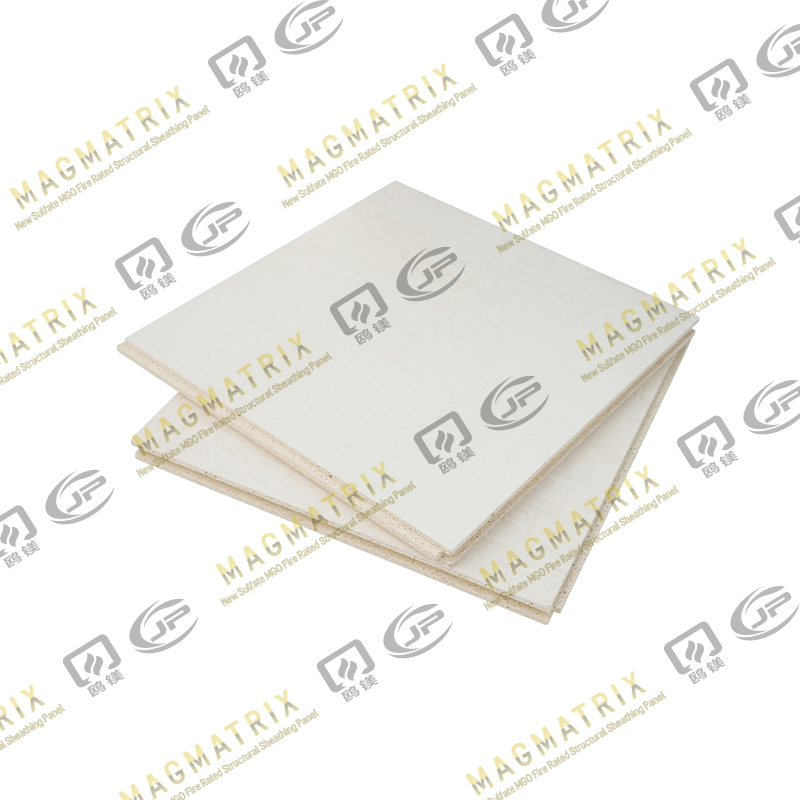
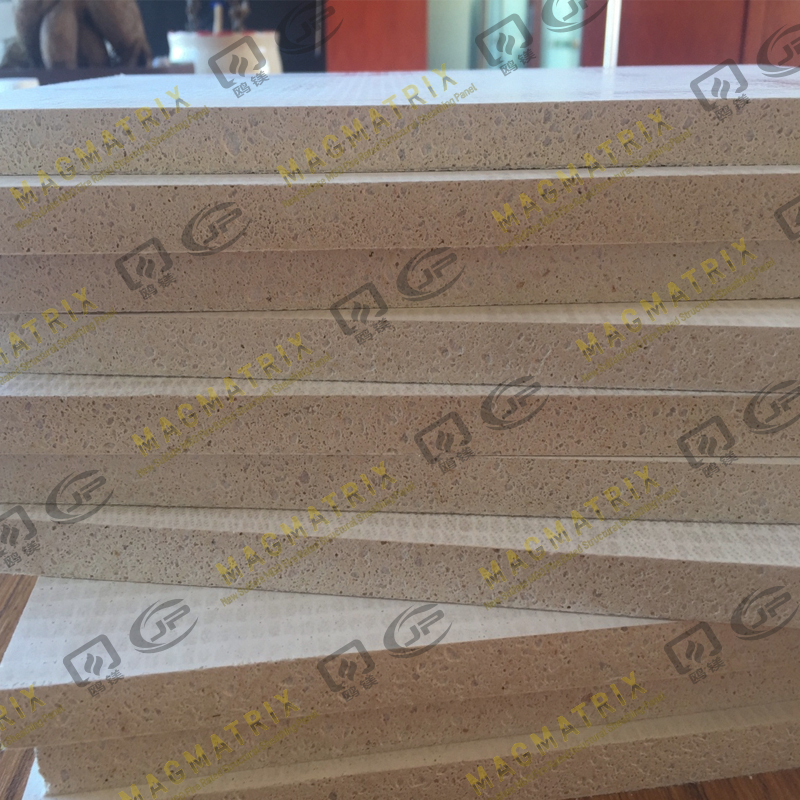
Sulfate MgO board — also called Magnesium Oxide Sulfate Board or Magnesium Sulfate MgO Board — is a non-combustible panel made from magnesium oxide (MgO) and magnesium sulfate (MgSO₄) as the primary binder, reinforced with fiberglass mesh, perlite, and wood fiber. It belongs to the broader MgO board family but differs fundamentally from older chloride-based versions.
The key distinction: the binder. Traditional MgO boards use magnesium chloride (MgCl₂), which is hygroscopic — it draws moisture from the air, leading to surface sweating, corrosion of metal fasteners, and dimensional instability in humid climates. Magnesium sulfate replaces chloride entirely, eliminating that moisture pathway at the chemistry level rather than masking it with coatings.
Jiangsu Jinpeng's BMSC 517 New Sulfate MgO Board takes this a step further. Developed in collaboration with institutions from China and Germany under the Chinese Academy of Sciences "Hundred Talents Plan," it achieves a pure 5·1·7 magnesium sulfate cementitious phase — the most chemically stable phase available. Its water solubility is just 0.034 g/100g, placing it on par with Portland cement and far outperforming both the 3·1·8 oxysulfate and 5·1·8 oxychloride phases.
Performance That Matters on the Job
Fire Resistance
Sulfate MgO board is non-combustible by nature. Under ASTM E84, it achieves a flame spread index of zero. Assembled into wall systems, it supports 2-hour fire ratings under ASTM E119 — the U.S. standard that simulates real fire conditions including structural load — making it code-compliant for fire-rated wall and floor assemblies in commercial and residential construction.
The MagMatrix Perseverance MgO Wall Sheathing Board, for instance, holds ASTM E136 noncombustible certification and ASTM E84 Class A approval, with Intertek-certified 2-hour wall assembly test results on both steel and wood stud framing. In Europe, the equivalent is the EN13501-1 Class A1 rating — the highest non-combustible classification available.
Moisture and Corrosion Resistance
Because sulfate boards contain no free chloride ions, they do not corrode steel studs, screws, or embedded reinforcement. In ASTM C666 freeze-thaw cycle testing, sulfate MgO panels maintain dimensional stability without delamination — a critical advantage for applications in coastal regions, high-humidity climates, or anywhere that experiences temperature swings.
This makes MgO wall sheathing panels for exterior and humid-area use a logical choice for bathrooms, kitchens, below-grade walls, and exterior sheathing behind rain screens.
Structural Strength
Sulfate MgO board delivers high early-strength development and substantial resistance to impact and racking forces. The Multi-Support MgO Wall Sheathing Board and Perseverance series have passed ASTM D2718-18 shear testing and racking shear resistance certification — meaning they can function as structural sheathing panels, not just decorative cladding.
Sulfate vs. Chloride MgO Board — Quick Comparison
| Property |
Sulfate MgO Board |
Chloride MgO Board |
| Binder |
MgSO₄ (chloride-free) |
MgCl₂ |
| Moisture absorption |
Very low |
Higher (hygroscopic) |
| Metal corrosion risk |
None |
Present (chloride migration) |
| Dimensional stability |
Excellent in wet cycles |
May expand/blister |
| Fire rating (wall assembly) |
Up to 2-hr ASTM E119 |
Varies by product |
| Suitable for exterior use |
Yes |
Limited |
Where Sulfate MgO Board Is Used
The material is genuinely multi-application. Within a single building, it can appear as:
- Exterior wall sheathing — replaces OSB or plywood behind cladding, adding fire resistance and moisture durability without adding weight
- Subfloor sheathing — the MgO subfloor sheathing panels carry EN13501-1 A1-FL classification and are load-tested for heavy-use environments
- Underlayment — thin panels under vinyl, tile, or hardwood provide a stable, non-swelling substrate
- Interior fire-rated partitions — non-load-bearing lining boards for corridors, stairwells, and service areas
- Decorative backer boards — fire-retardant substrate for melamine laminate panels in commercial interiors
Available thicknesses from Jinpeng run 6 mm, 9 mm, 12 mm, and 16 mm at standard sheet sizes of 1220 mm × 2440–3050 mm, covering most framing configurations without custom cutting.
Practical Guidance for Specifiers and Builders
A few points that save headaches on-site:
- Verify the chemistry, not just the name. "MgO board" is a category, not a specification. Ask for test reports confirming chloride-free composition (MgSO₄ binder) and independent third-party fire certifications before purchasing.
- Match thickness to load rating. Structural sheathing applications need panels tested to ASTM D2718 or equivalent shear standards. Not all sulfate MgO boards are rated for structural use — confirm with the manufacturer's certification documentation.
- Use corrosion-resistant fasteners regardless. Even with a chloride-free panel, outdoor and high-humidity installations benefit from stainless or hot-dip galvanized screws to maximize service life.
- Leave expansion gaps. All cementitious panels expand slightly with moisture variation. Follow the manufacturer's installation guide on joint spacing — typically 3 mm between boards — to prevent edge cracking under cyclic conditions.
For anyone evaluating how sulfate MgO board compares to chloride-based alternatives in real conditions, Jinpeng's product knowledge library includes test reports and installation guidance for each product line.
The Bottom Line
Sulfate MgO board solves the two problems that held the original MgO board category back: chloride-induced corrosion and hygroscopic instability. For fire-rated assemblies, humid-climate construction, coastal projects, or any application where long-term moisture performance matters, it is a technically superior choice over both chloride-based MgO boards and traditional materials like gypsum, OSB, or fiber cement. The certifications exist, the chemistry is sound, and the installation process is no more complex than conventional sheathing — which makes it straightforward to specify with confidence.



 English
 русский
 Español
 BMSC 517 New Sulfate MgO Board
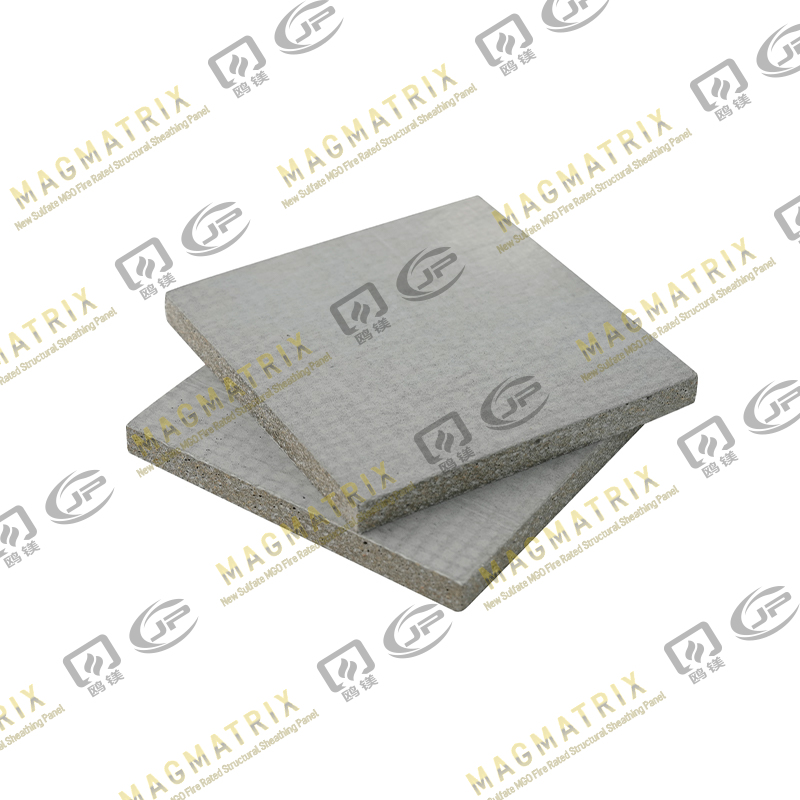 Multi-Support MgO Wall Sheathing Board
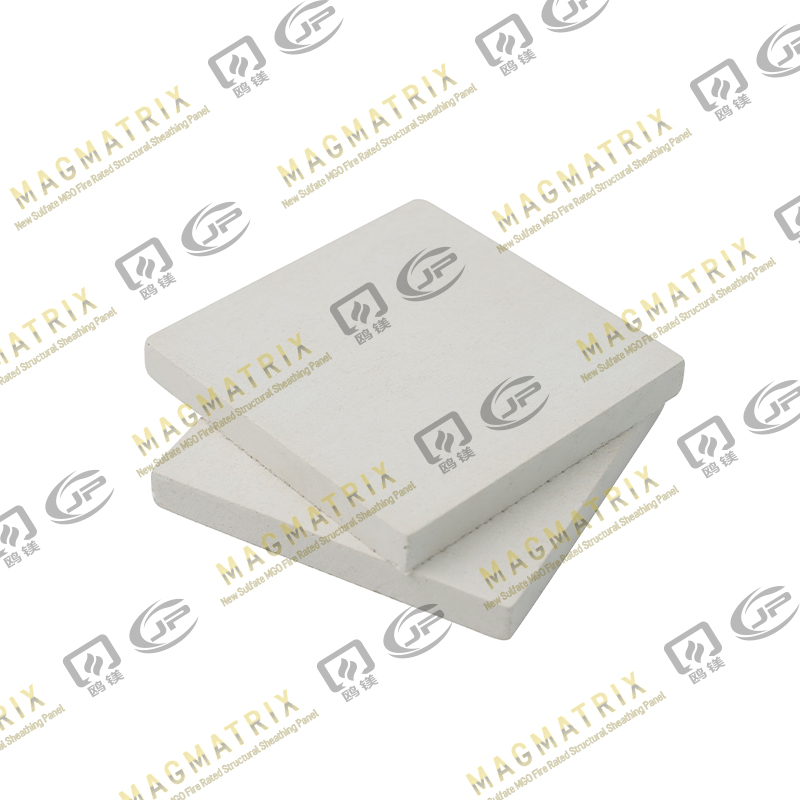 Perseverance MgO Wall Sheathing Board
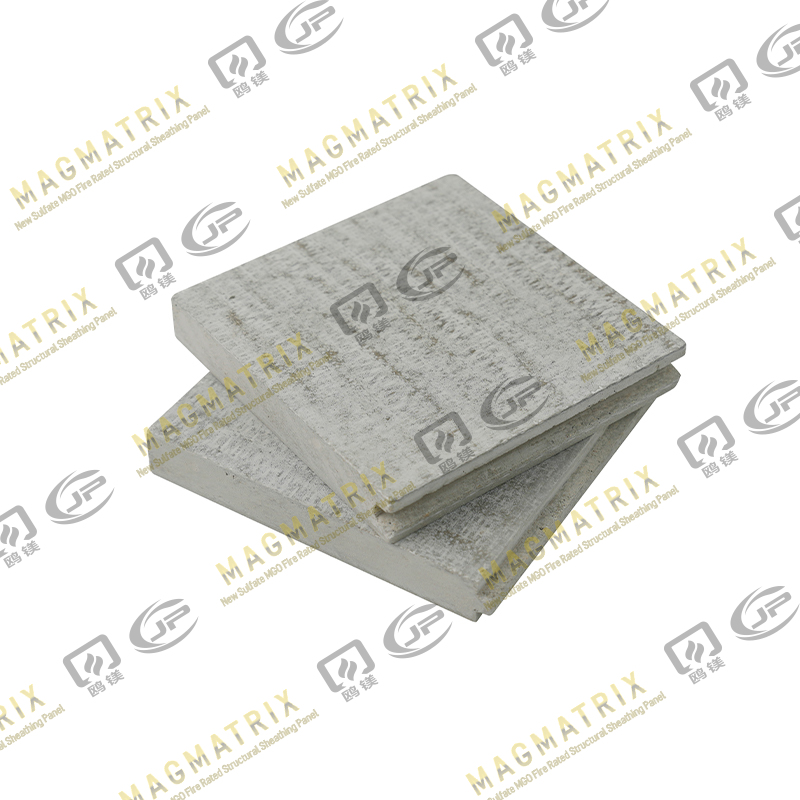 Multi-Support MgO Subfloor Sheathing Board
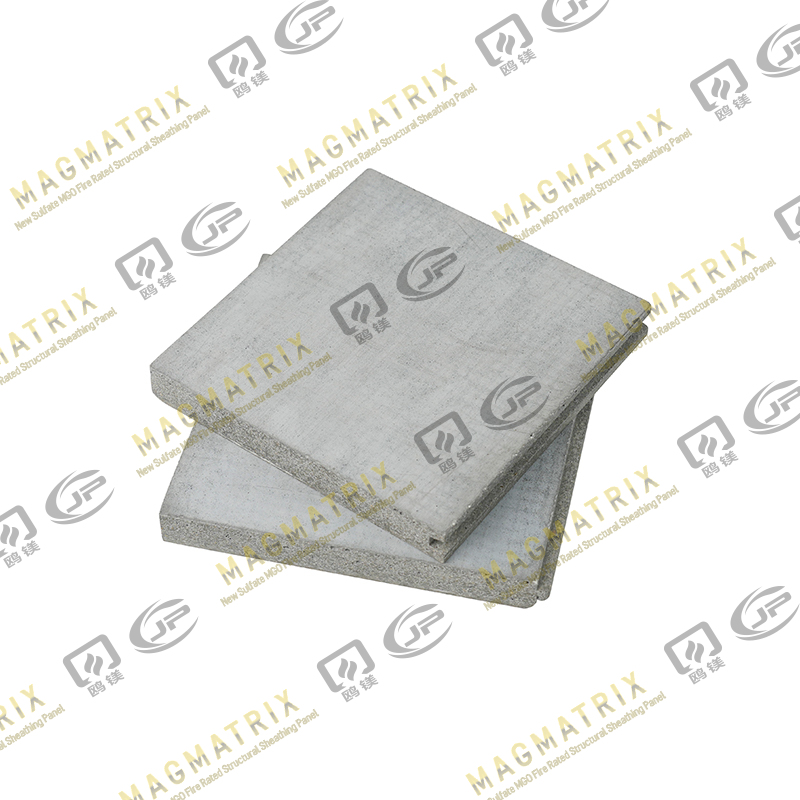 Perseverance MgO Subfloor Sheathing Board
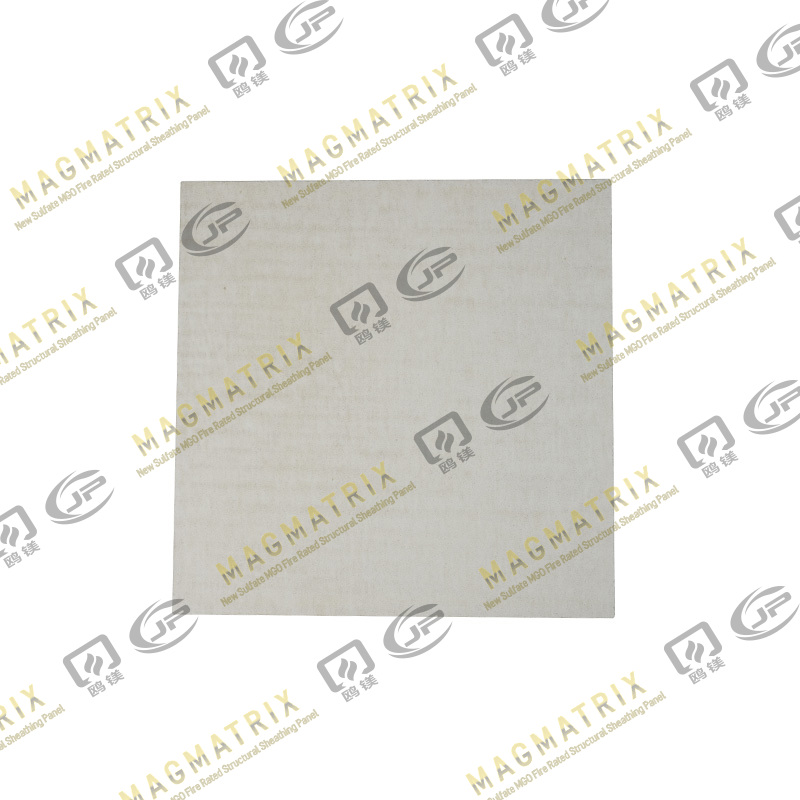 MagMatrix MgO Underlayment Panel/board