Why the Binder in Your MgO Board Matters More Than You Think
Most buyers shopping for magnesium oxide board focus on thickness, density, and price. Few stop to ask what holds the board together — and that's the decision that determines how the panel performs five years from now.
Traditional MgO boards use magnesium chloride (MgCl₂) as the primary binder. The newer generation — sulfate MgO board products — replaces that with magnesium sulfate (MgSO₄). This single chemical difference drives nearly every performance gap between the two.
Understanding why helps you avoid a costly specification mistake.
The Core Problem With Chloride-Based MgO Boards
Magnesium chloride is hygroscopic — it actively pulls moisture from the air and holds onto it. In humid climates or high-moisture applications, this causes chloride-based MgO boards to weep brine, corrode nearby metal fasteners, and delaminate over time. These failures are well-documented and were widespread in construction projects across North America and Europe throughout the 2000s and 2010s.
Magnesium sulfate does not share this behavior. MgSO₄ is stable under humidity fluctuation, which means the board absorbs and releases moisture naturally without retaining chloride ions that trigger corrosion. For a full breakdown of how sulfate MgO board compares to chloride-based boards, the chemistry makes the case clearly.
Fire Performance: What the Test Data Shows
Both board types carry fire-resistant claims, but the sulfate version earns stronger independent certification. Quality magnesium oxide sulfate board achieves EN13501-1 A1 non-combustible classification and ASTM E136 certification — the same tier as concrete and steel. Under ASTM E84, it scores a 0/0 flame spread and smoke development rating, meaning no measurable flame propagation and no toxic fume output.
In wall assembly testing under ASTM E119, a single 12mm layer on each side of a steel stud partition can deliver up to 120 minutes of fire resistance. That's a meaningful structural buffer for high-rise residential, commercial, and modular construction.
The board remains structurally intact up to 800°C and does not ignite below approximately 1,200°C — performance that drywall and OSB cannot approach.
Where Magnesium Sulfate MgO Board Gets Used
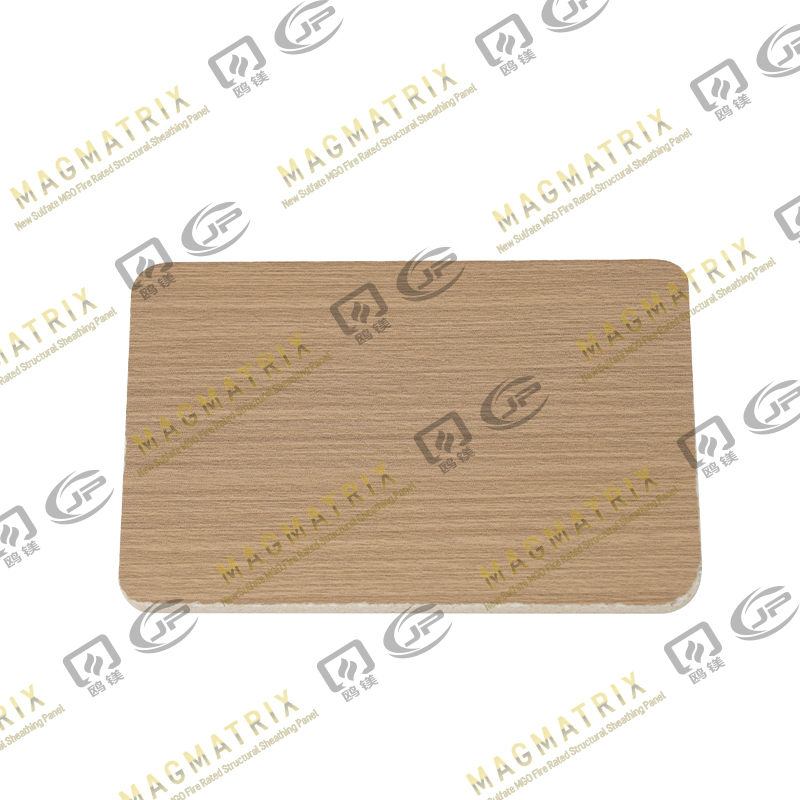
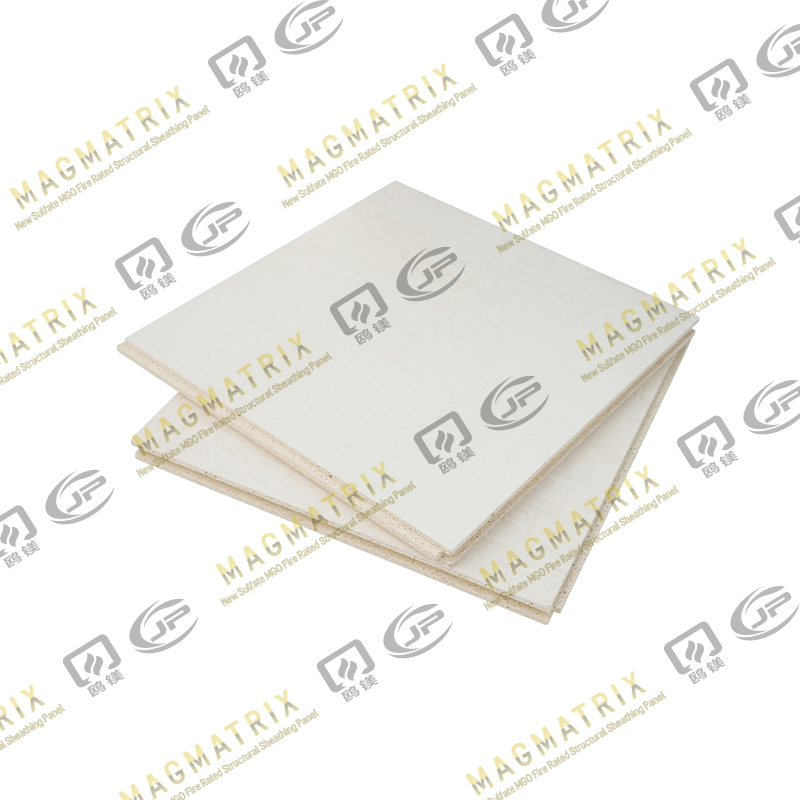
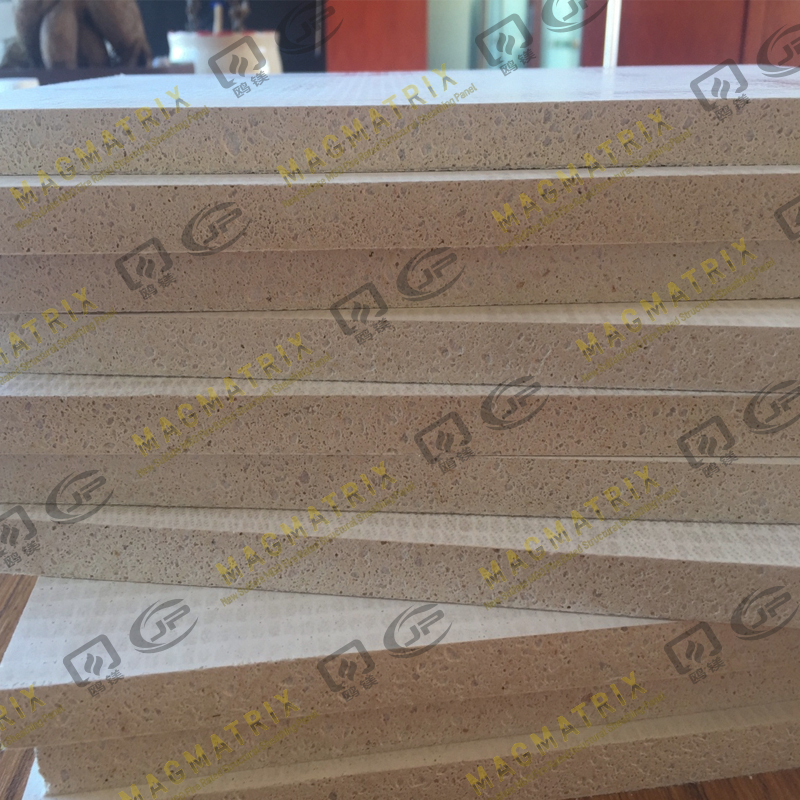
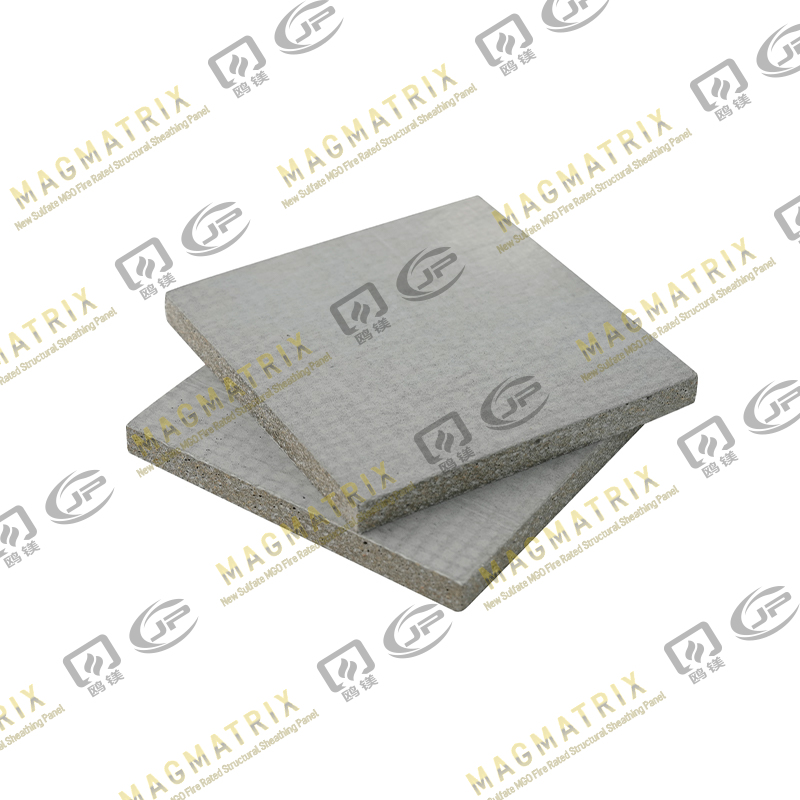
Magnesium sulfate MgO board is specified across a broad range of applications precisely because it handles multiple performance demands at once:
- Exterior wall sheathing — It replaces OSB and plywood in structural sheathing applications, offering superior moisture resistance and fire protection. See sulfate MgO board for exterior wall applications for installation guidance.
- Interior partitions and ceilings — Its zero formaldehyde, zero fly ash, and zero crystalline silica composition makes it a clean-air-compliant choice for hospitals, schools, and residential builds.
- Subfloor and underlayment — High bending strength (above 22 MPa with fiberglass mesh reinforcement) makes it a viable subfloor alternative, stable under temperature fluctuations and foot traffic.
- SIPs and modular panels — Its score-and-snap workability allows off-site fabrication without specialist tooling.
Key Specifications Buyers Should Verify
Not all boards marketed as "sulfate MgO" are equivalent. The magnesium oxide content matters: boards with less than 70% MgO by mass tend to underperform in fire and impact tests. Look for products backed by third-party certifications — Intertek CCRR reports, ASTM E119 wall assembly ratings, and EN13501-1 classification documents should be available on request.
Fiberglass mesh reinforcement layers are another differentiator. Four layers of high-tensile glass fiber mesh substantially increase bending strength and impact resistance compared to two-layer configurations. If a supplier cannot confirm mesh count and tensile specs, treat that as a gap.
Long-term durability also depends on installation. For guidance on avoiding cracking in magnesium sulfate MgO board after extended use, correct fastener spacing and gap allowances at panel edges are the two most common variables that determine whether a board installation remains stable at year five or develops surface defects.
How It Stacks Up Against Alternatives
Performance comparison across common sheathing materials
| Property |
Sulfate MgO Board |
Chloride MgO Board |
Gypsum Board |
OSB / Plywood |
| Fire Rating |
A1 / Class A |
A2 / Class A |
Class A (limited) |
Class C |
| Moisture Stability |
Excellent |
Poor (chloride leaching) |
Poor |
Poor |
| Metal Corrosion Risk |
None |
High |
Low |
Low |
| Formaldehyde |
None |
None |
Trace |
Present |
| Mold / Pest Resistance |
High |
Moderate |
Low |
Low |
The Practical Takeaway
If you're specifying for a project in a humid climate, a high-rise application, a modular build, or anywhere corrosion protection of metal framing matters, sulfate MgO board is the technically sounder choice over both chloride MgO and traditional sheathing materials. The premium over OSB or gypsum is real, but so is the gap in longevity, fire performance, and indoor air quality compliance.
Ask your supplier for the specific test reports that match your project's code requirements. A board certified to EN13501-1 A1 in Europe and ASTM E136 in North America covers most jurisdictions — but assembly ratings (ASTM E119) need to match your wall or floor configuration, not just the panel alone.
Specifying the right panel upfront is significantly cheaper than remediating moisture damage or fire rating deficiencies in an occupied building.



 English
 русский
 Español
 BMSC 517 New Sulfate MgO Board
 Multi-Support MgO Wall Sheathing Board
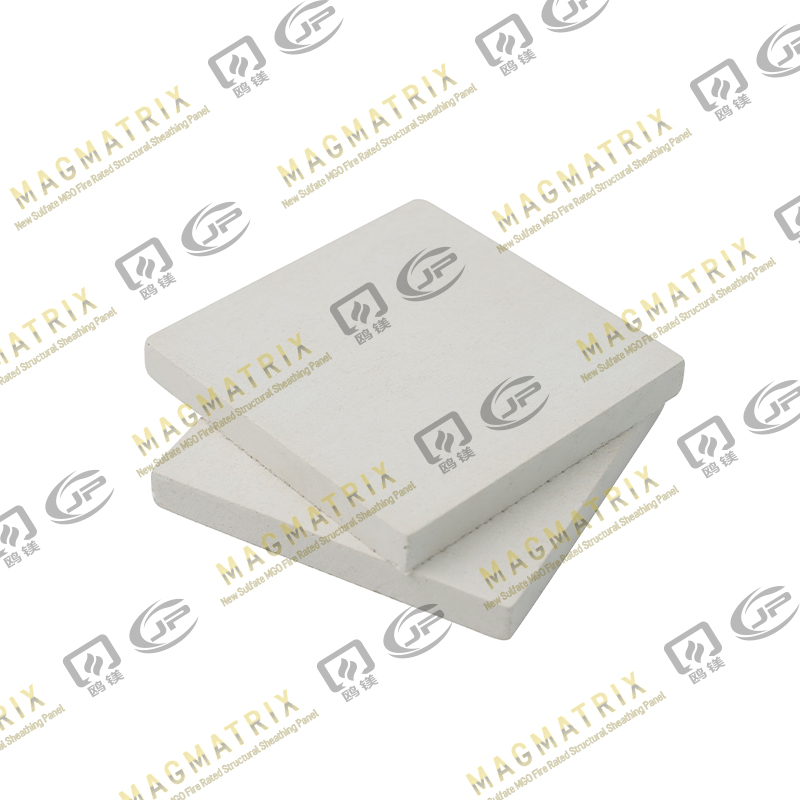 Perseverance MgO Wall Sheathing Board
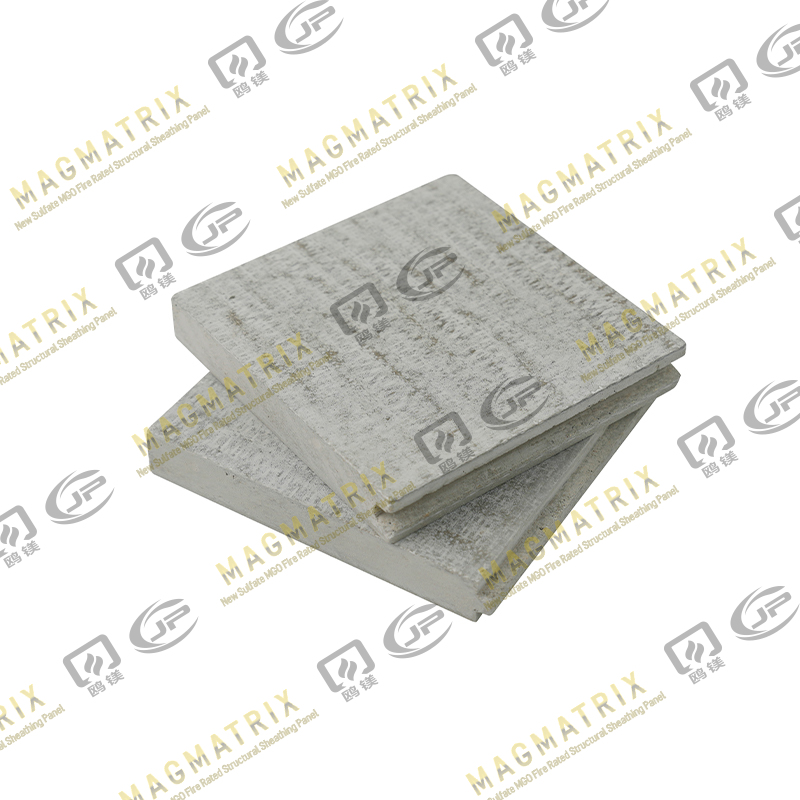 Multi-Support MgO Subfloor Sheathing Board
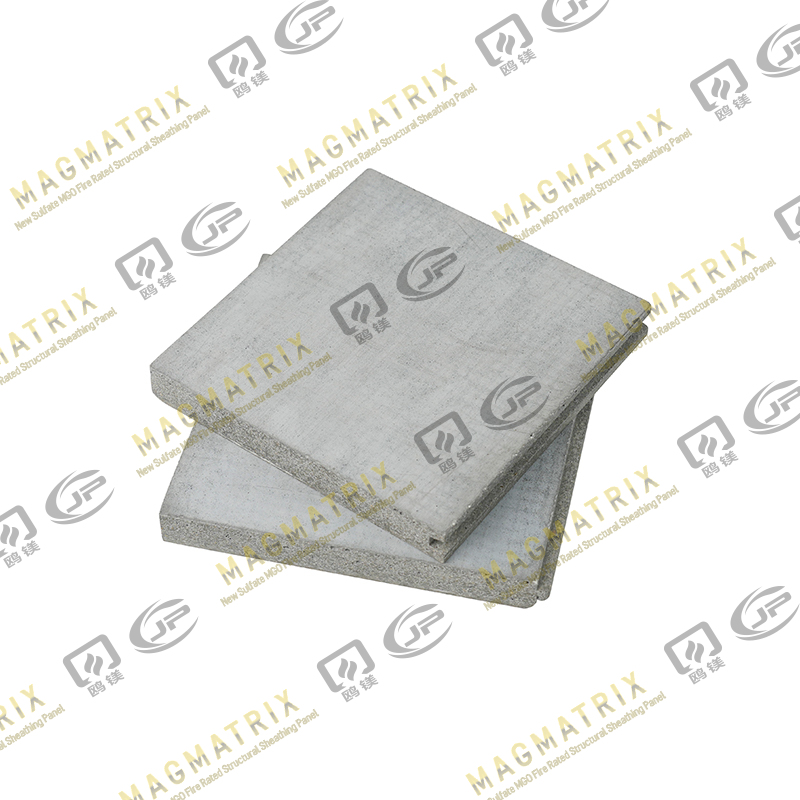 Perseverance MgO Subfloor Sheathing Board
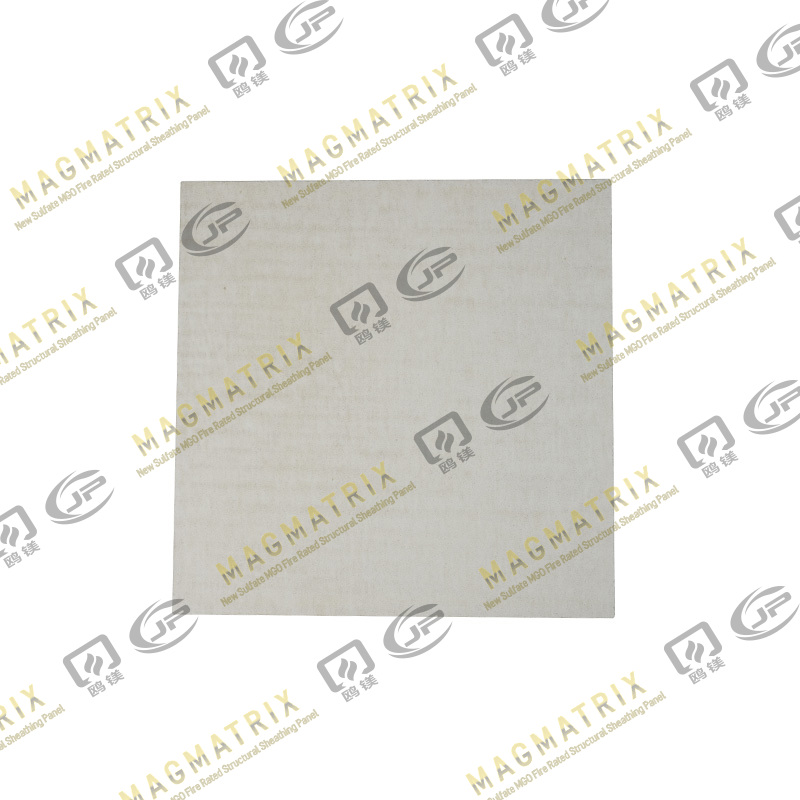 MagMatrix MgO Underlayment Panel/board