Three documents land in the same procurement inbox: a specification asking for magnesium sulfate, a supplier quote priced per tonne of MgSO4.7H2O, and a laboratory report naming a 5-1-7 crystalline phase. They describe one salt, and treating the names as interchangeable is how a batching error begins. The chemical equivalent of MgSO4 salt is magnesium sulfate, formula MgSO4, a white crystalline solid with a molar mass of 120.37 g/mol; the Epsom salt sold in garden centres is the same compound carrying seven water molecules.
The Chemical Equivalent of MgSO4 Salt Is Magnesium Sulfate
MgSO4 is magnesium sulfate, the magnesium salt of sulfuric acid, and every other label attached to it in commerce is either a hydrate of the same compound or a purity descriptor for it. The magnesium ion carries a 2+ charge, the sulfate ion carries a 2- charge, and no grade change alters either one.
Two CAS numbers cover almost every purchase: 7487-88-9 for the anhydrous solid and 10034-99-8 for the heptahydrate. Both dissolve freely in water, roughly 27 g per 100 mL at room temperature for the anhydrous form, which is why plants buy a granular solid and dissolve it on site instead of paying freight on water.
- Magnesium sulfate, the systematic name printed on safety data sheets
- MgSO4, the formula written on batching cards and purchase orders
- Epsom salt, the heptahydrate sold through retail and agricultural channels
- Kieserite, the naturally occurring monohydrate mineral
- Magnesium sulfate anhydrous, the technical grade used in dry mixes and oxysulfate boards
The chemical equivalent of MgSO4 salt is magnesium sulfate. The formula, the cation and the anion stay fixed across grades; only the water of crystallization and the impurity profile move.
What actually separates a fertilizer grade from a board-making grade is the impurity envelope: leachable chloride, heavy metals, acid-insoluble matter and particle size distribution. For a magnesium oxysulfate panel, chloride is the specification that matters most, because a chloride ion that stays mobile inside a finished board will eventually find a galvanized fastener.
What Chemical Equivalent Means in Practice
For MgSO4, the word equivalent is used in three different senses, and only one of them involves a calculation.
- Identity equivalent: magnesium sulfate and MgSO4 describe one substance under two naming systems, so a specification quoting either name refers to the same material.
- Hydrate equivalent: the same salt carrying a different number of water molecules, so the mass on the scale changes while the mole count stays fixed.
- Equivalent weight: the mass of salt that supplies one mole of charge, which for a 2:2 salt is exactly half of the molar mass.
120.37 g/mol, molar mass of anhydrous MgSO4
60.18 g/eq, equivalent weight at charge number 2
2 equivalents supplied by one mole of MgSO4
Equivalent weight equals molar mass divided by the charge number. For MgSO4 that is 120.37 divided by 2, or 60.18 g per equivalent. A dose written in equivalents becomes grams when you multiply by 60.18.
Water engineers work in that third sense. Because both ions are divalent, one mole of MgSO4 supplies two equivalents, and reporting against calcium carbonate gives a conversion of about 0.83 mg/L as CaCO3 for every 1 mg/L of MgSO4. Batch cards for a magnesium oxysulfate board usually skip equivalents and work in moles directly, which is the same arithmetic with the factor of two removed.
Hydrate Equivalents: One Salt, Four Common Forms
The forms on a supplier's list contain the same MgSO4 unit but different amounts of bound water, so a tonne of one delivers roughly half the MgSO4 that a tonne of another does.
Hydrate forms of magnesium sulfate and their MgSO4 content by mass.
| Form |
Formula |
Molar mass (g/mol) |
MgSO4 content (%) |
Typical use |
| Anhydrous |
MgSO4 |
120.37 |
100.0 |
Dry mixes, desiccants, oxysulfate batching |
| Monohydrate |
MgSO4.H2O |
138.38 |
87.0 |
Granular fertilizer and kieserite blends |
| Hexahydrite |
MgSO4.6H2O |
228.46 |
52.7 |
Evaporation product, rarely traded |
| Heptahydrate |
MgSO4.7H2O |
246.47 |
48.8 |
Epsom salt, liquid feed, agriculture |
The conversion between the two traded forms is fixed: 246.47 divided by 120.37 gives 2.05, so 1 kg of anhydrous MgSO4 is chemically equivalent to 2.05 kg of the heptahydrate. Working the other way, multiply a heptahydrate mass by 0.49 to express it as anhydrous.
Water is a raw material, not a free extra. Replacing anhydrous salt with the heptahydrate adds close to 1 kg of water for every 1 kg of MgSO4, and in an oxysulfate slurry that water shifts the phase balance as surely as the salt does.
Where the MgSO4 Equivalent Decides Board Performance
In a magnesium oxysulfate panel, magnesium sulfate is a reactant rather than a filler, and its molar ratio against reactive magnesia decides which crystal phase carries the board's strength.
Magnesium oxide boards are not a single material. Chloride-based boards set through magnesium oxychloride phases, sulfate-based boards through magnesium oxysulfate phases, and the two behave differently on site even when the data sheet lists the same density and the same reaction-to-fire class.
- Establish the reactive fraction. Not all of the MgO in a batch reacts; a citric acid activity test shows how much will enter the reaction and how quickly.
- Convert the salt dose to moles. Weigh the MgSO4 equivalent rather than the bag weight, applying the hydrate factor from the table above.
- Set the ratio. Published work on the 5-1-7 phase sits in the region of 5:1 to 8:1 MgO to MgSO4 on an active basis, and the working figure has to come from your own trial data.
- Control water and cure. Excess water raises porosity and dilutes the phase, while cure temperature decides whether the target phase or a weaker assemblage forms.
The main strength phase in most commercial sulfate boards is 5Mg(OH)2.MgSO4.7H2O, known as the 5-1-7 phase. It forms from magnesium oxide, magnesium sulfate and water, with no chloride in the system.
Sulfate route
- No leachable chloride to attack galvanized fasteners
- Lower efflorescence risk under humidity cycling
- Phase balance sensitive to molar ratio and water
- Slower early strength gain in cool conditions
Chloride route
- Fast early set and high green strength
- Lower salt cost per tonne of board
- Leachable chloride can corrode steel and cause surface bloom
- Greater moisture movement in service
Both routes have produced boards that pass identical fire tests, which is why the chemistry has to be read alongside the certification rather than instead of it. A side-by-side comparison of sulfate and chloride boards sets out the test evidence in more detail.
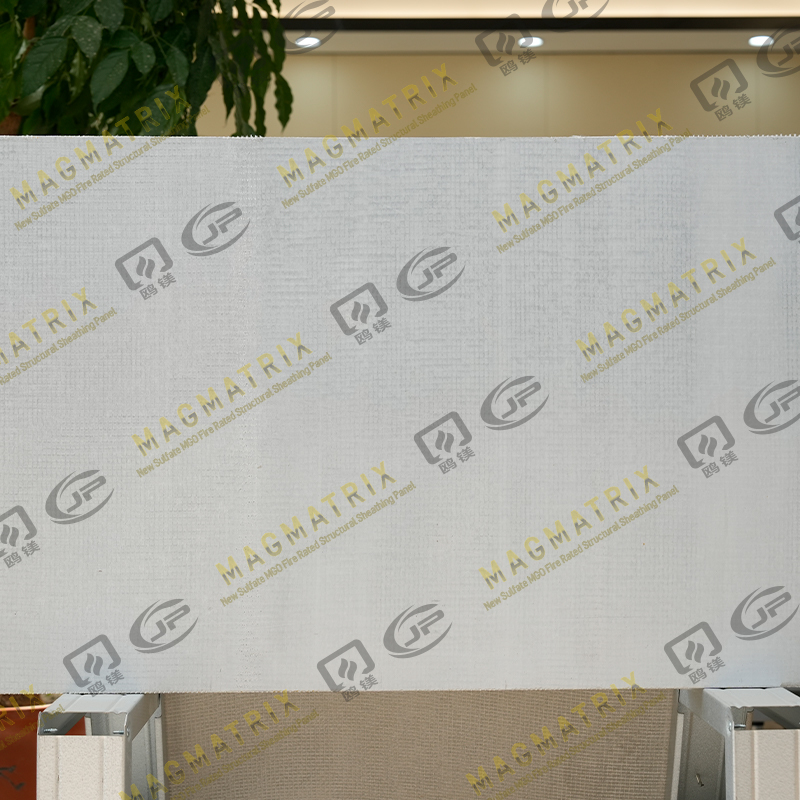 MagMatrix Multi-Support MgO Wall Sheathing BoardHigh-density fire-resistant structural MgO wall sheathing for Type III construction; compare its fire test evidence and published chemistry data before specifying.View Product →
The wall ranges built on this chemistry publish the reactive ratio and the chloride limit on their data sheets, so the numbers in the checklist below can be verified rather than assumed.
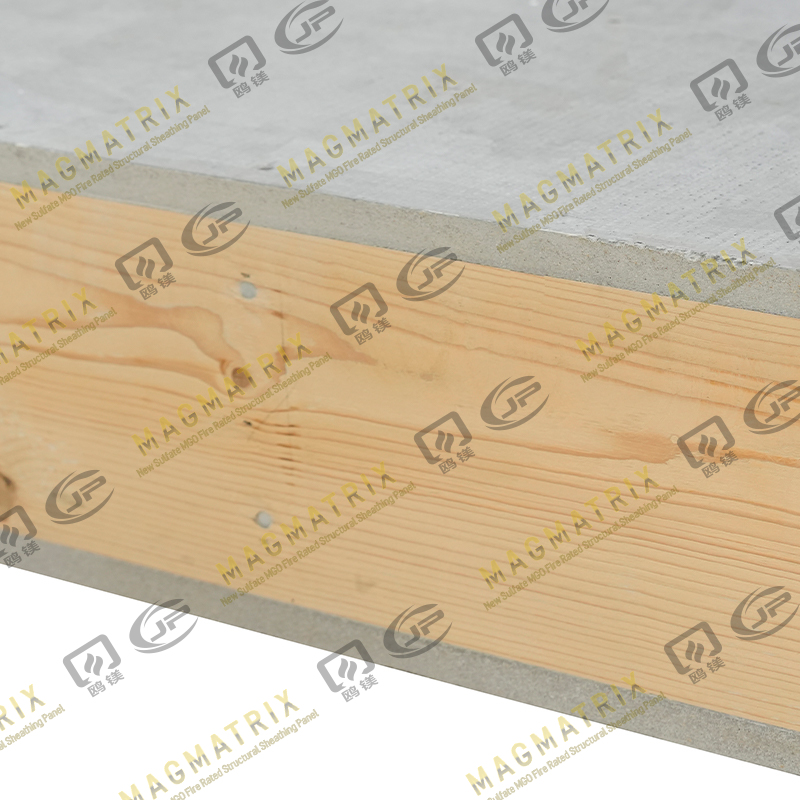 Multi-Support MgO Subfloor Sheathing BoardChloride-free magnesium sulfate subfloor panel for timber-frame floors, offering FRL 60–120 minutes and tongue-and-groove joints for tight installation.View Product →
Floor assemblies use the same salt system with a different density target, because a subfloor panel has to carry point loads and fastener pull-through rather than wind pressure.
Spec Sheet Checklist for a Sulfate-Based Magnesium Board
A sound purchase decision on a magnesium board rests on seven numbers that a supplier should produce on request, and none of them is the price per square metre.
- Declared MgO to MgSO4 molar ratio, stated on a reactive or total MgO basis
- Reactive MgO content and activity, reported with the test method used
- Leachable chloride in ppm, measured to ASTM C871 rather than inferred from a raw material certificate
- Free sulfate remaining after cure, as an indicator that the reaction ran to completion
- Oven-dry density, which separates a genuinely mineral panel from a light composite
- Flexural strength and fastener pull-through, because the two do not track each other
- Reaction to fire to ASTM E136, plus the ASTM E119 assembly rating where a fire separation is claimed
Third-party paperwork shortens the verification loop considerably. Non-combustibility to ASTM E136, a two-hour wood or steel stud wall assembly to ASTM E119, shear and racking data, and a 219-substance SVHC screen are the documents worth requesting before a sample is cut, and the published certificate set is the fastest place to confirm what already exists.
Frequently Asked Questions
Is Epsom salt the same chemical as MgSO4?
Yes. Epsom salt is magnesium sulfate heptahydrate, MgSO4.7H2O, and it contains the same magnesium and sulfate ions as the anhydrous salt at about 48.8 percent MgSO4 by mass. A dose quoted in kilograms is not a dose in moles until that factor is applied.
What is the equivalent weight of magnesium sulfate?
It is 60.18 g/eq, half of the 120.37 g/mol molar mass, because both the magnesium and the sulfate ions are divalent. In water treatment reporting the same figure converts to about 0.83 mg/L as calcium carbonate for every 1 mg/L of MgSO4.
Can magnesium sulfate replace magnesium chloride in a board formulation?
Not as a weight-for-weight substitution. The two salts set through different phase systems and need different molar ratios, water levels and curing schedules, so the swap belongs in a laboratory trial before it reaches a production line. The sulfate route avoids chloride-driven fastener corrosion but asks for tighter batching discipline.
How do I convert an anhydrous MgSO4 figure into the heptahydrate I have in stock?
Multiply by 2.05, the ratio of 246.47 to 120.37. Going the other way, multiply the heptahydrate mass by 0.49. Recalculate the water addition in the same step, because each kilogram of heptahydrate brings roughly a kilogram of water into the mix.
Rule of thumb for batch cards: quote the molar ratio and the chloride limit first, then the bag weight.



 English
 русский
 Español

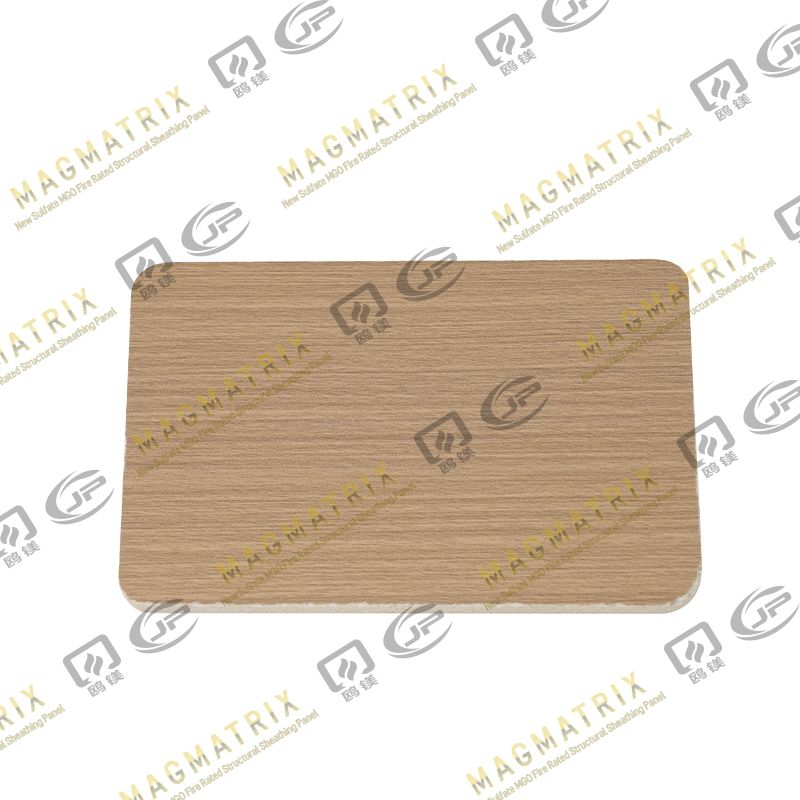
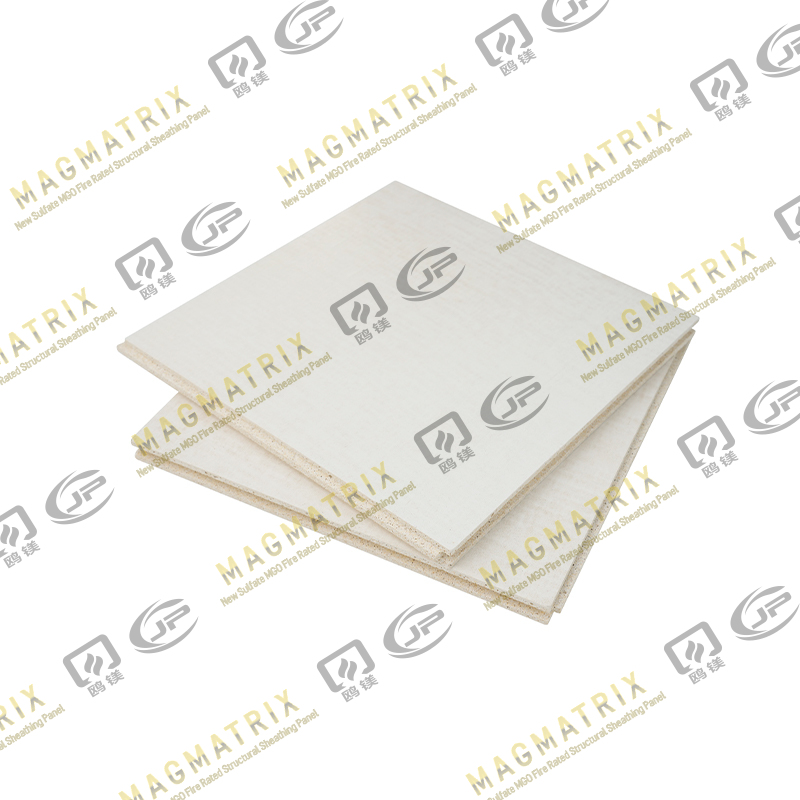
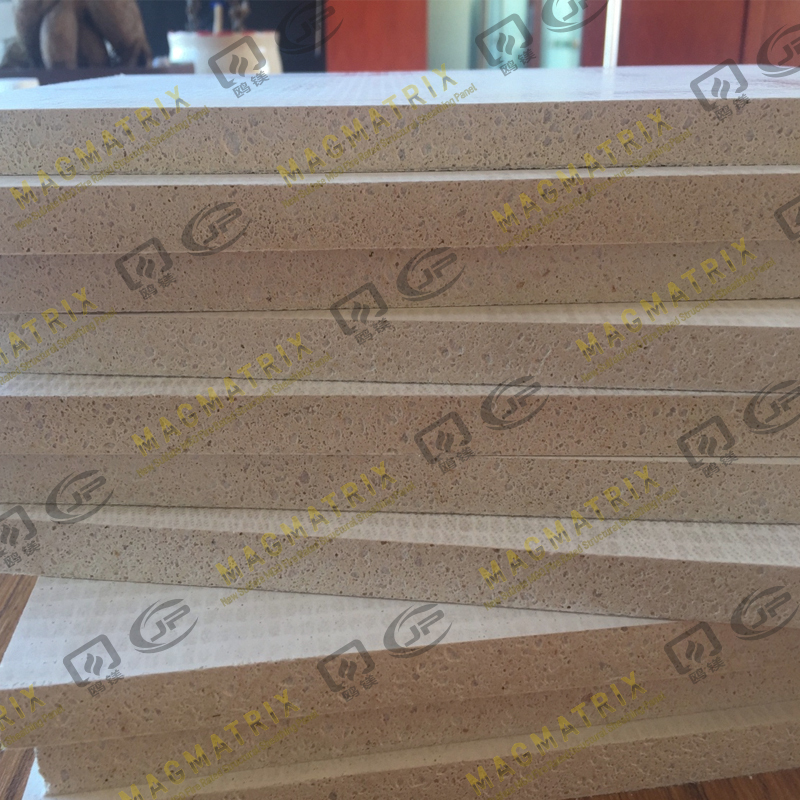 BMSC 517 New Sulfate MgO Board
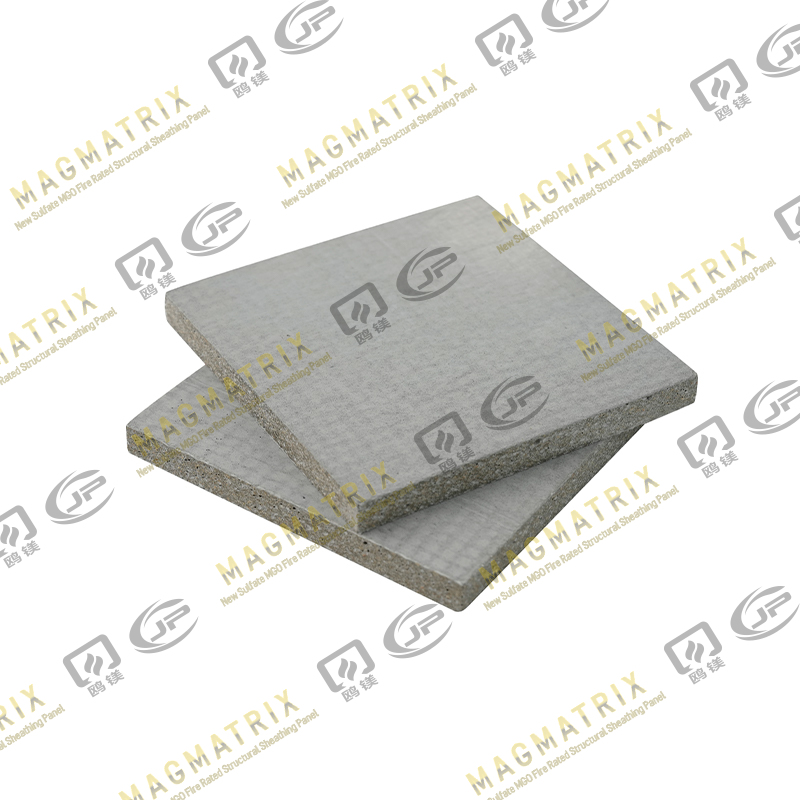 Multi-Support MgO Wall Sheathing Board
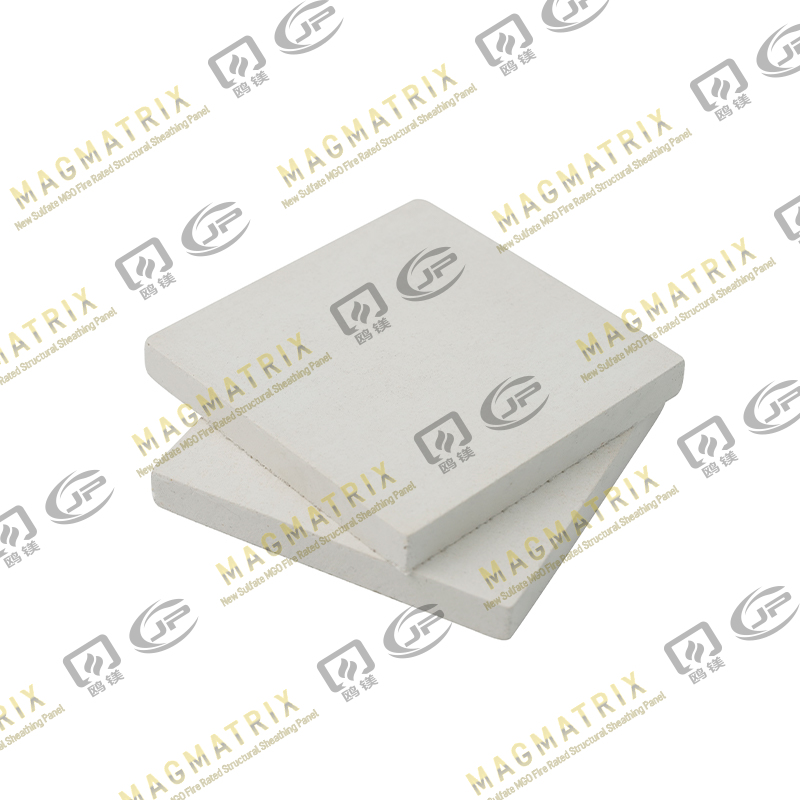 Perseverance MgO Wall Sheathing Board
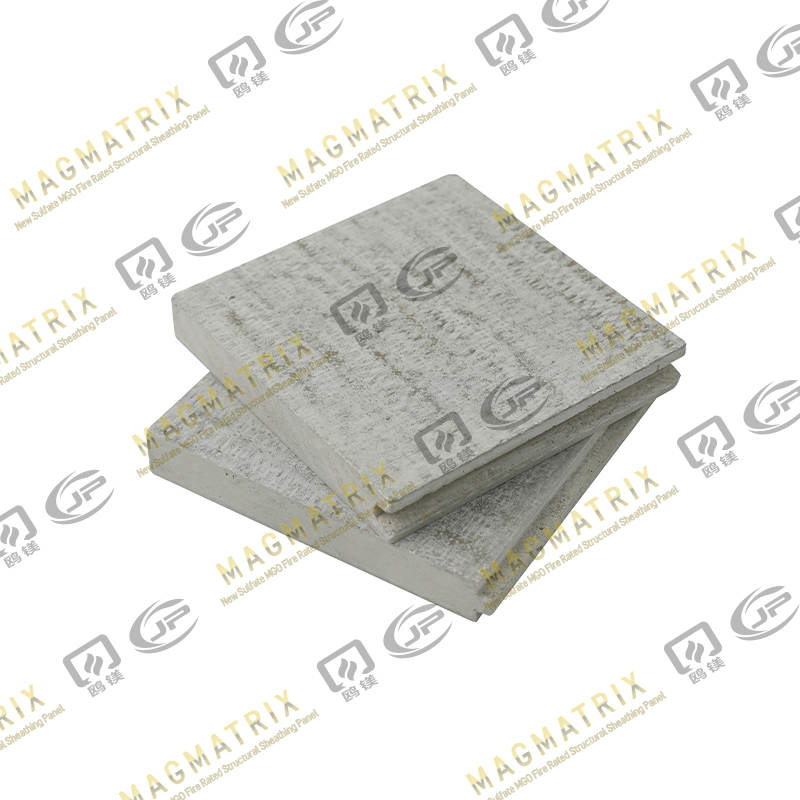 Multi-Support MgO Subfloor Sheathing Board
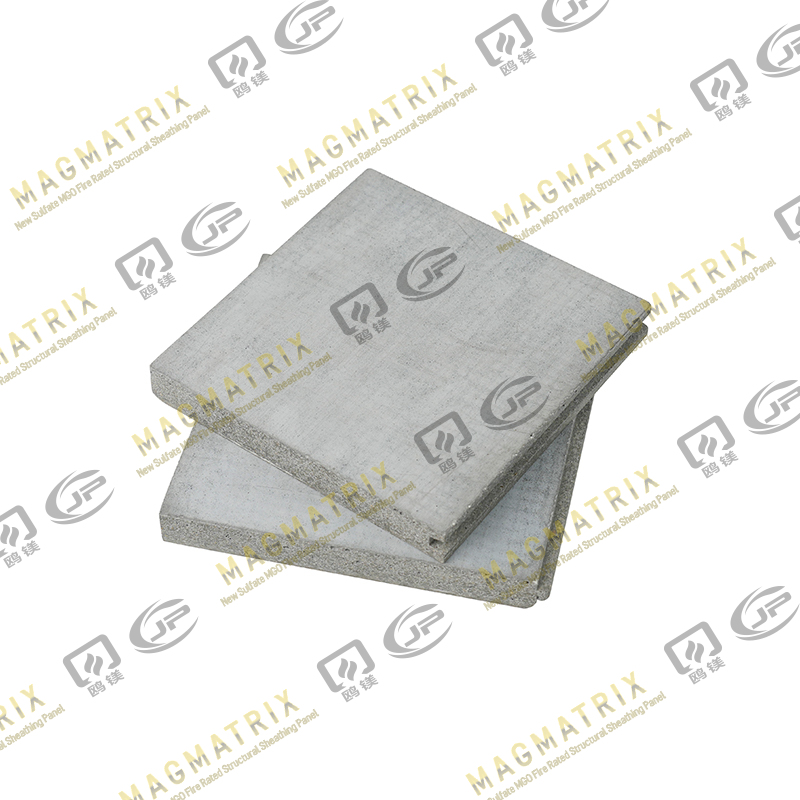 Perseverance MgO Subfloor Sheathing Board
 MagMatrix MgO Underlayment Panel/board