MgO Boards Achieve Class A1 Non-Combustibility — Here's What That Means
Magnesium oxide (MgO) boards are classified as Class A1 non-combustible under EN 13501-1, the European standard for the reaction-to-fire classification of construction products. This is the highest possible fire rating a building material can receive, meaning the board contributes no heat, no flames, and no smoke to a fire under any condition of use.
In the United States, MgO boards are tested under ASTM E136 (Standard Test Method for Behavior of Materials in a Vertical Tube Furnace) and ASTM E84 (Surface Burning Characteristics). Results consistently show a Flame Spread Index (FSI) of 0 and a Smoke Developed Index (SDI) of 0, placing them in Class A under IBC (International Building Code) classifications — the strictest category for surface-burning characteristics.
These ratings are not merely theoretical. MgO boards have been independently tested at temperatures exceeding 1,000°C (1,832°F) without igniting. The core chemistry is the reason: magnesium oxide is an inorganic mineral compound with a melting point of approximately 2,852°C, making combustion physically impossible under any realistic fire scenario.
Key Fire Resistance Certifications and Standards for MgO Boards
MgO boards are certified against multiple international fire standards depending on the target market. The following table summarizes the most widely referenced certifications:
| Standard / Certification |
Region |
Rating Achieved |
What It Tests |
| EN 13501-1 |
Europe / UK |
A1 |
Reaction to fire (non-combustibility) |
| ASTM E84 |
USA |
Class A (FSI 0 / SDI 0) |
Surface flame spread and smoke |
| ASTM E136 |
USA |
Non-combustible |
Vertical tube furnace behavior |
| BS 476 Part 4 |
UK / Australia |
Non-combustible |
Non-combustibility of materials |
| GB 8624 (Class A) |
China |
A1 / A2 |
Combustion performance classification |
| AS 1530.1 |
Australia / NZ |
Non-combustible |
Combustibility of materials |
Table 1: Common fire resistance certifications for MgO boards across key international markets.
It is important to verify that the specific MgO board product holds valid, current test reports for the standards required in your jurisdiction, as not all MgO boards on the market are manufactured to the same quality level. Third-party laboratory certification (e.g., UL, Intertek, SGS, or BRE) adds credibility and is increasingly required by building regulators.
Fire-Rated Wall and Floor Assemblies: How MgO Boards Perform in Real Structures
A material's individual fire rating and the fire resistance of an assembled system are two different measurements. MgO boards are frequently used as sheathing, substrate, or liner panels in fire-rated assemblies tested under ASTM E119 (USA), EN 1363-1 (Europe), or BS 476 Part 20/22 (UK). These tests expose a full wall, floor, or ceiling assembly to a standardized temperature-time curve and measure how long structural integrity, insulation performance, and integrity are maintained.
MgO board assemblies have been tested and approved for fire ratings ranging from 30 minutes to 4 hours (F30 to F240), depending on:
- Board thickness (typically 6 mm to 20 mm for fire-rated applications)
- Number of layers applied
- Framing type (steel stud, timber, concrete block)
- Cavity insulation material (mineral wool is the most common pairing)
- Joint treatment and fixing specifications
For example, a double-layer application of 12 mm MgO boards on each side of a steel stud frame filled with mineral wool can regularly achieve a 2-hour fire rating (F120). Such assemblies are used in partition walls between apartment units, corridor linings, and fire escape stairwells — all applications where code compliance demands proven, tested performance.
Smoke Toxicity and Off-Gassing: A Critical Safety Factor Often Overlooked
In real building fires, smoke inhalation — not direct flame exposure — accounts for the majority of fatalities, estimated at roughly 50–80% of fire-related deaths according to fire safety research. This makes a material's smoke and toxic gas output under fire conditions as important as its combustibility rating.
MgO boards have a significant advantage here. Because they contain no organic binders, halogens, or synthetic resins, they produce no toxic fumes and virtually no smoke when exposed to fire. This is in contrast to many alternative boards:
- Gypsum boards: release steam and trace sulphur compounds when heated; generally low toxicity but do not match MgO's total inertness
- Calcium silicate boards: similar to MgO in non-combustibility but can contain trace amounts of crystalline silica, raising dust exposure concerns during cutting
- Fiber cement boards: non-combustible but may release silica dust; some formulations include organic fibres that degrade at high temperatures
- OSB and plywood: combust readily and release formaldehyde, CO, and other volatile organic compounds
For projects requiring compliance with EN 13501-1 at the s1 (very low smoke) and d0 (no flaming droplets) level — the best possible smoke classification — MgO boards routinely qualify, giving specifiers the full A1-s1-d0 designation.
What to Verify Before Specifying MgO Boards for Fire-Rated Applications
Not every product sold as "MgO board" performs identically. Quality varies with the magnesium oxide purity, the chloride content of the magnesium chloride binder, and the manufacturing process. High chloride content in lower-grade boards is a known issue that causes corrosion of embedded metal components and moisture absorption over time — both of which can compromise structural integrity and long-term fire performance.
Before specifying MgO boards for any fire-rated application, confirm the following:
- Third-party fire test reports — request full test reports, not just summary certificates, and check the date and testing laboratory
- Chloride content specification — look for boards with chloride content below 0.1% to avoid corrosion and moisture problems
- Assembly-level approval — confirm that the tested assembly matches your intended installation configuration
- Local code acceptance — verify that the specific product and test standard are recognized by your local building authority
- Manufacturer technical support — a reputable supplier will provide detailed fixing specifications, joint details, and system documentation for the fire-rated assembly
MgO boards that meet these benchmarks represent a high-performance, chemically inert, and code-compliant solution for demanding fire-rated construction — from residential fire walls to commercial high-rise cladding and prefabricated modular structures.



 English
 русский
 Español
 BMSC 517 New Sulfate MgO Board
 Multi-Support MgO Wall Sheathing Board
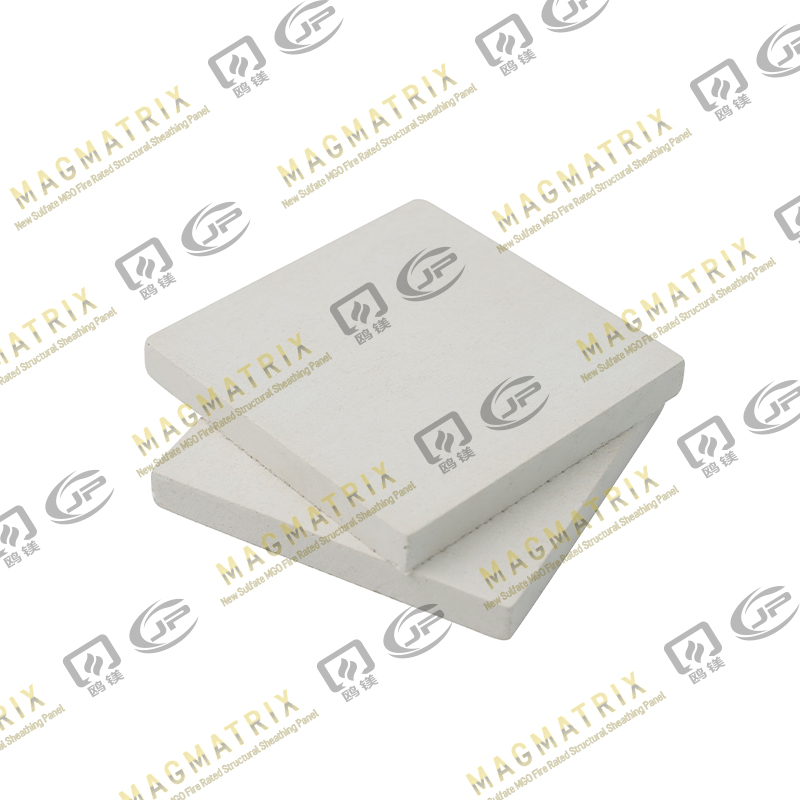 Perseverance MgO Wall Sheathing Board
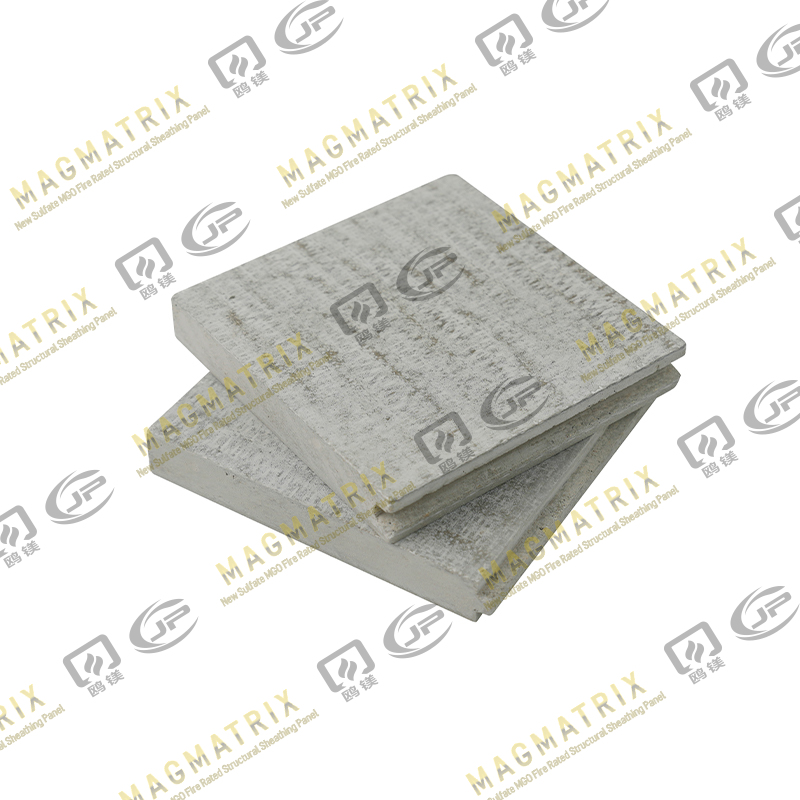 Multi-Support MgO Subfloor Sheathing Board
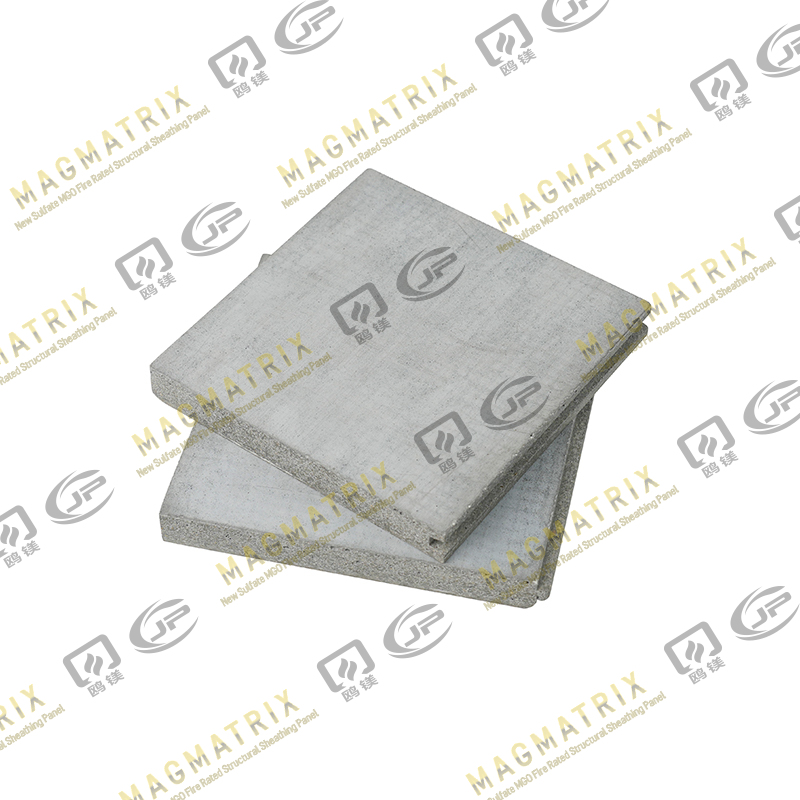 Perseverance MgO Subfloor Sheathing Board
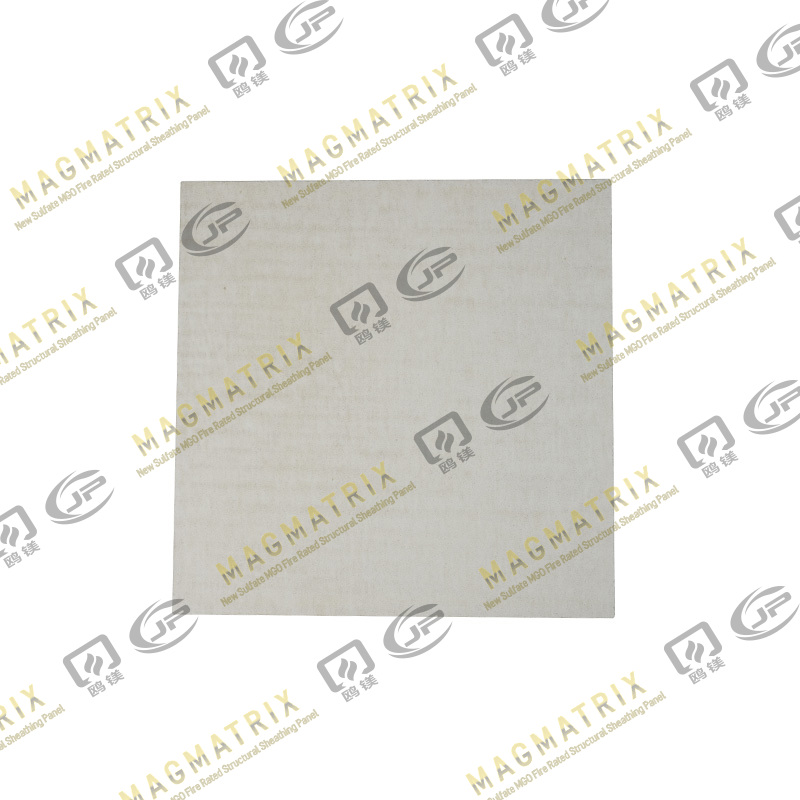 MagMatrix MgO Underlayment Panel/board