A 12 mm MgO board can look like a simple grey panel, but its performance depends on the magnesium oxide binder, the brine chemistry, the filler package, the reinforcing mesh, and the curing regime. That is why two sheets with the same label can behave like different materials on a wall, a floor, or a wet-area substrate.
MgO material definition: In construction, MgO material is a magnesium oxide-based inorganic cement board, typically formed from magnesium oxide powder, magnesium sulfate or magnesium chloride solution, mineral fillers, and fiber mesh. The board is not a single commodity; it is a formulated system.
Buyers searching for MgO material usually need one of two answers: what the chemical is, or which board grade fits a project. This guide covers both, with the specification checks that matter before a purchase order is issued.
What MgO Material Actually Is
MgO material is magnesium oxide, a white alkaline earth oxide. In construction, the term usually refers to a board made by mixing magnesium oxide powder with a magnesium sulfate or magnesium chloride solution, adding fillers such as perlite or vermiculite, and embedding glass-fiber mesh.
Typical components in a magnesium oxide construction board and their function.
| Component |
Function |
What to verify |
| Magnesium oxide powder |
Reactive binder |
Reactivity, purity, and batch consistency |
| Magnesium sulfate or chloride solution |
Activator and binder phase |
Binder chemistry, concentration, and soluble salt content |
| Mineral fillers |
Density, insulation, and cost control |
Filler type, loading level, and dust behavior |
| Fiber mesh |
Crack control and handling strength |
Mesh weight, placement, and layer count |
The important distinction is that MgO is the reactive ingredient, not the finished board. A high-purity powder can still produce a poor panel if the mix design, density, and curing are wrong.
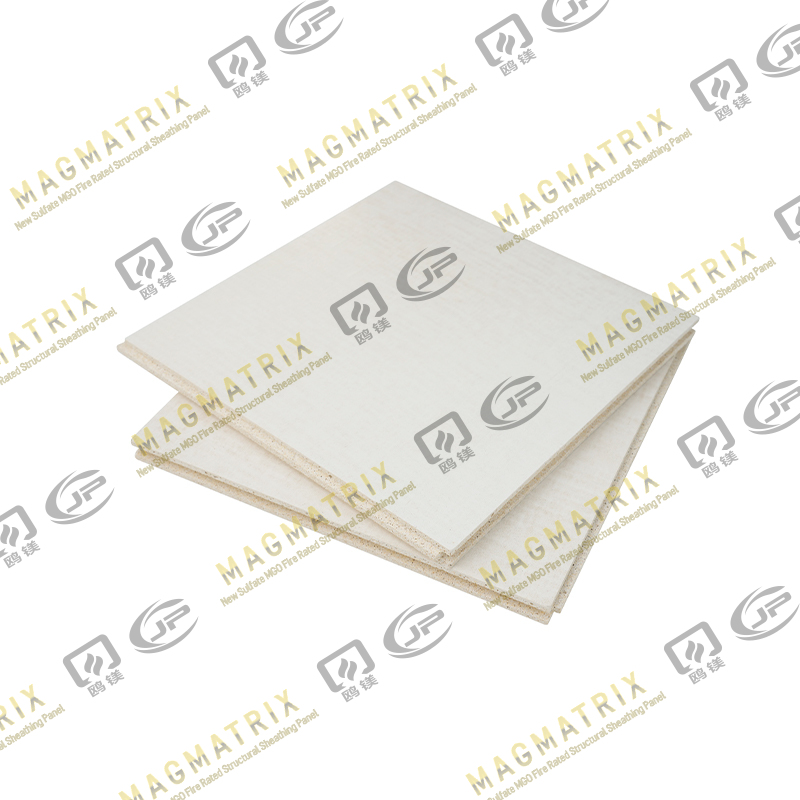
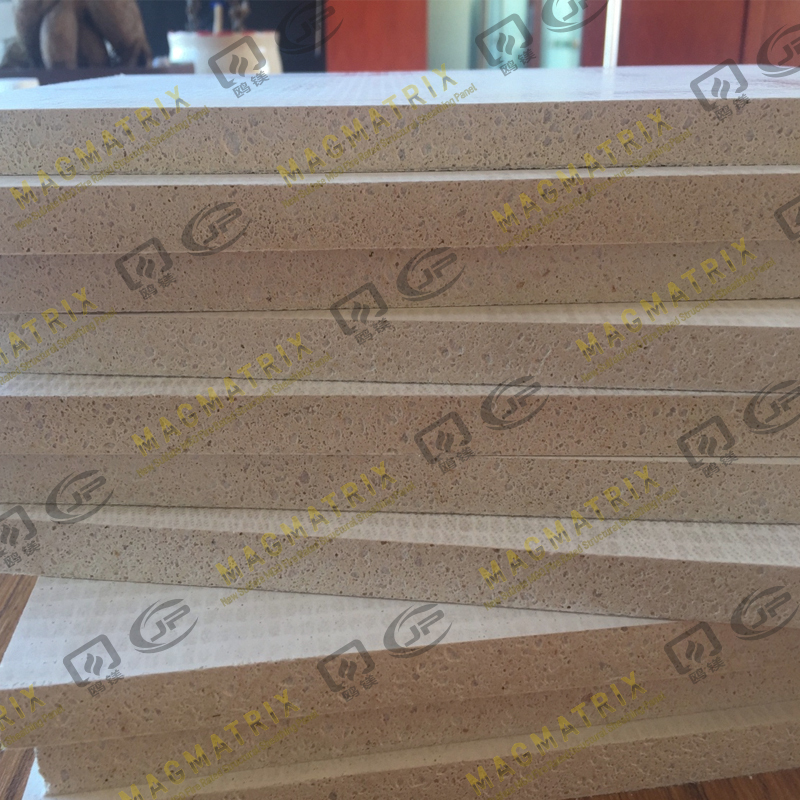
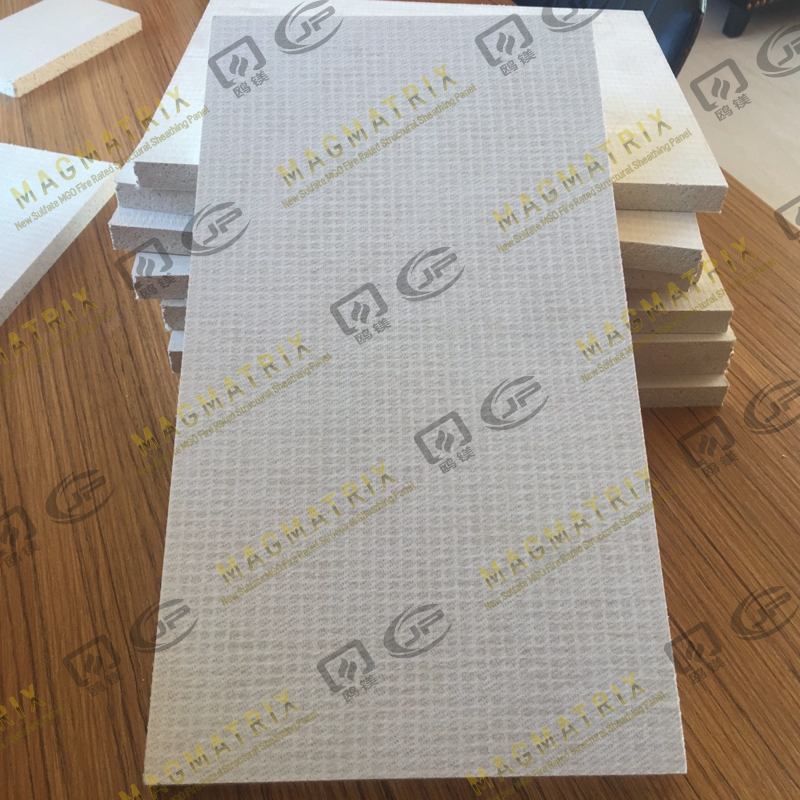 BMSC 517 New Sulfate MgO BoardA magnesium sulfate cementitious board with fire-rated structural and sheathing applications, relevant to understanding how MgO formulation affects finished panel performance.View Product →
For a board-level explanation of MgO material, the site's guide to MgO board properties and board types walks through composition, uses, and handling in more detail.
Chemical purity alone does not predict board performance. Formulation, density, and curing decide how the panel handles moisture, fasteners, and load.
Why Formulation Matters More Than the Label
Two boards labeled MgO can behave very differently because formulation controls the binder phase, free moisture, and soluble salts. The most common split is sulfate-based versus chloride-based chemistry.
Sulfate MgO board
- Generally favored where steel framing, damp basements, or long-life assemblies are involved.
- Lower chloride content can reduce corrosion risk when moisture is present.
- Still needs a project-specific test report and installation detail.
Chloride MgO board
- Can be cost-effective in dry interior applications.
- Moisture and soluble salts deserve closer review before use near metal.
- Not a universal exterior or wet-area solution.
For steel framing, damp basements, and long-life assemblies, ask for the binder chemistry in writing. The word MgO on a datasheet is not enough.
Properties Buyers Should Verify
The useful specification for MgO material is not a single density or fire number; it is a verified set of properties tied to the assembly. A board that passes one test may still be wrong for the substrate, coating, or fastener schedule.
2 h fire-rated wall assemblies cited in published test reports
219 SVHC substances screened in a published report
100,000 m2 factory footprint stated in the company profile
Specification checks that matter when comparing MgO material for a project.
| Property |
Why it matters |
Evidence to request |
| Fire class |
Non-combustibility and surface spread affect code compliance. |
ASTM E136 and ASTM E84 reports for the exact board. |
| Structural capacity |
Screw holding, shear, and span limits control wall and floor use. |
ASTM D2718 shear report and wall load calculations. |
| Moisture movement |
Shrinkage, expansion, and warping affect joints and finishes. |
Dimensional stability data and linear thermal expansion evaluation. |
| Indoor air |
SVHC, chloride, and surface chemistry matter in occupied buildings. |
219 SVHC report and Intertek CCRR documentation. |
| Surface finish |
Paint, laminate, tile, and vinyl systems need a compatible face. |
Board grade, surface treatment, and coating trial. |
A fire rating is assembly-specific. The board, studs, cavity insulation, fastener schedule, and joint treatment all belong to the test.
Jinpeng publishes certificates and test documentation for its MgO board range, which is useful when a specifier needs traceable evidence rather than a generic claim.
Where MgO Boards Fit in a Build
MgO boards fit wall sheathing, subfloor, underlayment, ceiling, and fire-resistant decorative backing when the grade matches exposure. The same material family can serve several roles, but not every board is interchangeable.
- Wall sheathing: check racking, fire assembly, and exterior exposure before substitution.
- Subfloor: verify load capacity, fastener pull-through, and joist spacing.
- Underlayment: confirm flatness, thickness, and compatibility with tile or vinyl plank.
- Decorative backing: review surface quality, lamination method, and fire performance.
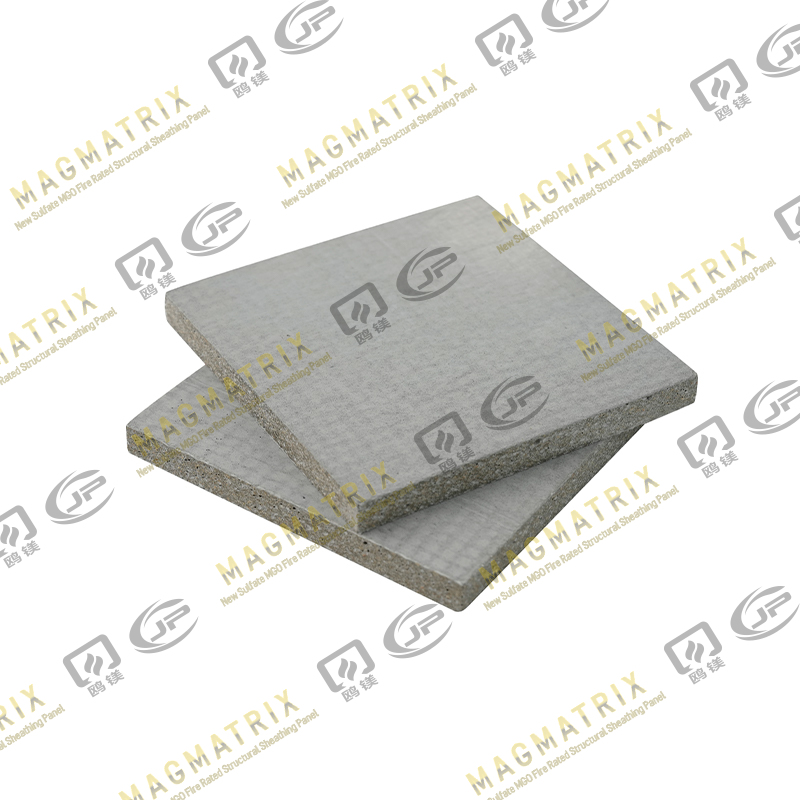
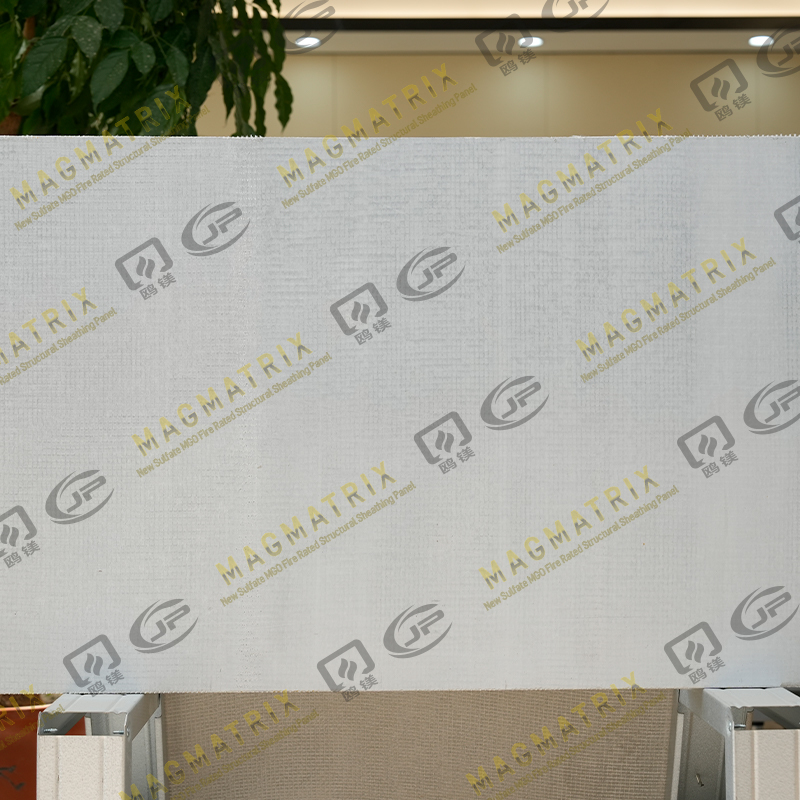 MagMatrix Multi-Support MgO Wall Sheathing BoardMedium-density structural sheathing for fire-rated walls, subfloors, and ceilings where a multi-purpose MgO grade matches the exposure and assembly.View Product →
Do not use an interior ceiling board as a wet-area subfloor just because both are MgO. Grade, thickness, and finish are part of the specification.
Selection and Installation Checks
Start selection with exposure, substrate, and assembly, not price per sheet. A lower-cost panel can become expensive if it needs extra primers, special fasteners, or early replacement.
- Define exposure: dry interior, humid interior, exterior sheathing, or wet floor.
- Match board grade to substrate and fastener type, especially near steel framing.
- Check thickness and span tables for floors, walls, and ceilings.
- Confirm joint treatment, coating, and waterproofing details.
- Review curing, acclimation, and cut-edge sealing before installation.
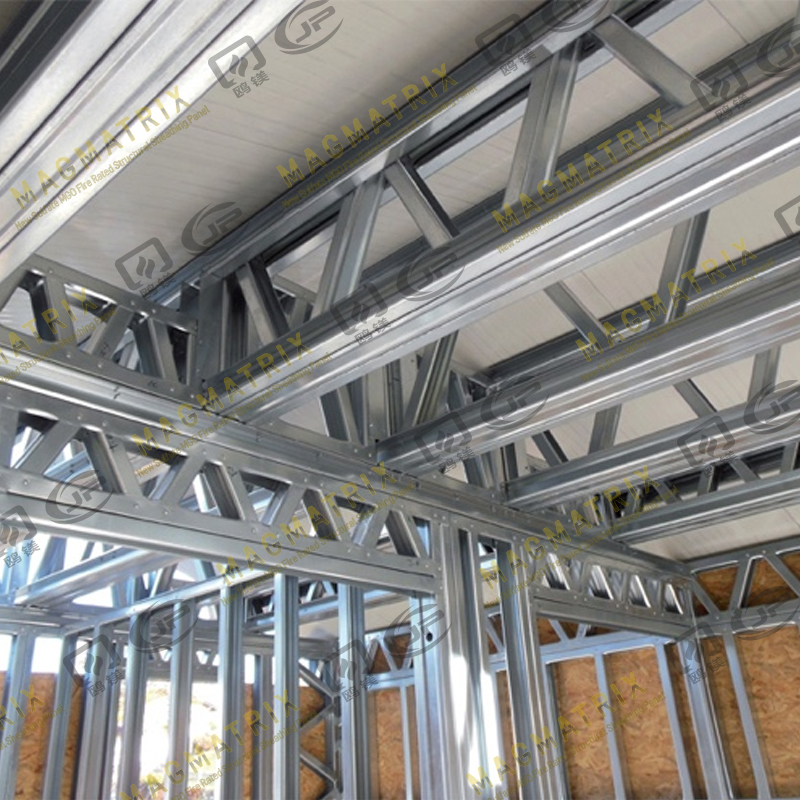 MagMatrix MgO Subfloor Sheathing BoardMoisture-resistant, sound-insulating subfloor panel for humid and commercial flooring systems, chosen after exposure, substrate, and assembly are defined.View Product →
Cut edges and penetrations are where moisture ingress starts. Seal them as carefully as the field of the panel.
Testing and Documentation
Ask for test reports that match the board, thickness, and assembly you are buying. A report for a 12 mm panel does not automatically cover a 16 mm panel, a different fastener schedule, or a different stud type.
- ASTM E136 non-combustibility report for the exact formulation.
- ASTM E119 2-hour wood-stud and steel-stud wall reports when fire resistance is required.
- ASTM E84 surface burning report for finish and code review.
- ASTM D2718 shear and wall load calculations for structural claims.
- SVHC and Intertek CCRR files for indoor air and compliance checks.
Documentation should follow the product, not the other way around. Match every report to the board code, thickness, and assembly detail on the drawing.
Frequently Asked Questions
These are the questions that come up most often when buyers compare MgO material with drywall, plywood, OSB, and cement board.
Most MgO failures are not chemistry failures. They are grade, moisture, or assembly failures.
Is MgO material the same as magnesium oxide board?
MgO material is the magnesium oxide binder system. MgO board is the finished construction panel made from that system plus fillers, mesh, and curing. The terms are related, but not identical.
Is MgO board waterproof?
No. MgO board is moisture-resistant, not a substitute for a waterproof membrane. Wet areas still need the correct board grade, joint treatment, and waterproofing detail.
Does MgO board contain asbestos?
A quality MgO board should not contain asbestos. Still, verify the current SVHC report, composition statement, and test documentation for the exact product, because formulations vary by supplier.
Can MgO board replace drywall or plywood?
In some assemblies, yes. In others, no. Fire rating, structural capacity, fastener schedule, and code approval must match before substitution. Use the assembly report, not the product name alone.



 English
 русский
 Español

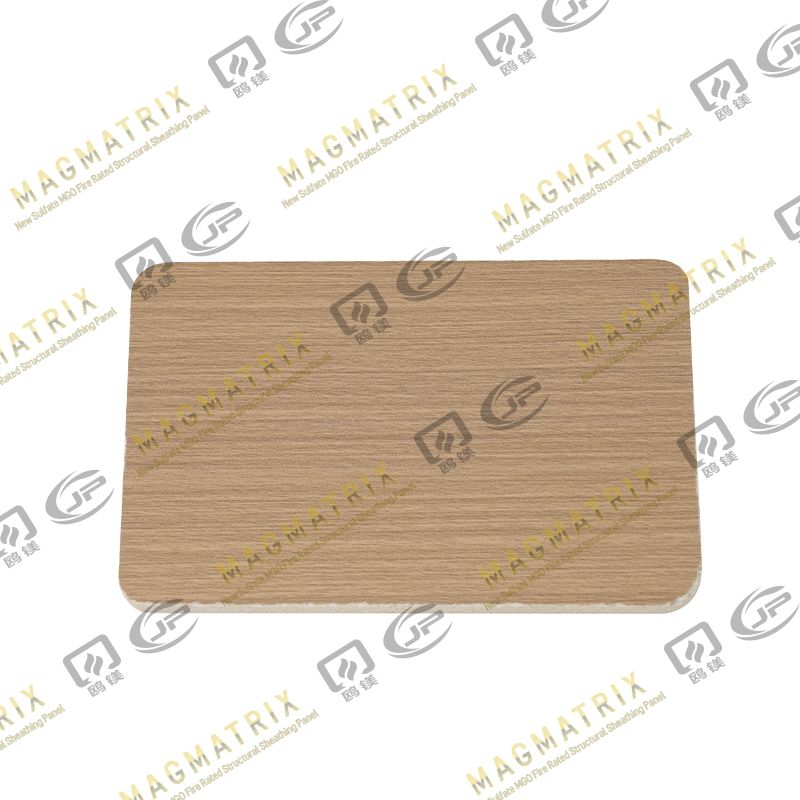
 BMSC 517 New Sulfate MgO Board
 Multi-Support MgO Wall Sheathing Board
 Perseverance MgO Wall Sheathing Board
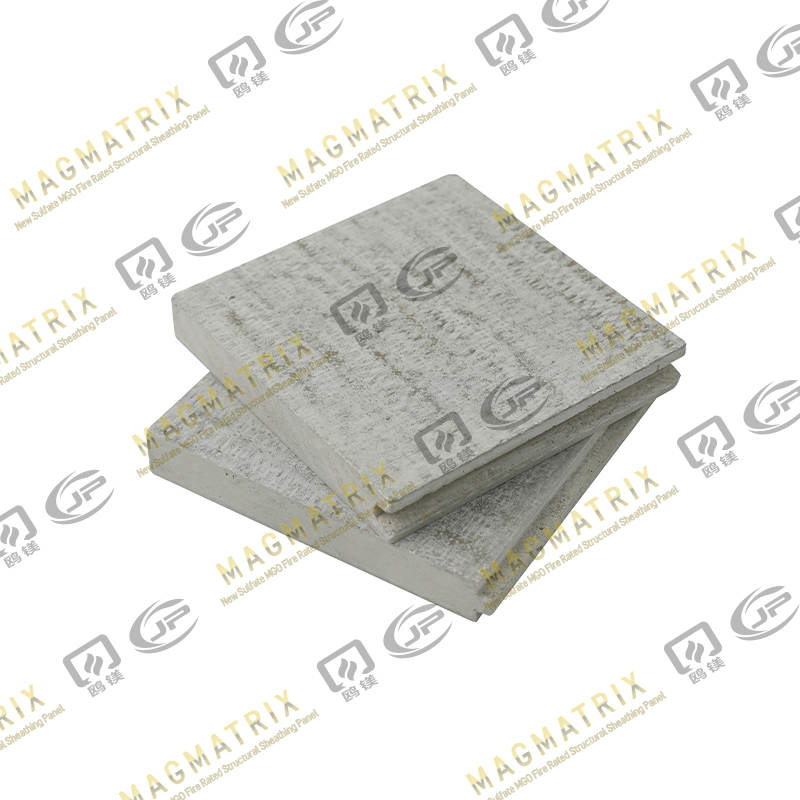 Multi-Support MgO Subfloor Sheathing Board
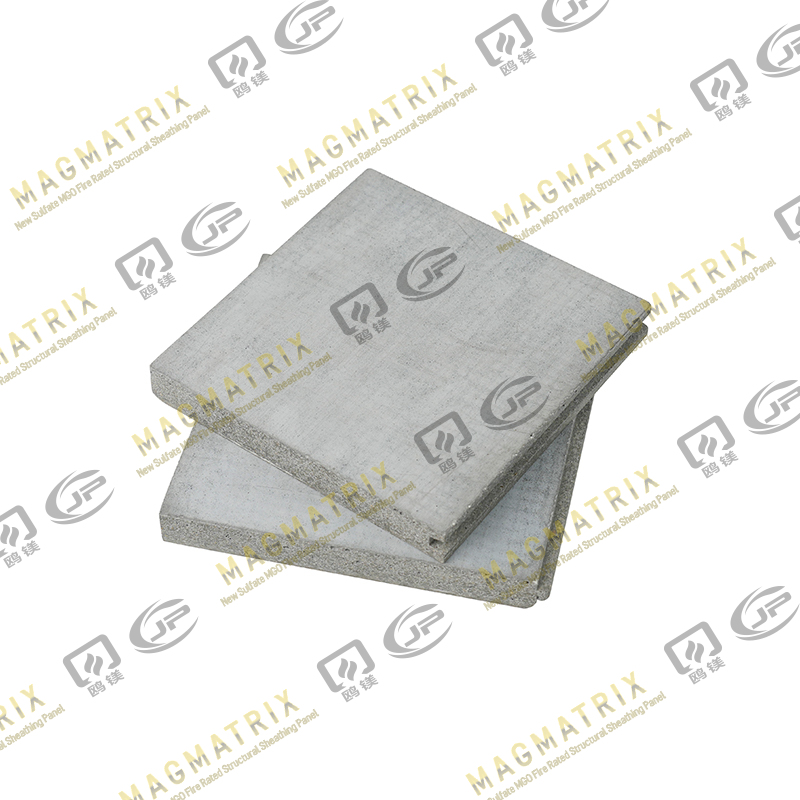 Perseverance MgO Subfloor Sheathing Board
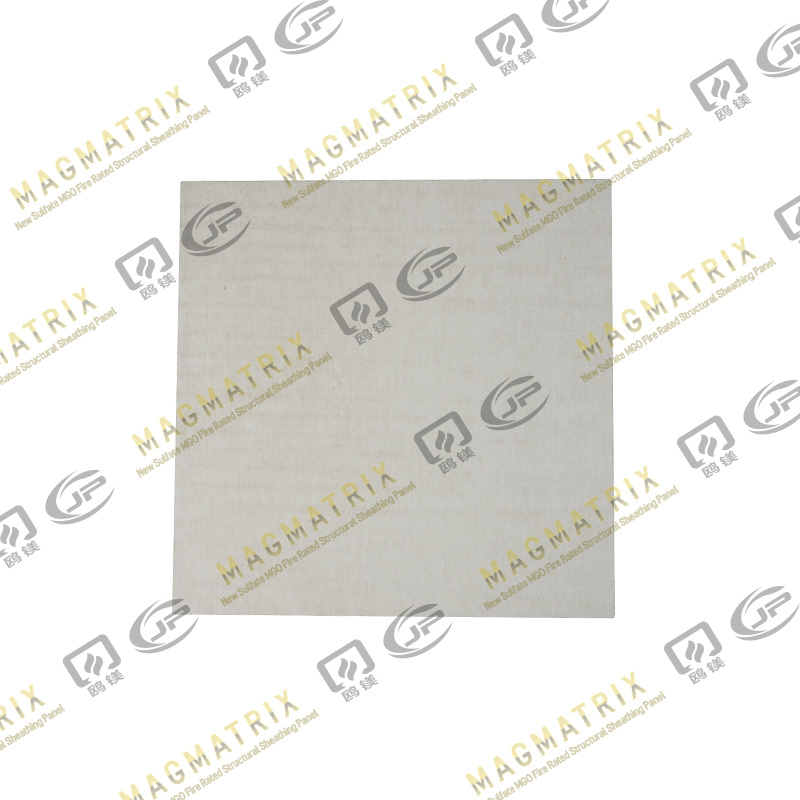 MagMatrix MgO Underlayment Panel/board