What Are MgO Panels?
MgO panels—magnesium oxide boards—are a non-combustible, mineral-based building material that consistently outperforms drywall and cement board where safety and durability matter most. They are formulated from magnesium oxide, magnesium sulfate or magnesium chloride, blended with wood fibers, perlite, and fine mineral fillers, then reinforced with glass-fiber mesh to form a rigid sheet. The result is a single panel that delivers fire resistance, moisture tolerance, and structural stability without the weight or brittleness of traditional cementitious products.
Unlike gypsum drywall, MgO board contains no paper facing, no gypsum core, and no organic binders that fuel fire or mold. The chemistry itself is what gives the board its strength: the magnesium oxide reacts with water and sulfate (or chloride) to form a dense crystalline matrix. In high‑quality production, the formulation is optimized to eliminate free chlorides, which addresses the long‑term durability issues that plagued earlier magnesium‑oxide products. For a detailed installation guide, refer to our detailed installation guide.
Specifying an MgO panel means you're selecting a substrate that is inherently non‑combustible, vapor‑permeable, and resistant to termites and rot. That combination explains why it has become the material of choice for architects and builders who need to meet strict fire codes, control condensation, and avoid callbacks caused by mold or delamination.
3 Core Benefits of MgO Panels
Every MgO panel is built around three performance promises: verified fire resistance, long‑term moisture stability, and verified indoor air quality. Understanding these benefits in real engineering terms helps you justify the material choice to clients, code officials, and installers.
Exceptional Fire Resistance
Fire safety is not a marketing claim with MgO panels—it is documented through independent testing. Full‑scale wall assemblies using MgO wall sheathing have passed 2‑hour fire endurance tests under ASTM E119, achieving equivalent ratings to multi‑layer gypsum assemblies but with a single‑layer application. In an ASTM E84 surface burning test, MgO boards typically achieve a Flame Spread Index of 0 and a Smoke Developed Index well below 50, putting them in Class A (or Class 1) territory.
What this means for a project is straightforward: an MgO‑sheathed steel‑stud wall will maintain its integrity under direct flame exposure long enough to meet the most stringent IBC requirements. The board does not contribute fuel, does not melt, and produces negligible smoke—a critical safety factor in hospitals, schools, and high‑rise residential buildings. Read more about these fire-resistant properties in our dedicated article.
Furthermore, ASTM E136 testing confirms that MgO panels qualify as non‑combustible. This is a hard pass‑fail criterion in Type I and Type II construction; MgO meets it without any fire‑retardant coatings or additives, whereas standard gypsum and plywood cannot.
Superior Moisture & Mold Resistance
Moisture is the leading cause of building material failure, and MgO is engineered to resist it at the molecular level. Immersion tests conducted per ASTM C1185 show that high‑quality MgO boards exhibit thickness swelling of less than 0.3% and no visible degradation after prolonged water exposure. The material does not support mold growth, does not soften, and retains its flexural strength even when fully saturated.
Because the board is vapor‑permeable but hydro‑resistant, it allows trapped moisture to escape the wall cavity without absorbing liquid water. This dual behavior is particularly valuable in humid climates and in wet‑area applications such as bathrooms, kitchens, and basement shafts. Builders who have replaced cement board tile backer with an MgO panel report fewer callbacks related to efflorescence or cracked grout lines, provided the substrate fastening schedule is followed.
Eco‑Friendly & Safe for Indoor Air
Indoor air quality compliance is non‑negotiable for LEED, WELL, and many local green codes. MgO panels are manufactured without added formaldehyde, asbestos, or crystalline silica. Independent SVHC (Substances of Very High Concern) screening reports, such as those conducted under EU REACH protocols, have returned zero detectable hazardous substances in a properly formulated magnesium‑sulfate board.
On the life‑cycle side, the production of MgO requires significantly lower calcination temperatures than Portland cement or gypsum, translating into lower embodied carbon. The material is also fully recyclable as a mineral aggregate. For the occupant, it means a wall or floor substrate that will not off‑gas toxic compounds, even in a fire event—a stark contrast to halogenated‑flame‑retardant plywoods and OSB.
Key Applications of MgO Panels
MgO panels are not a single‑solution product; they perform across interior, exterior, and structural roles. The following three applications represent the most common high‑value placements.
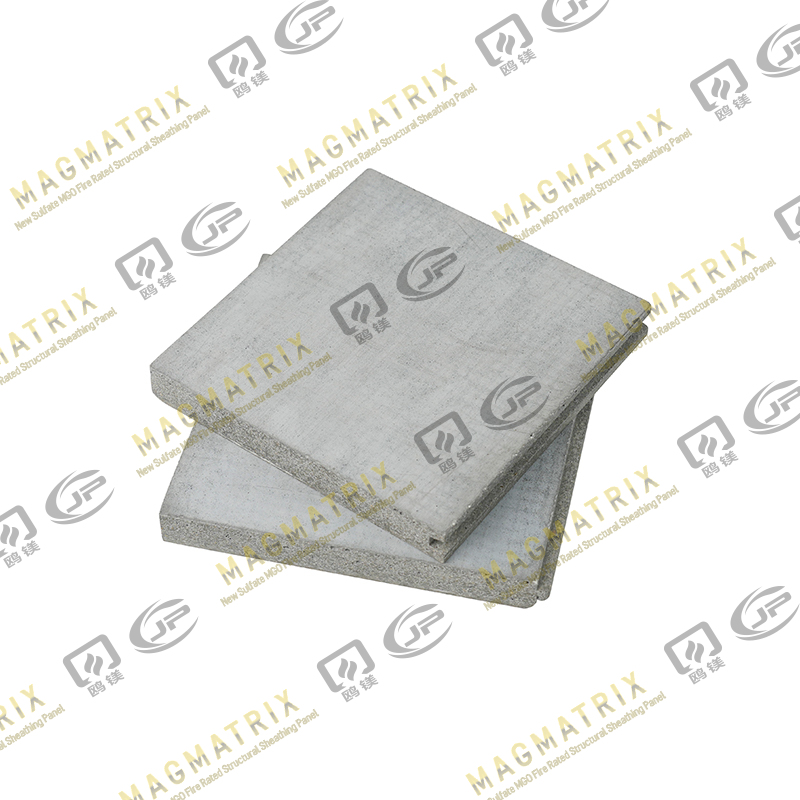
- Interior and Exterior Wall Sheathing: MgO wall boards serve as structural sheathing over wood or steel studs, as a fire‑rated barrier behind cladding, and as a smooth, paintable interior finish surface. Speccing an MgO wall sheathing panel
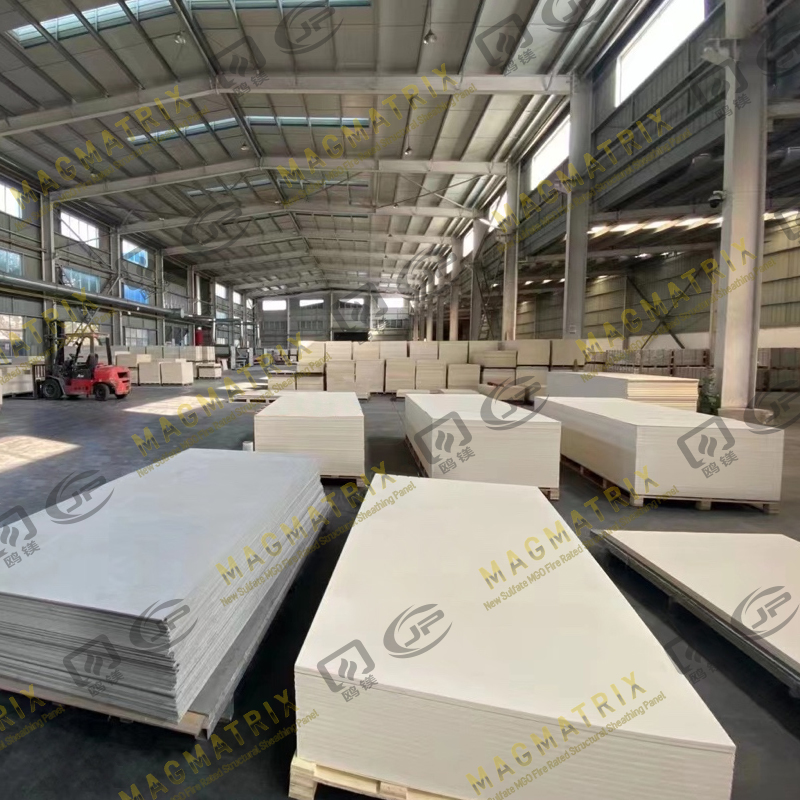 MagMatrix MgO Wall Sheathing Board Manufacturers, FactoryJinpeng are MGO Wall Board Manufacturers and Magnesium Oxide Sheathing Board Factory in China, Custom Magnesium Oxide Wall Sheathing Boar...View Product → allows you to combine the structural shear capacity of plywood with the fire rating of Type X gypsum in one sheet.
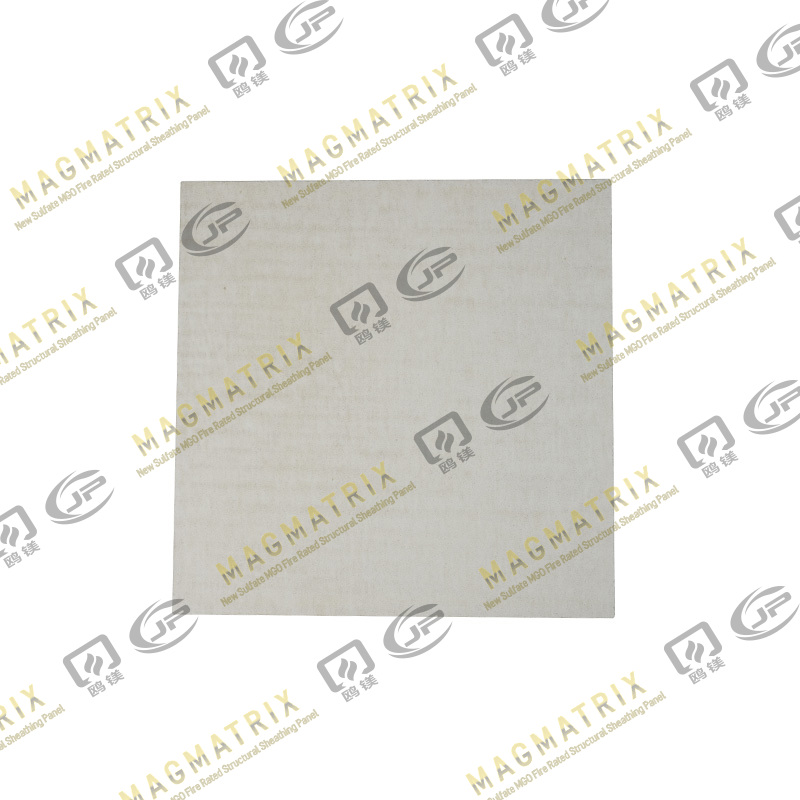
- Subfloor and Underlayment: MgO subfloor panels deliver a flat, solid, and moisture‑tolerant base for tile, vinyl plank, and engineered wood. Unlike OSB or plywood, MgO does not swell at the edges when exposed to construction moisture, and it eliminates the need for an additional cementitious underlayment layer in many tile assemblies.
- Ceiling and Soffit Panels: In suspended ceiling grids and open plenum soffits, MgO panels provide a lightweight, non‑combustible membrane that meets smoke‑development limits while accepting standard paint and joint compound finishes.
MgO Panels vs. Traditional Materials
To make an informed specification, you need to measure MgO panels against the products they replace. The differences are not marginal—they change the performance envelope of the entire assembly. For a more granular breakdown, see our detailed comparison with drywall.
MgO Panels vs. Drywall
Standard gypsum drywall loses structural integrity the moment its paper facers are breached by water or fire. In contrast, an MgO panel maintains its flexural strength after water exposure and does not burn. The price premium—roughly 20–35% on the material line—is typically offset by eliminating the need for separate fire‑rated assemblies and mold remediation. In multi‑family wood‑frame construction, replacing corridor partition drywall with MgO can reduce the required fire‑wrapping labor and still achieve a 1‑ or 2‑hour rating with a single layer.
MgO Panels vs. Cement Board
Cement board solves the moisture problem of drywall but introduces weight, brittleness, and silica dust hazards. A typical ½‑inch cement board weighs roughly 2.8–3.2 lb/ft², whereas an equivalent MgO panel comes in around 2.2–2.6 lb/ft². More importantly, MgO cuts cleanly with a carbide‑tipped blade and generates minimal respirable dust, speeding up installation and eliminating the silica exposure protocols required for fiber‑cement products. When high impact resistance is required—such as in corridors or gymnasiums—MgO’s reinforcement mesh gives it an edge over cement board, which can crack under sharp impacts.
Buyer’s Guide: How to Choose High‑Quality MgO Panels
All MgO boards are not equal. The determining factor in long‑term performance is the chemistry of the binder system, not just the magnesium oxide content.
Chloride‑based vs. sulfate‑based binder: Early MgO boards used magnesium chloride, which can leave free chloride ions in the board. Over time, these chlorides react with moisture and carbon dioxide to form efflorescence and can corrode fasteners. Modern high‑quality panels use a magnesium sulfate (MgSO₄) binder, often marketed as “sulfate MgO board” or “non‑chloride” board. Verify that the manufacturer provides third‑party ion‑chromatography reports showing chloride content below 0.06% by weight.
Flexural and shear strength: Look for panels that publish ASTM D2718 shear test values for wall sheathing applications. A properly formulated 12‑mm MgO board can achieve a racking shear resistance exceeding 700 lb/ft in a stud wall assembly, qualifying it as structural sheathing. For products designed for high shear zones, a Multi‑support MgO wall sheathing board often incorporates additional glass‑fiber reinforcement to boost planar stiffness without increasing thickness.
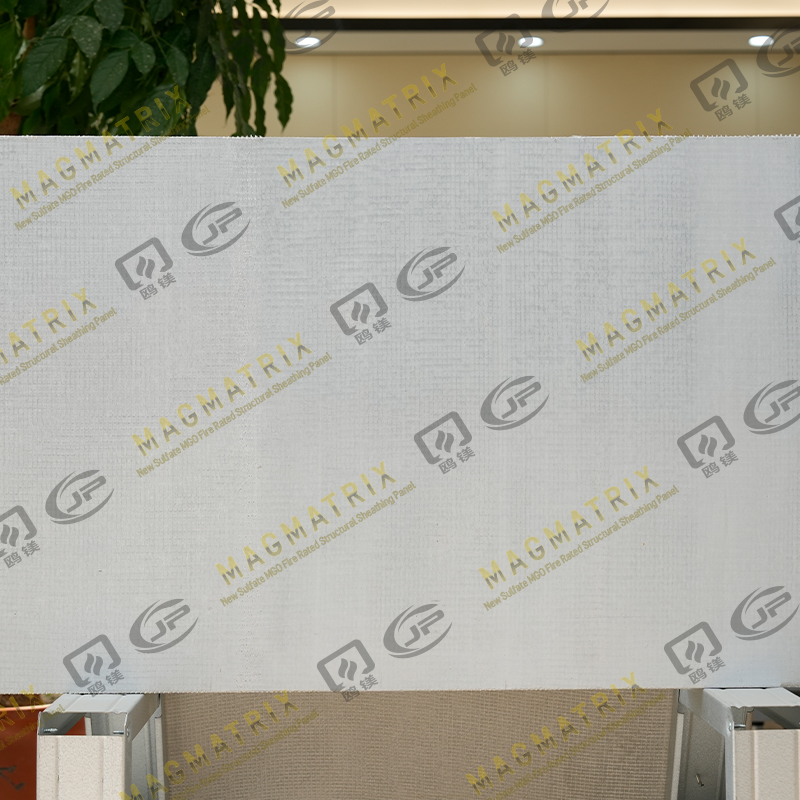 Multi-Support MgO Wall Sheathing Board Suppliers, Company - Jiangsu Jinpeng FireJiangsu Jinpeng Fireproof Board Co., Ltd. - China Multi-Support MgO Wall Sheathing Board Suppliers and Company, Wholesale Multi-Support M...View Product →
Certifications and test reports: Insist on seeing full test reports, not just summary data sheets. Key standards include ASTM E119 (fire endurance), ASTM E84 (surface burning), ASTM E136 (non‑combustibility), and ASTM C871 (chemical resistance). Certifications such as Intertek’s CCRR listing add an extra layer of quality assurance by verifying that the manufacturing process is under continuous surveillance.
Warranty and fastener compatibility: A quality board will come with a clear specification for fastener type and minimum embedment. Use corrosion‑resistant screws (usually coated steel or stainless steel) and follow the manufacturer’s edge‑distance recommendations. Boards backed by a 10‑year or longer limited warranty against delamination and strength loss give you recourse if a formulation issue surfaces post‑installation.
Conclusion
MgO panels are more than a substitute for drywall or cement board—they are a way to simplify assemblies while improving fire life safety and moisture durability. For architects and contractors who regularly face stringent building codes, tight performance specs, and moisture‑prone sites, the shift to MgO can reduce the number of material layers, eliminate the need for additional fire‑retardant treatments, and lower the risk of weather‑related delays.
Next steps: Review the technical test reports available on this site, examine the fastener schedules for your specific wall or floor application, and request a sample of a sulfate‑based MgO board to test with your team. A material specification is only as reliable as the data behind it—and MgO panels come with the data to back up every performance claim.



 English
 русский
 Español
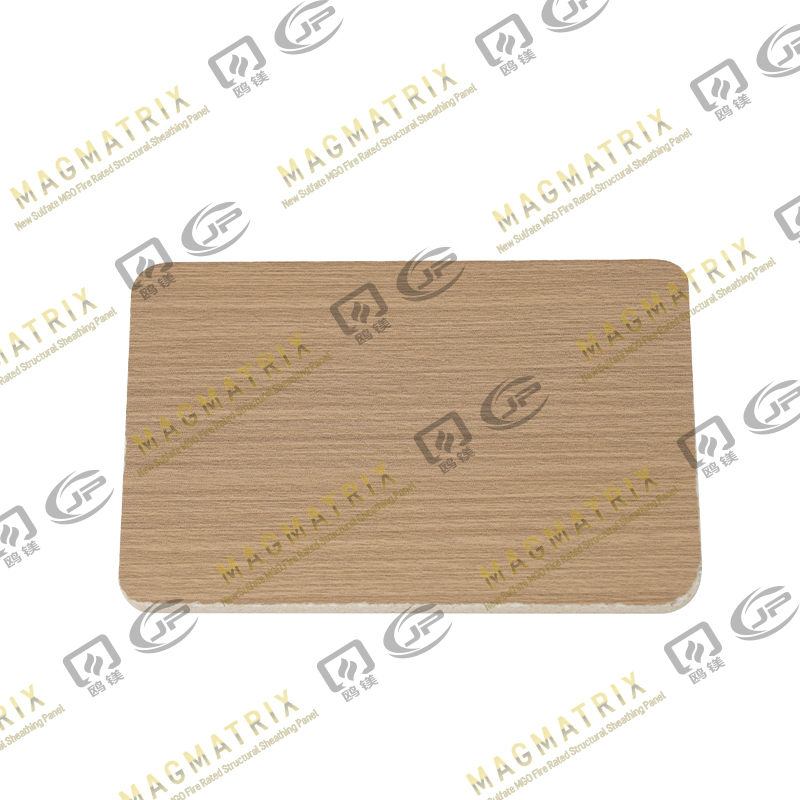
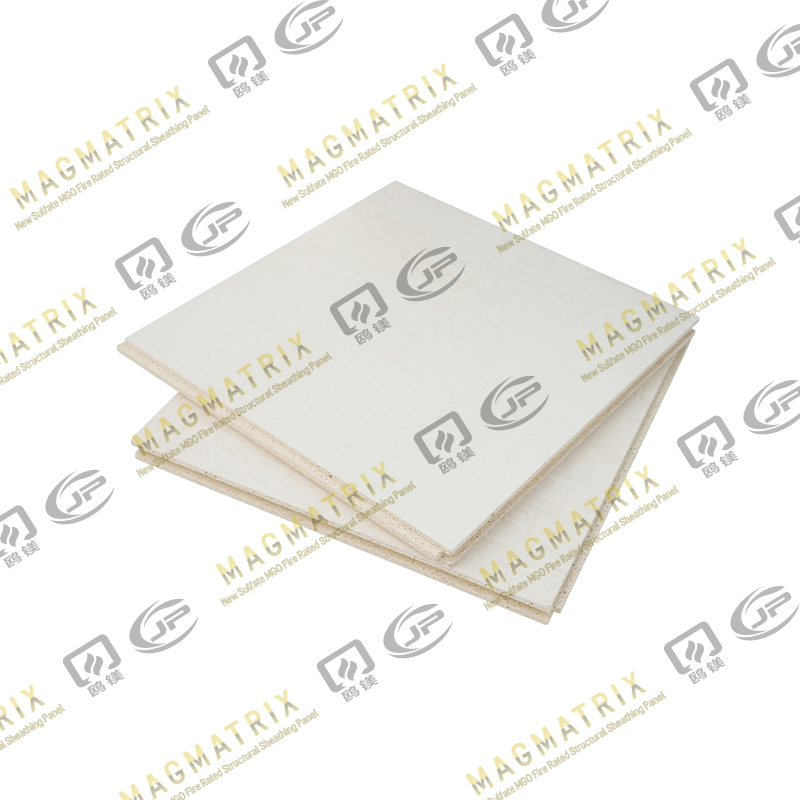
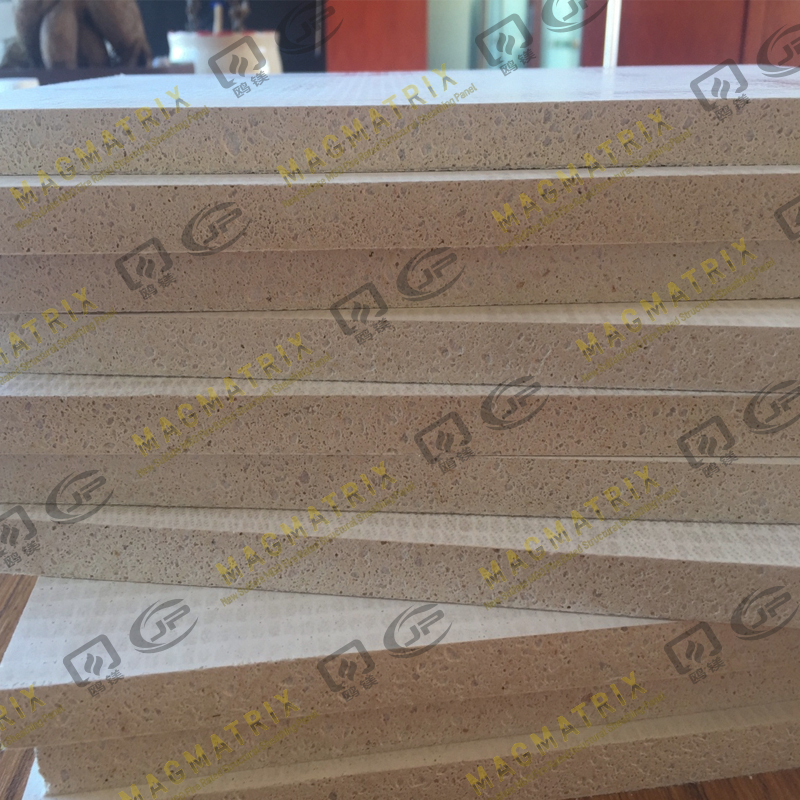 BMSC 517 New Sulfate MgO Board
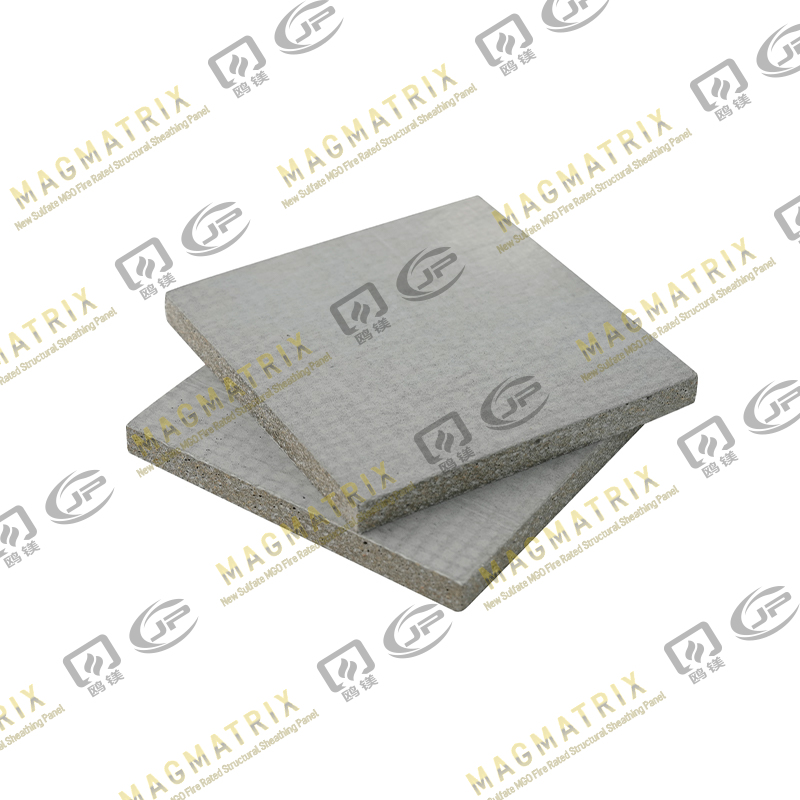 Multi-Support MgO Wall Sheathing Board
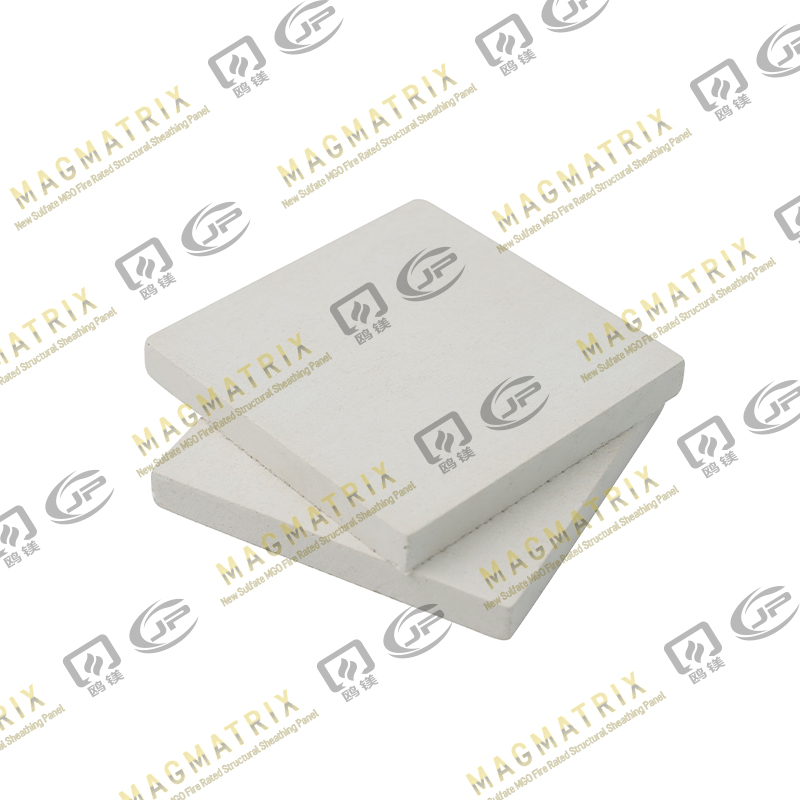 Perseverance MgO Wall Sheathing Board
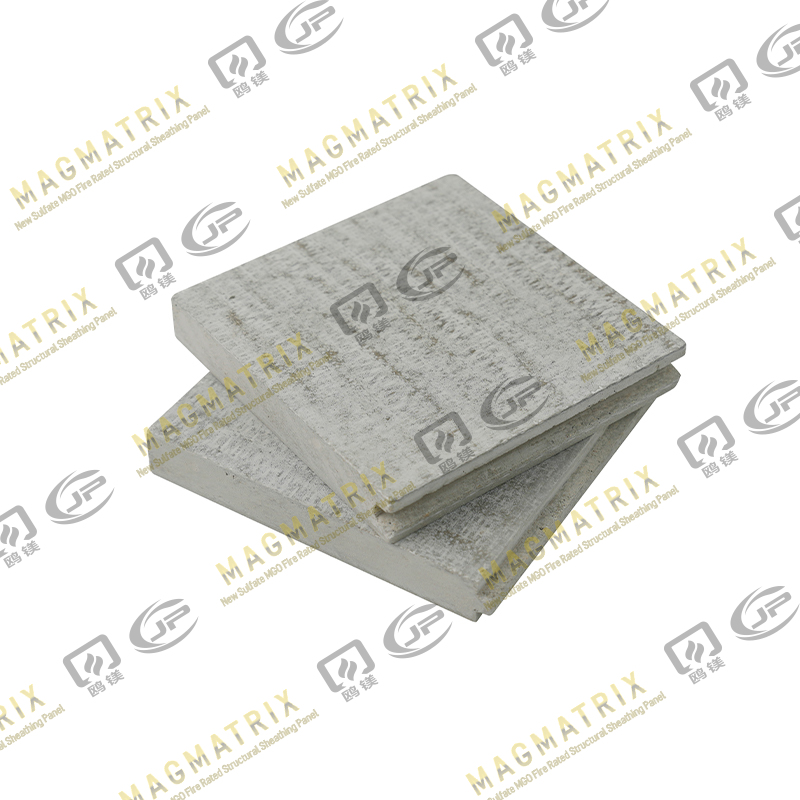 Multi-Support MgO Subfloor Sheathing Board
 Perseverance MgO Subfloor Sheathing Board
 MagMatrix MgO Underlayment Panel/board